Device makers are often cited in U.S. FDA warning letters for making claims not seen in the approved labeling, but the authors of a recent review of artificial intelligence (AI) products cleared by the FDA suggest that FDA documents and marketing materials should disclose the presence of AI in these products. The authors of an article in the Journal of the American Medical Association said that only about 80.6% of the products were represented with accurate statements about the presence of AI, although FDA regulation does not require that marketing materials make such disclosures.
The U.S. FDA’s draft guidance for predetermined change control plans (PCCP) is a groundbreaking document for med-tech regulation, but stakeholders see a few holes in the draft version. One of the issues for device manufacturers is that the guidance seems to exclude any possibility of inclusion of a new intended use or indication for use in a PCCP, while others seek more detail on how this policy can be applied to the device component of a combination product, two elements that may prove complicated to address in the final guidance.
The U.S. FDA’s draft guidance for predetermined change control plans (PCCP) is a groundbreaking document for med-tech regulation, but stakeholders see a few holes in the draft version. One of the issues for device manufacturers is that the guidance seems to exclude any possibility of inclusion of a new intended use or indication for use in a PCCP, while others seek more detail on how this policy can be applied to the device component of a combination product, two elements that may prove complicated to address in the final guidance.
Artificial intelligence (AI) continues to entice. On the exhibition floor at the 2023 Congress of the European Academy of Neurology, one company’s booth featured “Mindart” technology. A passersby could answer a short series of prompts, and get a unique image based on the input made by generative AI. Entertainment aside, medically speaking, AI applications “are still research,” Riccardo Soffietti told his audience at one of several sessions devoted to AI. “But obviously, research is the future.”
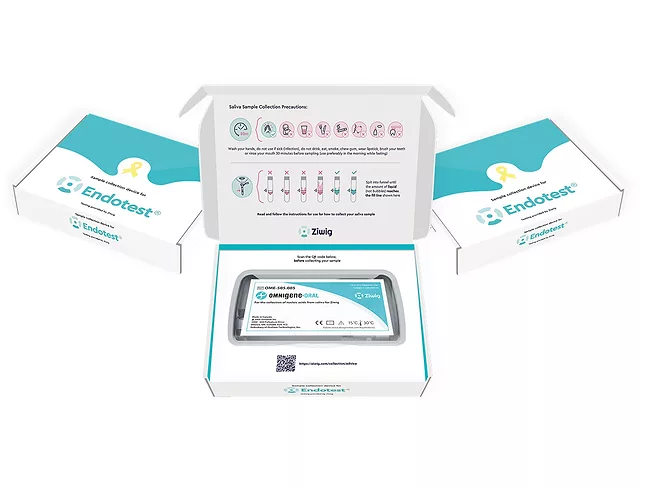
Difficulty in obtaining an accurate diagnosis and treatment for endometriosis leaves many women spitting mad, but they may soon find that saliva is the key to escaping the diagnostic maze. A recent study published in the New England Journal of Medicine validated the Endotest developed by Ziwig SAS based on results from a study involving 200 symptomatic patients monitored in five hospital units and specialized centers in France since November 2021. The findings demonstrateda sensitivity and specificity of more than 95%.
The U.S. FDA’s September 2022 guidance for clinical decision support (CDS) software was controversial the moment the agency posted the document, prompting the filing of a citizen’s petition five months later. The CDS Coalition has penned a June 8 letter to FDA commissioner Robert Califf in an effort to draw a reaction from the agency, but the letter was accompanied by a summary of an analysis of CDS software with a machine learning (ML) component that suggests that such products that are in development may have to be reconsidered.
Asep Medical Holdings Inc. reported “ground-breaking” use of artificial intelligence in its SepsetER test to rapidly identify infections at increased risk of severe sepsis. Developed under guidance by Professor Robert E.W. Hancock at the University of British Columbia, analysis of dysfunctional immune responses to identify particular sets of genes could signal when a patient is at risk of acquiring and potentially dying from severe sepsis.
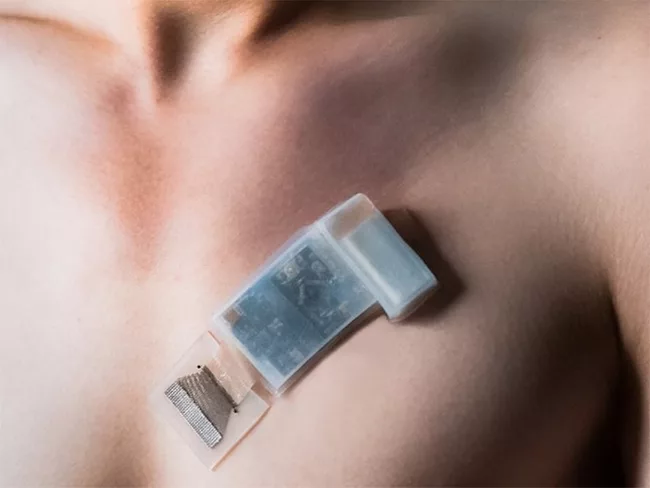
They call it the world's “first fully integrated wearable” ultrasound system for evaluating cardiovascular function while you walk, run, even ride a bicycle. Built on the nanoengineering research at the University of California San Diego (UCSD) the wearable ultrasonic system-on-patch (USoP) employs machine learning to interpret deep tissue vital signs data and track subjects in motion.
Breakthroughs in early detection of cancer offer increasing hope for better outcomes and longer lives for individuals affected by malignancies. This year’s American Society of Clinical Oncology annual meeting highlighted strong results from several companies at the forefront of this potential transformation.
Researchers at Mount Sinai Hospital have demonstrated that a machine learning-based model enables medical institutions to predict mortality risk for individual cardiac surgery patients.