Turbine Ltd. began the new year with a partnership with Cancer Research Horizons, the innovation arm of Cancer Research UK, which will put its Simulatedcell computational biology platform to work on the vexed question of how best to position CDC7 inhibitors in cancer.
The advantage of the U.S. FDA’s effort to regulate artificial intelligence (AI) in medical devices is that it is specific to medical devices and other medical products, but this vertical approach to AI regulation might soon become exceptionally complicated thanks to a new AI risk management framework posted by the U.S. National Institute for Standards and Technology (NIST). The NIST guideline is agnostic to the sector of the economy and thus may carry with it the expectation that developers of software as a medical device will hew to both the NIST framework and FDA regulations, a layering of requirements that could vastly complicate the task of developing and deploying these algorithms.
A panel at the J.P. Morgan Healthcare Conference touched on how multiple remote patient monitoring devices and management can be streamlined via machine learning to identify patients who need follow up, in many cases in their homes, increasing value without increasing the burden on already short-staffed health care organizations. The panelists saw technology as a way around a shortage of providers that could both increase access to care and deliver more targeted acute care while also addressing factors in health disparity to prevent development of disease.
Numares Health AG received $21.2 million from the European Investment Bank (EIB) in support to its automated and software based IVD platform for obtaining high-quality nuclear magnetic resonance metabolomics data from blood or urine biopsy samples.
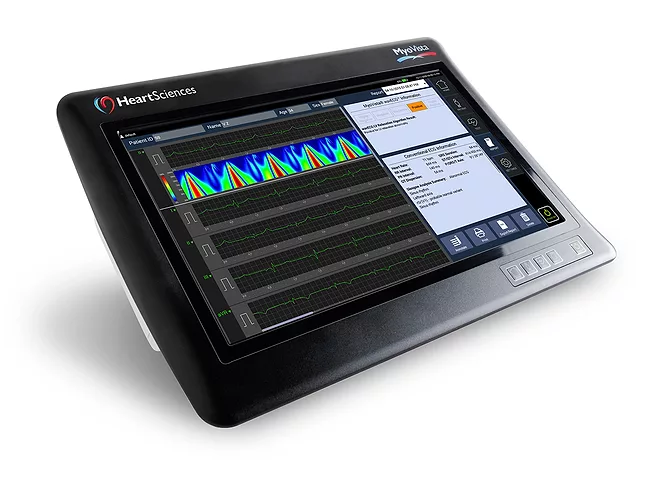
Heart Test Laboratories Inc., doing business as Heartsciences, said an independent study shows its Myovista electrocardiogram (ECG) machine learning model could be a cost-effective way to predict and stratify cardiac risk.
Biogen Inc. presented new data showing how applying artificial intelligence (AI), machine learning (ML) and radiomics can produce actionable insights on multiple sclerosis (MS) disease progression. The results, released at this week’s European Committee for Treatment and Research in Multiple Sclerosis (ECTRIMS) Congress, could help to advance new digital health tools to improve monitoring and quality of life of MS patients.
Nucleome Therapeutics Ltd. is poised to shed some light on the dark matter of the genome after raising £37.5 million (US$42.3 million) in an oversubscribed series A to begin commercialization of its technology for deciphering non-coding genes.
At first glance, Cellarity Inc. might appear as one more company harnessing the computational power of AI and machine learning to boost drug discovery efforts. A closer look, however, reveals a different approach, one that looks at cells and cellular behavior to address disease rather than the traditional method of seeking out molecular targets.
The most conspicuous part of the data problem for artificial intelligence (AI) medical software is the bias problem, but the U.S. Government Accountability Office (GAO) says there are policy solutions despite the data ownership/monetization problem.
Stryker Corp. reported the launch of its Q Guidance system for spine applications. The system leverages new optical tracking options via a redesigned camera with the advanced algorithms of the newly released Spine Guidance software.