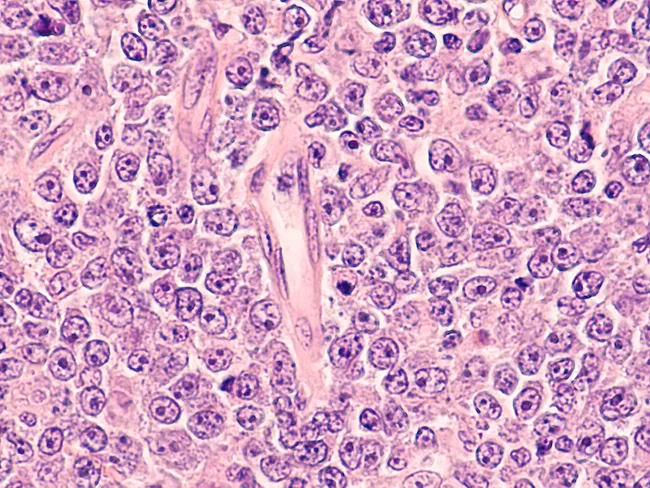
Seven deaths and five respiratory-related, treatment-emergent adverse events in a group of 40 aged and very unwell cancer patients rang alarm bells for ADC Therapeutics SA. The company has voluntarily paused enrollment in its phase II Lotis-9 study of Zynlonta (loncastuximab tesirine-lpyl) and rituximab (Lonca-R) for treating previously untreated diffuse large B-cell lymphoma in those who are considered frail or unfit.
Curocell Inc. is inching closer to realizing Korea’s first domestically developed CAR T therapy, presenting “encouraging” interim phase II trial results for anbalcabtagene-autoleucel at the International Conference on Malignant Lymphoma in Lugano, Switzerland.
Patients with an aggressive form of lymphoma who have failed prior therapies now have a new option for treatment with the U.S. FDA’s accelerated approval of Columvi (glofitamab-gxbm), which was granted under priority review a few weeks ahead of the July 1 PDUFA date.
Chia Tai Tianqing Pharmaceutical Group Co. Ltd. has identified proteolysis targeting chimeras (PROTACs) comprising cereblon (CRBN) ligands coupled to a Bruton tyrosine kinase (BTK) targeting moiety via linker and thus acting as BTK degradation inducers.
Ubix Therapeutics Inc. has identified proteolysis targeting chimeras (PROTACs) comprising cereblon (CRBN) ligands coupled to a Bruton tyrosine kinase (BTK) targeting moiety via linker acting as BTK degradation inducers reported to be useful for the treatment of cancer and autoimmune disease.
Five months after the first anti-CD20xCD3 T-cell engaging bispecific antibody, Roche Holding AG’s Lunsumio (mosunetuzumab), cleared U.S. FDA approval for follicular lymphoma, partners Genmab A/S and Abbvie Inc. won the agency’s approval for epcoritamab as the first subcutaneous CD20xCD3 bispecific antibody for treating diffuse large B-cell lymphoma.
Jiangsu Chia Tai Tianqing Pharmaceutical Group Co. Ltd. has divulged exportin-1 (CRM1; XPO1) receptor antagonists reported to be useful for the treatment of lymphoma and leukemia.
Researchers from Abbvie Inc. recently presented the discovery and preclinical evaluation of a novel CD19-targeting glucocorticoid receptor modulator (GRM) agonist antibody-drug conjugate (ADC), ABBV-319, being developed for the treatment of B-cell malignancies.
Diffuse large B-cell lymphomas (DLBCL) with mutations in B-cell translocation gene 1 (BTG1) present poor outcomes and extensive dissemination. Missense mutations of BTG1 are specific to germinal center-derived B cell lymphomas, which suggests an oncogenic function that depends on the specific cellular context. In a recent study published in Science, researchers from Weill Cornell Medicine and collaborators investigated how BTG1 mutations further contribute to the pathogenesis of these tumors.
Previous research has demonstrated that overexpression or gain-of-function mutations of enhancer of zeste homolog 2 (EZH2) are significantly associated with tumor cell proliferation of a number of cancers.