Laboratory Corp. of America Holdings introduced a glial fibrillary acidic protein blood-based test available commercially in the U.S. for the early detection of neurodegenerative diseases and brain injuries. The test, which the company said was the first of its kind, is designed to assess the presence and progression of Alzheimer’s disease, multiple sclerosis, glioblastoma and traumatic brain injury.
With high hopes for its LPA1R antagonist program, Contineum Therapeutics Inc. has priced an IPO of 6.9 million shares of its class A common stock at $16 per share as it seeks to generate $110 million in gross proceeds. The San Diego-based company began trading on Nasdaq under the ticker CTNM on April 5, with shares ending the day at $15.40, down 3.8%. There have been nine other biopharma IPOs so far in 2024.
Acorda Therapeutics Inc. has filed for bankruptcy and agreed to sell its assets, including rights to its three commercialized drugs, to German biopharma Merz Therapeutics GmbH for $185 million. Palo Alto, Calif.-based Eiger Biopharmaceuticals Inc. also filed for bankruptcy.
Analysis of the immune signatures of blood samples from patients with early-stage multiple sclerosis (MS) who were treatment naive has identified three distinct subtypes that have different disease trajectories and which respond differently to therapy.
The activation of the NLRP3 inflammasome exacerbates neuronal dysfunction in several neurological diseases such as Alzheimer’s and Parkinson’s diseases, as well as multiple sclerosis. Targeting NLRP3 is an approach to overcome brain inflammation, among others.
Intermittent fasting (IF) consists of fasting and refeeding cycles that cause dramatic changes in the gut microbiome and microbiota-derived metabolites, subsequently affecting immune response.
Patients with multiple sclerosis have an increased prevalence of sleep disorders compared to the general population, with an estimated rate ranging from 25% to 50% and negative impacts on quality of life.
Semaphorin 3A signaling, through the plexin A1/neuropilin 1 (PLXA1/NRP1) receptor complex, is known to disrupt the differentiation and migration of oligodendrocyte precursor cells and mature remyelinating oligodendrocytes. Both semaphorin 3A and plexin A1 are up-regulated in the central nervous system of patients with multiple sclerosis.
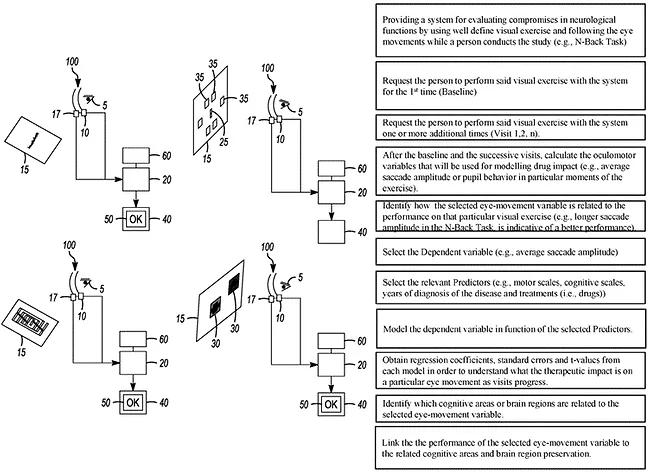
New York-based Viewmind Inc. has applied for patent protection of methods and systems for detecting neurological disorders and/or measuring, fine-motor skills, processing speed, decision making, and cognitive processes by measuring eye movements, oculomotor features and pupil behavior.