CEO Samantha Singer said Abata Therapeutics Inc. “spent a considerable amount of time finding the right indication” for its approach, which deploys autologous regulatory T cells (Tregs) made to express T-cell receptors (TCRs). That disease is progressive, non-relapsing multiple sclerosis (MS). “We’re going to be able to succeed with these patients where other options have failed,” she told BioWorld.
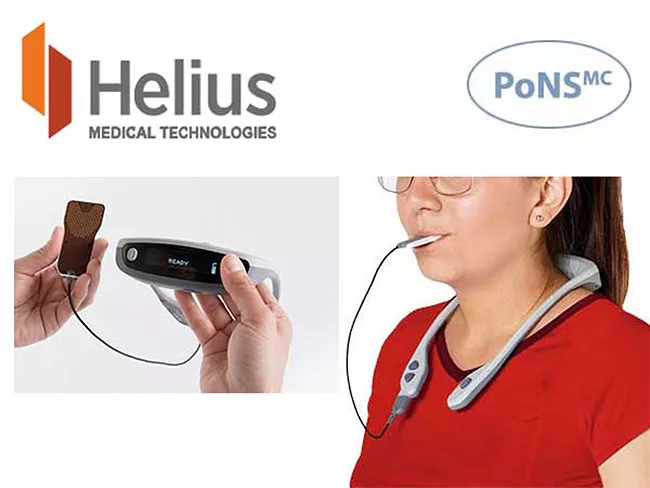
The FDA authorized marketing of the Portable Neuromodulation Stimulator (Pons) for short-term treatment of gait issues arising from mild to moderate symptoms associated with multiple sclerosis (MS) through its de novo pathway. Helius Medical Inc., a subsidiary of Helius Medical Technologies Inc., makes the non-implantable neuromuscular tongue stimulator.
Now that Johnson & Johnson (J&J), through its Janssen Pharmaceuticals unit, has won the FDA’s nod for Ponvory (ponesimod), market factors will decide how the once-daily oral selective sphingosine-1-phosphate receptor 1 modulator fares against several others already approved in the class.
As it waits on initial data from its two lead programs, in sensorineural hearing loss and multiple sclerosis, Pipeline Therapeutics Inc. raised $80 million in a series C crossover round to progress its pipeline of small-molecule drugs for neuroregeneration and to position it for a potential IPO.
Osmotica Pharmaceuticals plc’s amendment earlier this month to the NDA for arbaclofen in spasticity resulting from multiple sclerosis wasn’t enough to quell the concerns of the FDA, which smacked the firm with its second complete response letter (CRL).
Both phase III studies of ublituximab, an anti-CD20 monoclonal antibody from TG Therapeutics Inc., of New York, met their primary endpoints of significantly reducing the annualized relapse rate in multiple sclerosis (MS) patients. Company stock (NASDAQ:TGTX) received a solid bump Dec. 10 as shares closed 40.85% higher at $41.72. T
Israeli cell therapy specialist Neurogenesis Ltd., said new phase II data has shown that treatment with its autologous cell therapy candidate NG-01 in progressive multiple sclerosis (MS) patients led to an 80% to 90% reduction in disease progression at 12 months compared to a pretreatment period and a 90% reduction in relapses compared to placebo-treated patients.
With a Nov. 6 FDA adcom meeting on Biogen Inc.'s Alzheimer's candidate, aducanumab, creeping ever closer, the candidate's prospects stole the show in its third-quarter earnings report, even outshining attention to the cloud of generics raining on the company's years-long Tecfidera (dimethyl fumarate) parade. FDA acceptance for aducanumab's BLA lines the candidate up for a priority review and regulatory action by March 7, the company said. Furthermore, global progress remains underway, with an EU marketing application now made and one in Japan on deck.
Belong.Life has expanded its digital clinical trial matching program to include patients with multiple sclerosis (MS). The technology uses advanced artificial intelligence (AI) that processes a patient's medical data and determines which trials in its global database are appropriate. The app typically returns results, which are prescreened by a clinical trial coordinator, in less than two days. More than 8,000 cancer patients have used the program so far.
As with many conferences, the Cleveland Clinic’s 2020 Medical Innovation Summit went virtual this year. Still, the event featured the hotly anticipated top 10 list of innovations for 2021 that saw a range of therapies. Ranked in order of expected importance, the list was led by gene therapy for hemoglobinopathies. The top three innovations, including a novel drug for primary-progressive multiple sclerosis and smartphone-connected pacemaker devices, were highlighted in a special presentation.