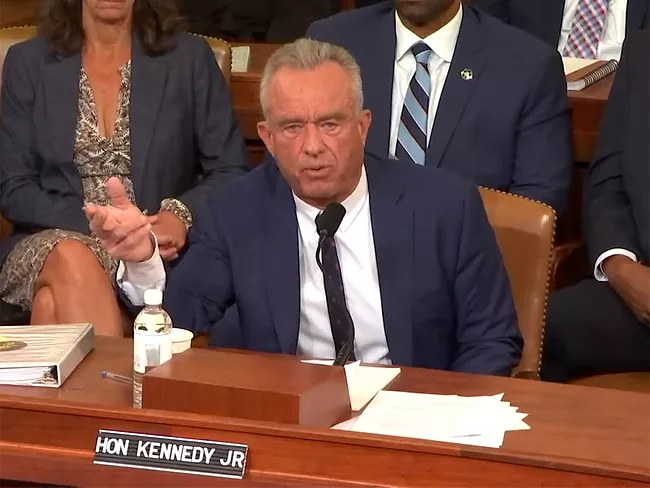
The U.S. Department of Health and Human Services (HHS) has appealed a recent federal ruling that put on hold several changes to the childhood vaccine schedule and the Advisory Committee on Immunization Practices as reconstituted by HHS Secretary Robert Kennedy.
U.S. Health and Human Services (HHS) Secretary Robert Kennedy made his first stop April 16 on a congressional tour in support of President Donald Trump’s proposed fiscal 2027 budget, which would reduce discretional spending for HHS and its agencies by about 12%.
South Korea is rolling out regulatory changes to speed biosimilar development, including reforms to shorten review timelines, ease phase III trial requirements and simplify oversight of manufacturing changes.
With all the focus of late on the U.S. CDC’s Advisory Committee on Immunization Practices (ACIP), the FDA’s 30-plus advisory committees have been flying under the radar, especially since many of them haven’t met for a few years now.
Chaos continues at the U.S. CDC and its Advisory Committee on Immunization Practices (ACIP) with the resignation of ACIP member Robert Malone and the impending deadline for the president to nominate a new CDC director following the dramatic exit last year of Susan Monarez and months of acting directors.
A member of the CDC’s Advisory Committee on Immunization Practices (ACIP), physician and biochemist Robert Malone, who a judge earlier this week suggested lacked vaccine-related experience, wrote March 19 on X that the committee “has been disbanded.” Nearly six hours later, he followed up, saying it was a “miscommunication.”
The good news is that the U.S. Congress is on track to pass a slate of fiscal 2026 spending bills before the current continuing resolution expires Jan. 30. So, barring any last-minute disputes or legislative hostage-taking, there should be no repeat of last year’s 43-day shutdown that impacted NIH grants and activities.
The chaos Health and Human Services Secretary Robert Kennedy has injected into the U.S. vaccine market could have long-term consequences as vaccine makers reevaluate business decisions and pipelines.
A federal judge in Maine has put the brakes on a pilot program that would have enabled biopharma companies to offer rebates instead of up-front discounts as part of the 340B program beginning Jan. 1, 2026.