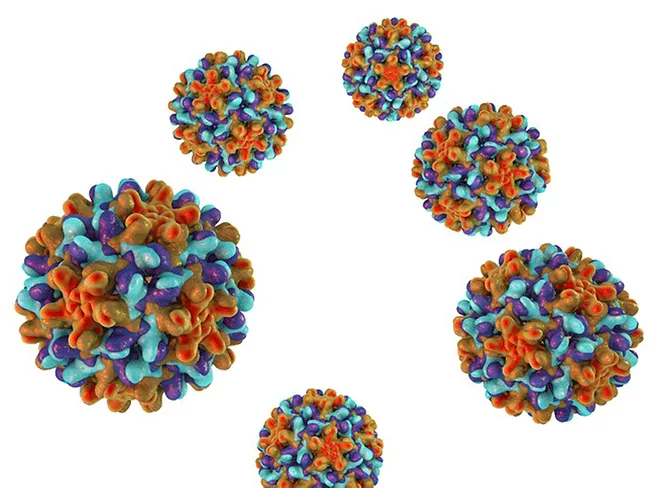
Enanta Pharmaceuticals Inc. has disclosed new fused heterobicyclic derivatives reported to be useful for the treatment of hepatitis B virus (HBV) and hepatitis D virus (HDV) infections.
Astrivax NV has been awarded a €3 million grant by Flanders Innovation & Entrepreneurship (VLAIO) to advance development of the company’s therapeutic vaccine targeting chronic hepatitis B.
LW-231, under development by Shanghai Longwood Biopharmaceuticals Co. Ltd., is a novel bifunctional molecule designed to simultaneously modulate hepatitis B virus (HBV) capsid assembly and activate cGAS-STING pathway. Preclinical data were recently presented.
Researchers from Weifang Medical University and affiliated organizations have published details on the discovery of novel hepatitis B virus (HBV) capsid assembly modulators (CAMs).
Researchers from Ipsen Ltd. and affiliated organizations presented the discovery and preclinical characterization of a novel NTCP inhibitor, A-7387, being developed for the treatment of HBV and HDV infections.
Researchers from Aligos Therapeutics Inc. presented preclinical data for ALG-001075, a novel capsid assembly modulator leading to the formation of empty capsids (CAM-E), being developed for the treatment of hepatitis B.
Aligos Therapeutics Inc. has divulged bicyclic compounds acting as viral replication inhibitors reported to be useful for the treatment of hepatitis B (HBV) and hepatitis D virus infections.
Researchers from Aligos Therapeutics Inc. have presented the discovery and preclinical evaluation of a novel next-generation liver targeted PD-L1 small molecule inhibitor, ALG-094103, which is being developed for the treatment of chronic hepatitis B and liver cancer.
It’s known that interferon-alpha (IFNα) activates interferon-stimulated genes (ISGs) and disrupts the hepatitis B virus (HBV) replication cycle. Pegylated (PEG)-IFNα has been widely used for its immunomodulatory and antiviral properties but it is not always well tolerated and thus its use is limited.