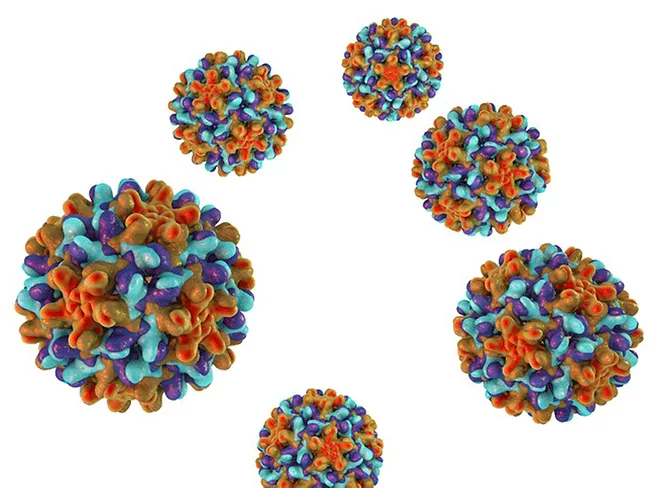
Qilu Pharmaceutical Co. Ltd. licensed rights to AB-729, an RNA interference (RNAi) therapeutic from Arbutus Biopharma Corp., in a deal worth up to $300 million. Qilu obtained rights to develop and commercialize the phase II asset for the treatment of hepatitis B (HBV) in mainland China, Hong Kong, Macau, and Taiwan. Under terms of the agreement, Qilu will pay Arbutus $40 million up front, as well as up to $245 million in development, regulatory and sales milestones. In addition, Qilu will make a $15 million equity investment in Arbutus at a price of $4.19 per share.
Pricing of VBI Vaccines Inc.’s just-approved hepatitis B virus (HBV) vaccine, Prehevbrio, won’t be known before launch in the first quarter of next year, but CEO Jeff Baxter said the company will take into account that the sector is “one of the most price-intensive and price-competitive. A lot of the market-access research says that the wholesale acquisition cost is one of the key determinants” in avoiding sluggish adoption, he said, so that by staying moderate the firm can “supply [its] product on a much quicker basis than you might do, say, if you went with a 30% or 40% premium to standard of care.”
Alphamab Oncology Co. Ltd. has won conditional marketing approval from China’s NMPA for KN-035 (envafolimab), the world’s first PD-1/PD-L1 antibody to be administered by subcutaneous injection. The drug was cleared for use in treating adult patients with advanced solid tumors who have unresectable or metastatic advanced microsatellite instability-high phenotype/mismatch-repair deficiency. That includes patients with advanced colorectal cancer who have experienced disease progression after previous therapy with fluorouracil, oxaliplatin and irinotecan.
The FDA has issued new risk classification orders for two series of products, including in vitro diagnostics for hepatitis C, two of which the agency down-regulated from class III to class II. However, blood lancets for multiple uses on more than one patient has been elevated from class I to class III, a change that has no impact on any products currently available on the U.S. market.
Aligos Belgium presented research on ALG-005398, a first representative of a series of non-heteroaryldihydropyrimidines (HAPs) class I capsid-assembly modulators, that was identified using structure-based drug design and scaffold hopping.
Ascletis Pharma Inc. has obtained the global development and commercialization right for ASC-22 (envafolimab) outside greater China from Suzhou-based Alphamab Oncology Co. Ltd. to treat viral diseases including hepatitis B.
Antios Therapeutics Inc. followed up its $96 million series B financing in April with another $75 million series B-1 round that reflects faith in the potential of lead candidate ATI-2173, bound for phase IIb investigation as the backbone of a once-daily, curative regimen in chronic hepatitis B virus (HBV) infection.
If there is one thing that potently illustrates the hope and despair of the COVID-19 pandemic, it is the zigzag of BioWorld’s Infectious Disease Index. Up by nearly 64%, it is towering over both the Nasdaq Biotechnology Index and the Dow Jones Industrial Average, which are up 12.4% and 15.5%, respectively, but it has experienced several downward swings this year as well.
After seeing elevated alanine transaminase (ALT) levels consistent with drug-induced hepatotoxicity in its phase II study of ABI-H2158, Assembly Biosciences Inc. decided to discontinue development of the chronic hepatitis B virus (HBV) infection therapy.
Brii Biosciences Ltd. raised HK$2.482 billion (US$319 million) in its IPO in Hong Kong and will use the proceeds to support the development of its key assets, which includes programs for hepatitis B virus (HBV), HIV and drug-resistant infections.