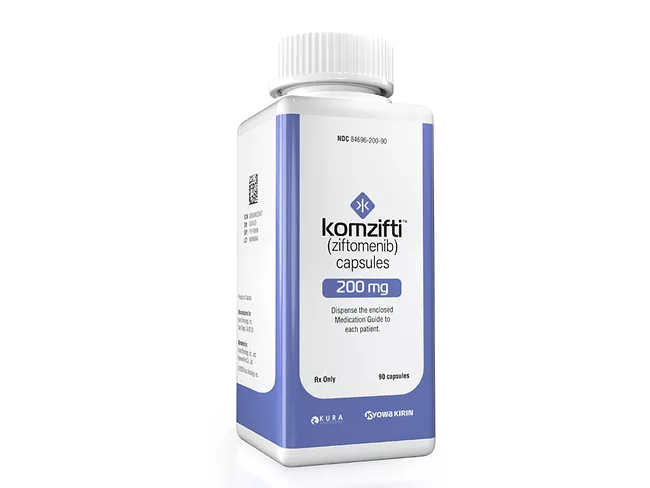
The U.S. FDA gave the thumbs up to Kura Oncology Inc./Kyowa Kirin Co. Ltd.’s selective oral menin inhibitor, ziftomenib, to treat relapsed, refractory (r/r) nucleophosmin1 (NMP1)-mutant acute myeloid leukemia (AML). The approval of the drug, branded Komzifti, came more than two weeks ahead of the Nov. 30 PDUFA date.
The Schlafen (SLFN) family of interferon-inducible genes, involved in the regulation of immune and antiviral responses, has recently attracted attention for the development of novel anticancer therapies.
Leukogene Therapeutics Inc.’s lead product candidate LTI-214 (M2T-CD33) has been awarded orphan drug designation by the FDA for the treatment of acute myeloid leukemia (AML).
Ipsen SA is expanding its cancer portfolio with the €1 billion (US$1.16 billion) acquisition of immuno-oncology specialist Imcheck SAS, and will pay €350 million up front with the balance to come in regulatory and sales-based milestones for the lead program ICT-01.
Amphista Therapeutics Ltd. has nominated AMX-883, a selective and orally bioavailable degrader of BRD9, as its first clinical development candidate. AMX-883 is being advanced for the treatment of acute myeloid leukemia (AML), with an IND application planned for early next year.
N6-methyladenosine (m6A) modification, mainly controlled by the m6A methyltransferase METTL3, is crucial for RNA regulation and the development of leukemia. However, how METTL3 stability and function are regulated after translation is not fully understood. Since O-GlcNAcylation commonly modifies nuclear and cytosolic proteins, researchers have hypothesized that METTL3 may be O-GlcNAcylated, affecting its stability and oncogenic activity in myeloid malignancies.
FMS-like tyrosine kinase 3 (FLT3) mutations, particularly internal tandem duplications and point mutations in the tyrosine kinase domain, are frequently observed in acute myeloid leukemia (AML) and contribute to disease progression and poor prognosis.
Acute myeloid leukemia (AML) is an aggressive blood cancer with poor clinical outcomes and high mortality rates, primarily driven by drug resistance and relapse. Increasing evidence has confirmed dysregulated cellular metabolism as a tumor hallmark with crucial roles in tumor growth, progression and drug resistance.
Several South Korean biotech and biopharmaceutical companies completed IND submissions or won nods to start clinical trials in either the U.S. or South Korea, including SK Bioscience Co. Ltd., Genosco Inc., Pimedbio Inc., Sillajen Inc. and Ami Pharm Co. Ltd.



.webp?height=488&t=1670008838&width=650 "Acute myeloid leukemia")