N6-methyladenosine (m6A) modification, mainly controlled by the m6A methyltransferase METTL3, is crucial for RNA regulation and the development of leukemia. However, how METTL3 stability and function are regulated after translation is not fully understood. Since O-GlcNAcylation commonly modifies nuclear and cytosolic proteins, researchers have hypothesized that METTL3 may be O-GlcNAcylated, affecting its stability and oncogenic activity in myeloid malignancies.
FMS-like tyrosine kinase 3 (FLT3) mutations, particularly internal tandem duplications and point mutations in the tyrosine kinase domain, are frequently observed in acute myeloid leukemia (AML) and contribute to disease progression and poor prognosis.
Acute myeloid leukemia (AML) is an aggressive blood cancer with poor clinical outcomes and high mortality rates, primarily driven by drug resistance and relapse. Increasing evidence has confirmed dysregulated cellular metabolism as a tumor hallmark with crucial roles in tumor growth, progression and drug resistance.
Several South Korean biotech and biopharmaceutical companies completed IND submissions or won nods to start clinical trials in either the U.S. or South Korea, including SK Bioscience Co. Ltd., Genosco Inc., Pimedbio Inc., Sillajen Inc. and Ami Pharm Co. Ltd.
Several South Korean biotech and biopharmaceutical companies completed IND submissions or won nods to start clinical trials in either the U.S. or South Korea, including SK Bioscience Co. Ltd., Genosco Inc., Pimedbio Inc., Sillajen Inc. and Ami Pharm Co. Ltd.
Charm Therapeutics Ltd. is heading to the clinic after closing an oversubscribed series B, which will fund initial development of a menin inhibitor that is AI-designed to circumvent shortcomings of first-generation molecules.
Charm Therapeutics Ltd. has closed an oversubscribed series B funding round, raising $80 million to advance its next-generation menin inhibitor into clinical development. Current menin inhibitors show promise in acute myeloid leukemia (AML) treatment but are limited by the rapid emergence of resistance mutations that cause treatment failure.
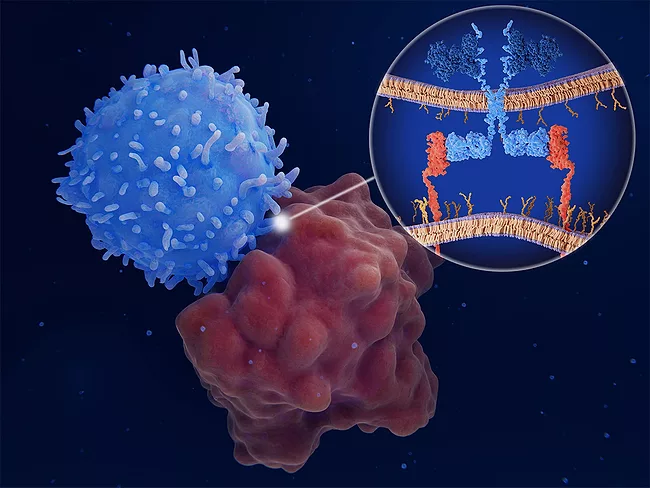
CAR T-cell therapy works by engineering a patient’s T cells to express synthetic receptors that recognize and kill cancer cells without relying on HLA presentation. This approach has shown remarkable success in relapsed or refractory B-cell cancers and multiple myeloma, resulting in several approved treatments. However, no CAR T therapy is currently approved for acute myeloid leukemia (AML) or T-cell acute lymphoblastic leukemia (T-ALL).
In a study published recently in Cancer Immunology, Immunotherapy journal, researchers from Jiangsu Province Hospital and colleagues investigated the impact of targeting the TP53-induced glycolysis and apoptosis regulator (TIGAR) on T-cell function and antitumor immunity in acute myeloid leukemia.
Just a month after laying off 147 employees and announcing plans to mull “strategic alternatives,” Vor Biopharma Inc. reported raising $175 million in private placement in public equity financing and inking a new $4.23 billion license deal for Yantai Rongchang Biotechnologies (Remegen) Co. Ltd.’s telitacicept, a dual-target fusion protein drug approved in China for three autoimmune indications. The news was disclosed after U.S. market hours June 25. Vor’s shares (NASDAQ:VOR) gained 34 cents, or 60.5%, to close June 26 at 89 cents. The company’s shares had risen for eight consecutive trading days since June 17.





.webp?height=488&t=1670008838&width=650 "Acute myeloid leukemia")
