China’s Genor Biopharma Co. Ltd. agreed to out-license GB-261, its bispecific antibody candidate primarily targeting B-cell lymphomas, to TRC 2004 Inc., a U.S.-based newco co-founded by Third Rock Ventures LLC and Two River Group Holdings LLC.
Scientists from Abbvie Inc. and the Department of Lymphoma and Myeloma, University of Texas MD Anderson Cancer Center have discovered a new allosteric MALT1 inhibitor, ABBV-MALT1, for the treatment of certain types of diffuse large B-cell lymphoma (DLBCL).
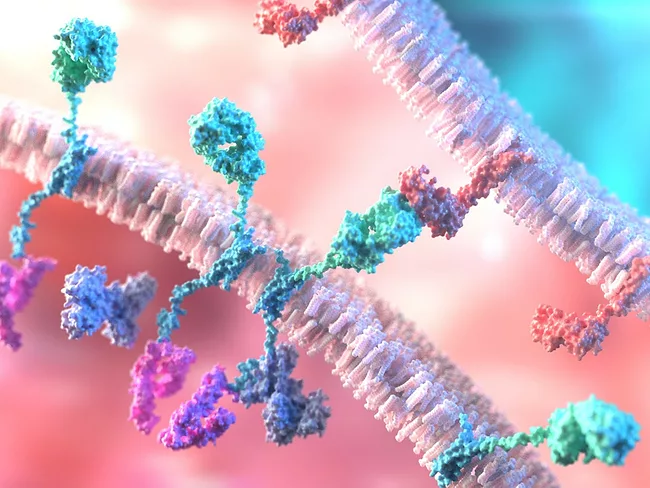
Bispecific CD20×CD3 T-cell engagers have shown efficacy in hematological malignancies; however, associated toxicities such as cytokine release syndrome and immune effector-associated neurotoxicity syndrome limit their use.
Acepodia Inc.’s antibody cell conjugation platform could change the way CAR T-cell therapies are manufactured, clearing the way for an off-the-shelf model to treat numerous cancers that is safer and cheaper than current CAR Ts, Acepodia CEO Sonny Hsiao told BioWorld.
Acepodia Inc.’s antibody cell conjugation platform could change the way CAR T-cell therapies are manufactured, clearing the way for an off-the-shelf model to treat numerous cancers that is safer and cheaper than current CAR Ts, Acepodia CEO Sonny Hsiao told BioWorld.
Researchers at Washington University School of Medicine in St. Louis have received a $5 million grant from the Leukemia & Lymphoma Society (LLS) to support research aimed at developing new immunotherapies for different types of blood-based cancers.
Triarm Therapeutics Ltd. is on a mission to democratize CAR T therapies to make them more accessible and affordable, Triarm CEO Jay Zhang told BioWorld. “Nearly half of the patients eligible for CAR T therapies still cannot get treated, and the main reason is the expense, and the second is they cannot afford to wait.
Triarm Therapeutics Ltd. is on a mission to democratize CAR T therapies to make them more accessible and affordable, Triarm CEO Jay Zhang told BioWorld. “Nearly half of the patients eligible for CAR T therapies still cannot get treated, and the main reason is the expense, and the second is they cannot afford to wait.
Bruton tyrosine kinase (BTK) enzyme inhibitors used to treat B-cell cancers, including chronic lymphocytic leukemia and non-Hodgkin lymphoma, also produce resistance by causing mutations in the protein. Now, a study on the BTK degrader NX-2127 showed the compound could be effective in eliminating BTK regardless of its mutations.