Numares Health AG received $21.2 million from the European Investment Bank (EIB) in support to its automated and software based IVD platform for obtaining high-quality nuclear magnetic resonance metabolomics data from blood or urine biopsy samples.
Enhanc3D Genomics Ltd. has raised £10 million (US$11.3 million) in a series A round to advance development of its Genlink3D technology for directly linking gene regulators in non-coding DNA to their target protein coding genes.
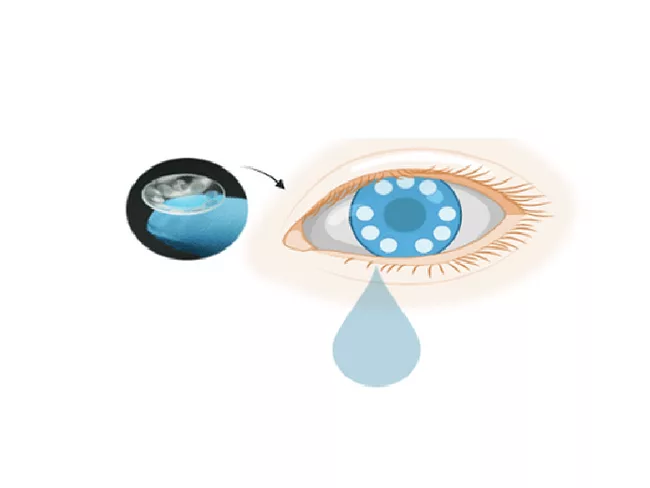
Researchers from the Terasaki Institute for Biomedical Innovation (TIBI) in Los Angeles are developing a contact lens that can capture and detect exosomes. These are nanometer-sized vesicles found in bodily secretions which have the potential to be diagnostic cancer biomarkers. The team published its work and findings in August 2022 in Advanced Functional Materials.
Tears shed today by patients frustrated by an inability to obtain a diagnosis could speed diagnoses for others in the future. Researchers at Wenzhou Medical University, China, have developed a new nano membrane system, dubbed I-Tears, that harvests and purifies tiny droplets called exosomes from tears, allowing rapid analysis for disease biomarkers.
The U.S. FDA has granted 510(k) clearance to a blood-based biomarker assay for disease monitoring of patients with metastatic breast cancer (MBC). The Divitum Tka assay, developed by Uppsala, Sweden-based Biovica International AB, measures the activity of the enzyme thymidine kinase-1 (TK1) which is highly associated with cell proliferation and a predictive marker of tumor aggressiveness. It is the first liquid cancer cell proliferation biomarker assay to be approved by the FDA for use in monitoring metastatic breast cancer.
Prognomiq Inc. secured access to 800,000 anonymized biological samples for analysis and detection of dynamic cancer biomarkers as part of a new partnership struck with Kahn-Sagol-Maccabi (KSM), the research and innovation center of Maccabi Healthcare Services, Israel’s largest health maintenance organization. The partnership will enable the creation of a biomarker platform the organizations hope will facilitate early diagnosis and improved outcomes for cancer patients using Prognomiq’s multiomics platform.
Bipolar disorder (BPD) is disabling, destructive and notoriously difficult to diagnose. Research indicates that up to 40% of patients diagnosed with major depressive disorder or unipolar depression actually have BPD and treating them with antidepressants alone runs an elevated risk of worsening their condition. But the issue is not one-sided: other studies found that 30% to 60% of patients diagnosed with BPD do not meet the clinical criteria for the illness and may be taking powerful mood stabilizers needlessly while failing to receive potentially beneficial therapies.
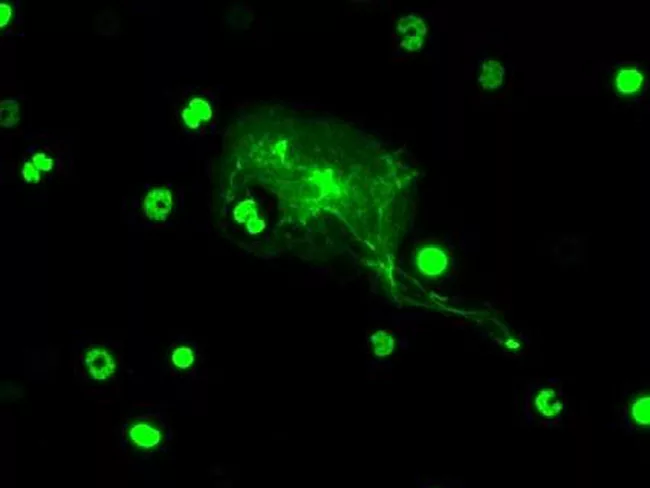
Volitionrx Ltd. won the CE mark for its Nu.Q NETs test for the detection, evaluation and management of NETosis, a type of cell death characterized by the release of neutrophil extracellular traps, or NETs. The test – the first biomarker approved for the measurement of NETs for patient management – will soon be available for clinical use across the E.U.’s 27 member states.
Metabolic health platform Ultrahuman Healthcare Ltd. has acquired consumer wearable company Lazy Design Pvt Ltd. India (known as Lazyco) to expand the biomarkers complementing its current wearable, the Ultrahuman M1.
A research team from the Grenoble Institute for Neuroscience (GIN) recently discovered a blood biomarker capable of detecting the onset of Parkinson's disease (PD) from a very early stage. This discovery represents the findings of a multi-model, translational study published in the Journal of Clinical Investigation.