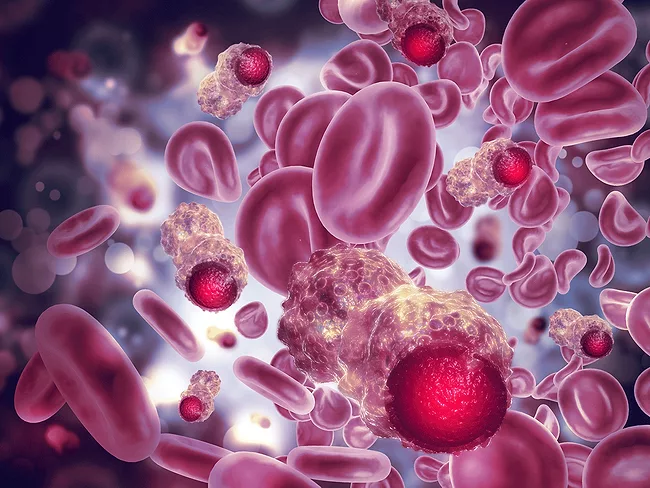
Hematopoietic stem cell research over the past century has shown that leukemia may be driven by an invisible hand of inflammation. The bone marrow and inflammation, then, may hold the keys to preventing blood cancers, according to John E. Dick’s plenary session at the 2026 Korean Society of Hematology International Conference, held March 26, 2026.
Hematopoietic stem cell research over the past century has shown that leukemia may be driven by an invisible hand of inflammation. The bone marrow and inflammation, then, may hold the keys to preventing blood cancers, according to John E. Dick’s plenary session at the 2026 Korean Society of Hematology International Conference, held March 26, 2026.
Hematopoietic stem cell (HSC) research over the past century has shown that leukemia may be driven by an invisible hand of inflammation. The bone marrow and inflammation, then, may hold the keys to preventing blood cancers, according to John E. Dick’s plenary session at the 2026 Korean Society of Hematology International Conference (ICKSH 2026), held March 26, 2026. Work in Dick’s lab has found acute myeloid leukemia (AML) HSCs that harbor preleukemic mutations long before any disease diagnosis. These insights have enabled predictive models that could identify individuals at elevated AML risk years before the onset of outright disease, opening the door to new prevention strategies.
Omeros Corp. has successfully completed its initial study in nonhuman primates evaluating the efficacy and safety of its Oncotox-AML cancer therapeutic platform for acute myeloid leukemia (AML). Oncotox-AML is an engineered biologic designed to selectively kill both AML blasts and relapse-related leukemia stem cells.
Venetoclax has shown good results for adult acute myeloid leukemia (AML) in combination with azacitidine, but there is increasing evidence of inherent and acquired resistance. High expression of nicotinamide phosphoribosyltransferase (NAMPT) has been associated with cancer aggressiveness and poor prognosis due to increased nicotinamide metabolism.
Sumitomo Pharma Co. Ltd. is developing the Menin (MEN1)-myeloid/lymphoid or mixed-lineage leukemia (MLL) interaction inhibitor DSP-5336 (enzomenib) for the treatment of MLL-rearranged acute myeloid leukemia.
Apollo Therapeutics Ltd. has developed APL-4098, a small-molecule general control nonderepressible 2 (GCN2) inhibitor for the potential treatment of AML.
ENL-YEATS is an epigenetic reader that sustains transcriptional programs essential for AML, whereas FLT3 mutations, present in approximately 30% of patients, drive malignant proliferation. Dual inhibition of ENL-YEATS and FLT3 may therefore more effectively disrupt complementary drivers of leukemogenesis than FLT3 targeting alone.