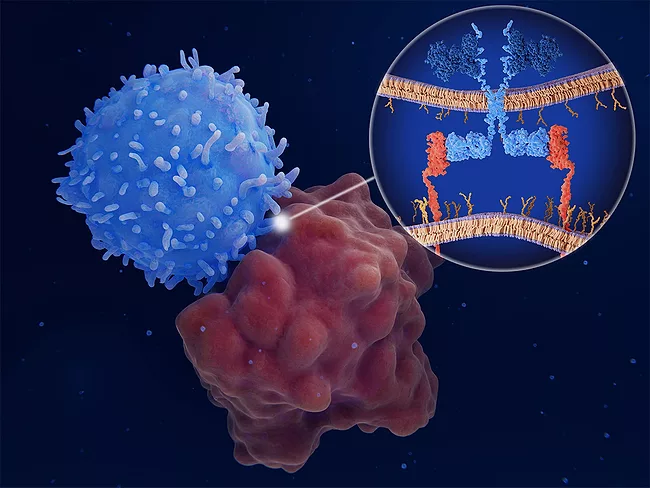
MYB is a transcription factor essential for cell proliferation and differentiation, and is regarded as a target for cancer therapy because it is overexpressed in many different tumor types such as adenoid cystic carcinoma (ACC), acute myeloid leukemia (AML) or T-cell acute lymphoblastic leukemia, among others.
Researchers from Zhejiang University and affiliated organizations have reported the discovery of novel orally bioavailable bromodomain-containing protein 9 (BRD9) proteolysis-targeting chimera (PROTAC) candidates for the treatment of acute myelocytic leukemia (AML). Synthesis and optimization led to the discovery of a novel series of BRD9 PROTACs, with compound [I] selected as the lead candidate with the best degradation and proliferation inhibition activities in vitro.
CD33 is known to be highly expressed in myeloid cells and a good therapeutic target for treating acute myeloid leukemia (AML). In the search for more potent compounds, researchers from Dragonfly Therapeutics Inc. and Bristol Myers Squibb Inc. investigated the therapeutic potential of BMS-986357, also known as CC-96191.
Wall Street will be watching closely for such adverse effects as anemia that foiled Gilead Sciences Inc.’s CD47-binding magrolimab earlier this year, but so far Shattuck Labs Inc.’s SL-172154 looks strong in combination with azacitidine to treat front-line higher-risk myelodysplastic syndrome (HR-MDS) and TP53-mutant (TP53m) acute myeloid leukemia (AML).
High expression of CD123, the IL-3 receptor α chain (IL-3α), is observed on both leukemic blasts and leukemic stem cells, thus suggesting it can be considered an attractive therapeutic target in AML.
Katy Rezvani received this year’s E. Donnall Thomas Prize for her work on natural killer (NK) cells at the annual meeting of the American Society of Hematology (ASH). It was not love at first sight, though.
In work conducted at China Pharmaceutical University, synthesis and optimization of a new series of cyclin-dependent kinase 9 (CDK9) inhibitors bearing a flavonoid scaffold led to the identification of compound [I] as the lead candidate, with IC50 of 6.7 nM for CDK9 and >80-fold selectivity over CDK2 and most other CDK family members.
Caribou Biosciences Inc. has received FDA clearance of its IND application for CB-012, an allogeneic anti-C-type lectin-like molecule-1 (anti-CLL-1) chimeric antigen receptor (CAR) T-cell therapy. CLL-1 is highly expressed on acute myeloid leukemia (AML) cells and leukemic stem cells, but it is not expressed on hematopoietic stem cells.
Chengdu Easton Biopharmaceuticals Co. Ltd. has synthesized aminopyridine derivatives acting as CDK9/cyclin T1 inhibitors reported to be useful for the treatment of cancer.



.webp?height=488&t=1670008838&width=650 "Acute myeloid leukemia")