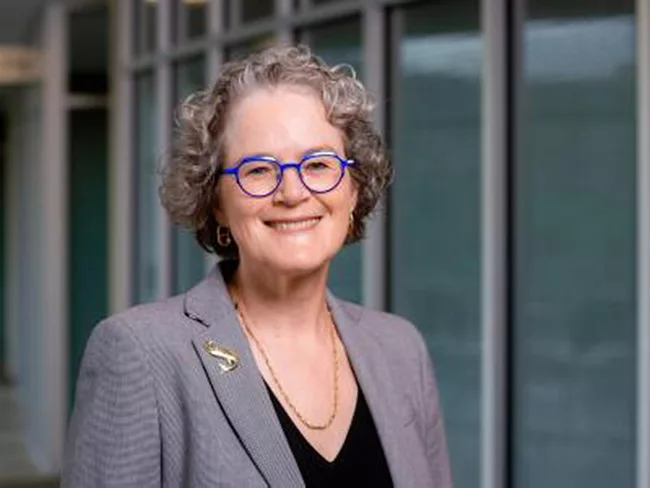
After nearly two years with an unconfirmed acting director at its helm, the U.S. NIH is one step closer to finally having Senate-confirmed leadership to steer the agency in a time pressed with political agendas, pandemic concerns and the potential for what could be life-altering innovations. The Senate Health, Education, Labor and Pensions (HELP) Committee voted 15-6 Oct. 25 to favorably report Monica Bertagnolli’s nomination to the full Senate for a confirmation vote as the next NIH director.
U.S. Sen. Bernie Sanders (I-Vt.) is calling for an investigation into the NIH’s proposed grant of an exclusive patent license for a late-stage cervical cancer drug to a small company linked to a former NIH researcher.
A week before the U.S. Senate Health, Education, Labor and Pensions Committee is scheduled to vote on the confirmation of Monica Bertagnolli as the next NIH director, she faced a grilling by the committee fueled by drug pricing agendas and deals the Biden administration made with certain lawmakers to advance her nomination.
A recent bipartisan request for funding of a study on replacing U.S. drug patents with cash prizes is just one more symptom of a larger global malady that makes patents the scapegoat for bigger problems that have nothing to do with intellectual property (IP), David Kappos, board co-chair of the Council for Innovation Promotion (C4IP), told BioWorld.
A recent bipartisan request for funding of a study on replacing U.S. drug patents with cash prizes is just one more symptom of a larger global malady that makes patents the scapegoat for bigger problems that have nothing to do with intellectual property (IP), David Kappos, board co-chair of the Council for Innovation Promotion (C4IP), told BioWorld.
While U.S. politics continues to delay Senate confirmation of the NIH director, other crucial positions at the agency that don’t require Senate action are being filled. Acting NIH Director Lawrence Tabak announced Aug. 2 that he has named Jeanne Marrazzo as director of the agency’s National Institute of Allergy and Infectious Diseases (NIAID).
While U.S. politics continues to delay Senate confirmation of the NIH director, other crucial positions at the agency that don’t require Senate action are being filled. Acting NIH Director Lawrence Tabak announced Aug. 2 that he has named Jeanne Marrazzo as director of the agency’s National Institute of Allergy and Infectious Diseases (NIAID).
A day after a U.S. House committee, on a party-line vote, advanced two bills to reauthorize emergency preparedness programs, the Senate Health, Education, Labor and Pensions (HELP) Committee voted 17-3 July 20 to send its bipartisan reauthorization of the Pandemic and All Hazards Preparedness Act to the Senate floor with a do-pass recommendation.
The counterintuitive side of preventing a health crisis prompted by antimicrobial resistance showed itself at a July 11 U.S. Senate hearing, with witnesses saying that antibiotics exist to treat current infections but they often don’t have staying power in the market.
The tension of clashing politics, policies and prescription drug pricing is coming to a head as U.S. Sen. Bernie Sanders (I-Vt.) acts on his threat to hold presidential appointments in the health arena hostage until President Joe Biden commits to do more to bring down drug prices.