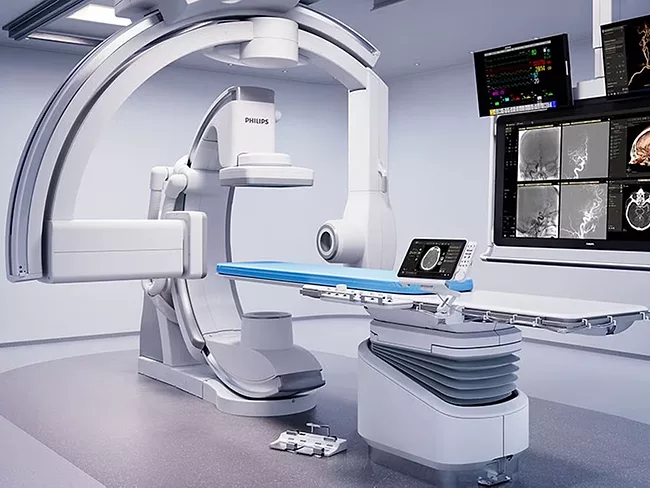
In a sign that Royal Philips NV is not letting the problems in its business in the U.S. stop its innovation, the company has launched the Azurion neuro biplane, a new image guided therapy system for patients suffering from stroke and other neurovascular diseases. It also teamed up with Syntheticmr AB and launched Smart Quant Neuro 3D, an AI imaging tool which will help health care professionals diagnose and assess brain disorders like multiple sclerosis, traumatic brain injury and dementia.
The U.S. FDA reported Feb. 15 that Philips USA, a subsidiary of Amsterdam-based Royal Philips NV, recalled three models of the Brightview line of single photon emission CT (SPECT) systems due to an incident in which the system detector fell.
Royal Philips NV recently received some good news from the U.S. FDA which cleared its latest transesophageal echocardiography (TEE) ultrasound transducer, amidst ongoing efforts with the regulatory body to address problems with its sleep business. The X11-4t Mini 3D TEE transducer is 35% smaller than previous versions and is designed to provide cardiologists with high quality 3D images of the heart and its internal structure.
Royal Philips NV agreed with the U.S. FDA to the terms of a consent decree focused on its Respironics business, following the recall of millions of its devices over the last few years. Although the details of the decree are being finalized, Philips said it will halt the sales of new continuous positive airway pressure (CPAP) and bilevel positive airway pressure (BiPAP) sleep therapy machines as well as other respiratory care devices in the U.S. until the conditions of the decree are met.
The U.S. Office of Inspector General (OIG) reported that it and Philips Respironics have come to terms over allegations that the company violated the False Claims Act (FCA) by offering free CPAP masks to operators of sleep clinics
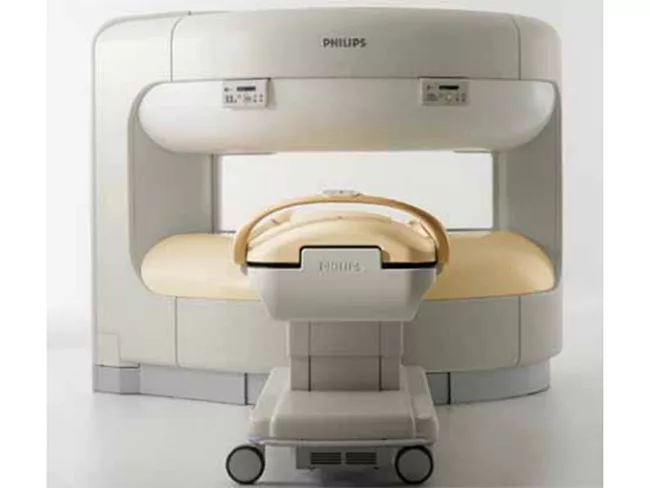
More bad news on the recall front for Royal Philips NV, as the U.S. FDA this week categorized the company’s voluntary recall of its Panorama 1.0T HFO open magnetic resonance (MR) system as a class I action. Class I recalls indicate the “use of the devices may cause serious injuries or death,” the FDA noted.
Philips Respironics Inc.’s nightmares with its Dreamstation continuous positive airway pressure (CPAP) line of products continued with a fresh warning from the U.S. FDA of reports involving thermal issues with a newer iteration of the machine, some of which cited patient injuries.
Royal Philips NV received a second round of funding from the Bill & Melinda Gates Foundation to speed adoption of artificial intelligence (AI) algorithms on the Lumify hand-held ultrasound device, bringing its total commitment to the project designed to reduce maternal mortality to $60 million.
The U.S. Centers for Medicare & Medicaid Services (CMS) has wrapped up its rulemaking for the outpatient prospective payment system (OPPS) for calendar year 2024, bringing some good news and some bad news for the medical device industry. While Philips North America came home with a new technology pass-through (NTPT) payment for its Cavaclear device, Cook Medical Inc., was less fortunate with its Echo Tip device as CMS declared that the Echo Tip did not satisfy the substantial clinical improvement criteria for transitional pass-through payment.
Quibim SL and Royal Philips NV have teamed up to utilize their artificial intelligence (AI)-enabled solutions to help clinicians deliver faster diagnosis and treatment of patients with prostate cancer. The partnership will see Philips AI-based magnetic resonance (MR) imaging technology integrated into Quibim’s AI based QP-Prostate software, to automate real-time prostate gland segmentation in MR images, and generate meaningful quantitative insights, as well as standardize MRI prostate exam reporting.