Authors of a multi-center study welcomed results from a device that works with a smartphone or tablet to capture medical images for a more detailed understanding of infected wounds. By capturing heat produced by a wound and using bacterial fluorescence, the Swift Ray 1 developed by Swift Medical Inc., may help clinicians tell the difference between inflammation and a potentially dangerous infection.
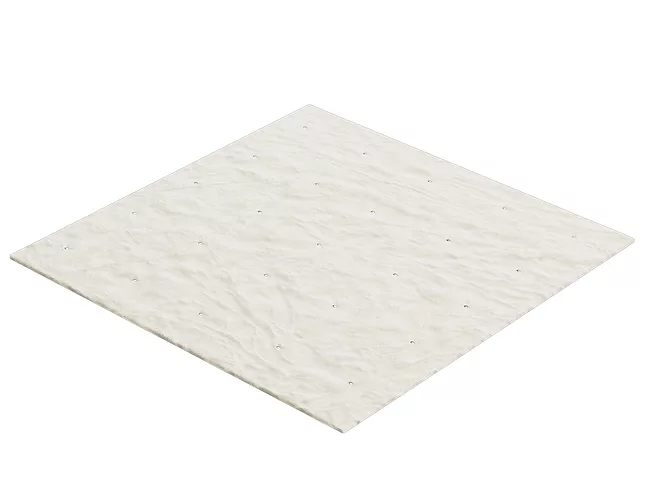
Stimlabs LLC has taken a new view of wound healing by developing a fenestrated dehydrated complete human placental membrane allograft for chronic and acute wounds. The fenestration in the Release product allows fluids to drain away from the wound, promoting faster healing, while the tissue provides protection.
Some U.S. FDA inspections go better than other ones, but the agency’s inspection of the Boston plant operated by a subsidiary of Princeton, N.J.-based Integra Lifesiences Holding Corp. was not one of those with a quick resolution. The agency said in a July 17 warning letter that Integra will have to obtain certification for the site in each of the next three years after finding considerable fault with operations, including one citation the agency said is a carryover from a warning letter issued in 2019.
The $1.83 million grant Fesarius Therapeutics Inc. was recently awarded will allow the company to work on the next generation of dermal repair products to treat complex wounds. The funds from the National Institutes of Health (NIH) will go towards further development of the company’s advanced dermal regeneration scaffold for reconstructive surgery and takes the total amount of non-dilutive grant funding Fesarius has received to develop its hydrogel technology, Dermisphere, to $4 million.
Cresilon Inc. obtained U.S. FDA clearance for a hemostatic gel that staunches the flow of blood from minor external wounds. The Cresilon hemostatic gel (CHG) is the first technology to blend polymers from the algae plant to instantaneously create a mechanical barrier against bleeding.
Coloplast A/S agreed to acquire wound care company Kerecis Ehf for up to $1.3 billion in a bid to strengthen its presence in the high-growth, U.S.-centric biologics segment. Kerecis has developed a technology which uses intact fish skin from Atlantic cod to treat chronic wounds. It has around 5% share of the U.S. biologics market.
Reddress Ltd. secured $26 million in a series D financing aimed at further advancing its autologous, point-of-care wound management solution. The funds will be used to grow uptake of its Actigraft product suite, pursue global partnerships and expand its blood-based technology to treat more conditions.
Artivion Inc. (formerly Cryolife Inc.) received U.S. FDA premarket application (PMA) approval of its Perclot absorbable hemostatic system and promptly sold the product line to Baxter International Inc., in keeping with the terms of an agreement announced in July 2021. Artivion will begin shipping Perclot product to Baxter following receipt of a milestone payment of $18.75 million in cash, of which $4.5 million will go to Artivion’s former partner Starch Medical Inc.
Using direct current to stimulate a chronic wound can help it to heal up to three times faster, researchers from Chalmers Institute of Technology, Sweden, and the University of Freiburg, Germany, found. Working from a well-known hypothesis that the skin is electrostatic, the researchers engineered a microfluidic biochip on which skin cells were cultured. They then made tiny wounds in two cells. One was allowed to heal naturally while the other was stimulated with electricity.
Urgo Group SAS has launched, in the presence of the Minister of Health François Braun, the creation of Genesis research laboratory on artificial skin. “Our objective with this novel tissue engineering laboratory is to create artificial skin for helping the health care professionals in the effective treatment of severe wounds and quickly curing the patients,” Guirec Le Lous, CEO of Paris-based Urgo Medical, told BioWorld. Urgo Medical is the advance wound care division of Urgo Group SAS.



.webp?height=488&t=1677877909&width=650 "Epidermal growth factor receptor (EGFR)")