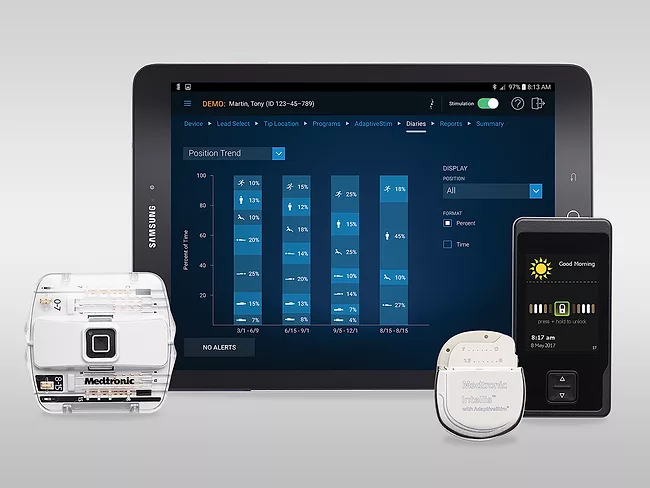
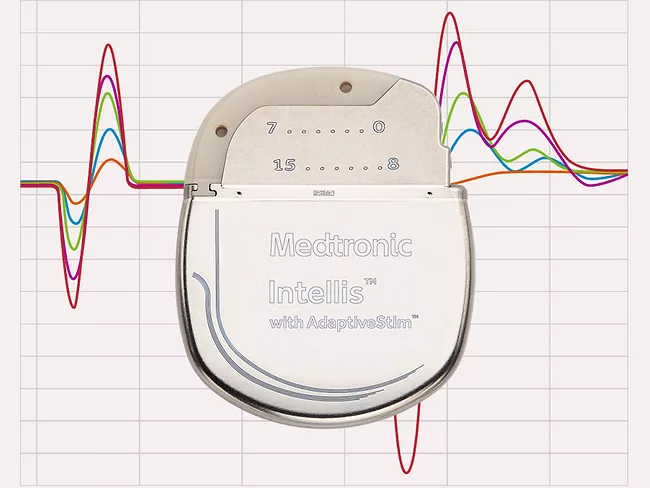
Medtronic plc released initial results showing meaningful pain relief using differential target multiplexed (DTM) spinal cord stimulation (SCS) endurance therapy, a lower-energy form of its DTM SCS treatment for overall, back or leg pain. At three months, patients in the on-label, prospective, multicenter study reported that their overall pain was about half what it was at the start of the study, measured by a 3.9 cm reduction on the 10 cm Visual Analog Scale (VAS) vs. 7.8 cm at baseline. Patients in the study also reported an average decrease in back and leg pain or 4.3 cm and 5.0 cm, respectively. Medtronic plans to offer the DTM SCS endurance therapy on its rechargeable Intellis and primary cell Vanta platforms.
TORONTO – Neupath Health Inc. and Cynergi Health Partners have signed a memorandum of understanding that could see Cynergi’s virtual reality (VR) software combined with Neupath’s remote pain management platform. The platform is expected to benefit from the therapeutic potential of Austin, Texas-based Cynergi’s Rilaxta VRx to lower patient anxiety and perception of pain as they walk through restful, VR-created landscapes. “We don’t see another group taking a similar, holistic approach to pain management that we are,” Neupath CEO Grant Connelly told BioWorld.
LONDON – Wise Srl has received CE marking for its cortical strip electrode, validating the underlying flexible electronics technology and opening the door to the development of implantable devices for long-term neurostimulation.
If the March 25 vote from a joint FDA advisory committee meeting is anything to go by, the long and bumpy development road for Pfizer Inc.’s tanezumab, a nonopioid pain drug, may have just gotten longer and bumpier. In what was nearly a unanimous vote, the Arthritis Advisory Committee and Drug Safety and Risk Management Advisory Committee said the sponsor’s proposed risk evaluation and mitigation strategy (REMS) was not adequate to ensure the benefits of tanezumab in alleviating osteoarthritis pain outweigh its risks, which include further joint deterioration.
With the December PDUFA date already blown, Pfizer Inc. is headed into a day-and-a-half FDA advisory committee meeting this week to make the case for 2.5-mg tanezumab, a potential first-in-class treatment in the U.S., partnered with Eli Lilly and Co. Inc., for chronic pain due to moderate to severe osteoarthritis.
COVID-19 continues to dramatically reconfigure medicine as an ever-broadening array of digital therapies rolls out and telemedicine tackles increasingly complex applications. Abbott Laboratories’ newly launched Neurosphere Virtual Clinic exploits both trends to make management of chronic pain and movement disorders easier for patients.
IBM Research and Boston Scientific Corp. are harnessing artificial intelligence (AI) to create an objective pain measurement tool that could someday replace standard patient-reported pain scales in the assessment of chronic pain.
Medtronic plc is looking to increase market share in pain stimulation with its differential target multiplexed (DTM) therapy, a recharge-free device and its next big disrupter, evoked compound action potential (ECAP). The company is currently developing a closed-loop SCS system for chronic pain following failed back surgery based on ECAP and DTM algorithms.
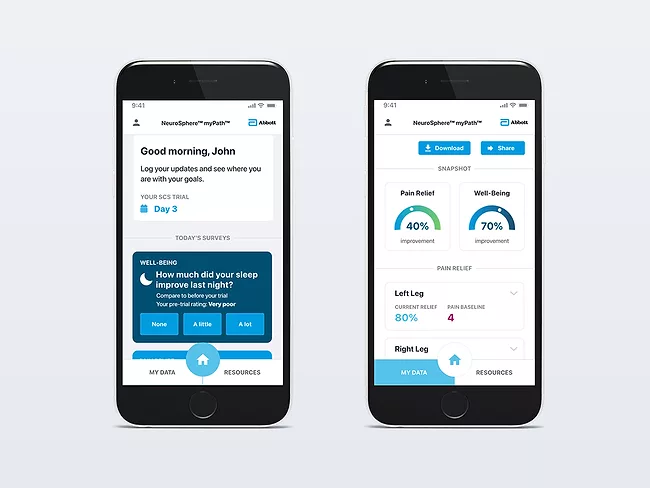
Abbott Laboratories plans to launch its Neurosphere Mypath digital health app in the coming weeks, the latest addition to its Neurosphere Digital Care connected health management platform. The new app will enable chronic pain patients trying out Abbott neuromodulation therapies to track and report their pain relief.
Neuros Medical Inc., a company developing neuromodulation technology to treat intractable post-amputation pain, has raised $38.5 million in a series BB financing. The funds will be used to complete enrollment in its pivotal QUEST clinical trial and to submit a premarket approval application to the U.S. FDA. New investors Amzak Health and Sectoral Asset Management co-led the round.