Bsense Bio Therapeutics Ltd. has nominated BSEN-760, a dual Kv7.2/3 and TRPV1 ion channel modulator, as a clinical candidate for the treatment of chronic pain.
Researchers from New York University College of Dentistry’s Pain Research Center in collaboration with the University of Pittsburgh found a candidate for chronic pain treatment among a library of 27 million compounds.
Virpax Pharmaceuticals Inc. expects to submit an IND application for Envelta (MET-LENK) around the middle of next year following review of comments made by the FDA on the company’s pre-IND submission. If successful, first-in-human trials would also be expected to begin around the middle of the year.
Boston Scientific Corp.’s plan to acquire Relievant Medsystems Inc. is part of its ongoing effort to address chronic pain which is significantly impacting the quality of life of millions of people. Relievant’s Intracept intraosseous nerve ablation system will give Boston Scientific another tool in its armory to tackle chronic pain which already includes radiofrequency ablation (RFA) solutions and spinal cord stimulator (SCS) systems.
Scientists at the University of Chicago have discovered a signaling pathway guided by nicotinic acetylcholine receptors (nAChRs) that could relieve pain even when tolerance to opioids was present. This mechanism did not produce dependence after treatment and could be explored to develop new drugs.
Long-term brain recordings from four patients with chronic pain have led investigators at the University of California at San Francisco to identify brain signals that could serve as biomarkers for each individual patients’ pain. The study, which was published online in Nature Neuroscience on May 22, 2023, demonstrated that “chronic pain can successfully be tracked, can successfully be predicted, in the real world while patients are ... going about their lives,” lead author Prasad Shirvalkar told reporters at a press conference announcing the findings. Shirvalkar is a neurologist at the University of California at San Francisco.
Long-term brain recordings from four patients with chronic pain have led investigators at the University of California at San Francisco to identify brain signals that could serve as biomarkers for each individual patients’ pain.
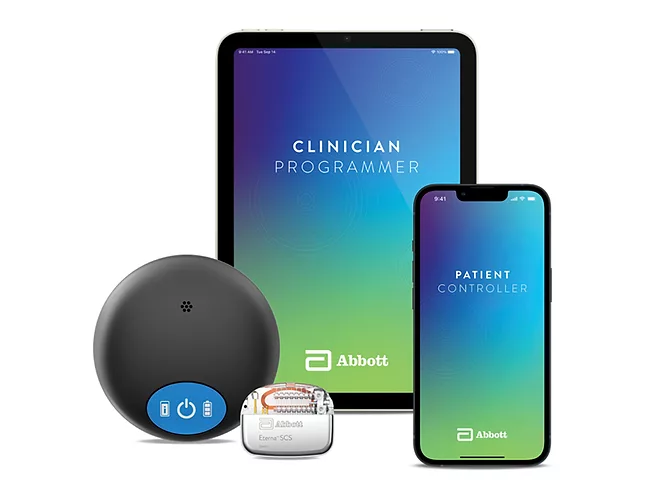
Abbott Laboratories received U.S. FDA approval for an expanded indication for its spinal cord stimulator (SCS) devices to include treatment of chronic back pain for individuals who have not had or are ineligible for back surgery. The FDA based its decision on the positive results from the DISTINCT study which showed that 85.2% of patients implanted with the SCS devices achieved significant reduction in back pain compared to 7.1% of those who received conservative medical management.
Chronic inflammatory and neuropathic pain are among the most common chronic conditions, but their treatment options present significant limitations both in efficacy and safety. Researchers from Purdue University presented data on their work aimed to develop adenyl cyclase type 1 (AC1, ADCY1) inhibitors as a new treatment for chronic pain.
Just three months after raising $12.9 million, Remedee Labs SAS reported it has signed a partnership with pharmaceutical group Upsa SAS to ramp commercialization of its smart bracelet for chronic pain. “We are going to rapidly deploy our non-invasive chronic pain relief technology throughout France and Europe,” David Crouzier, co-founder and CEO of Remedee Labs, told BioWorld.