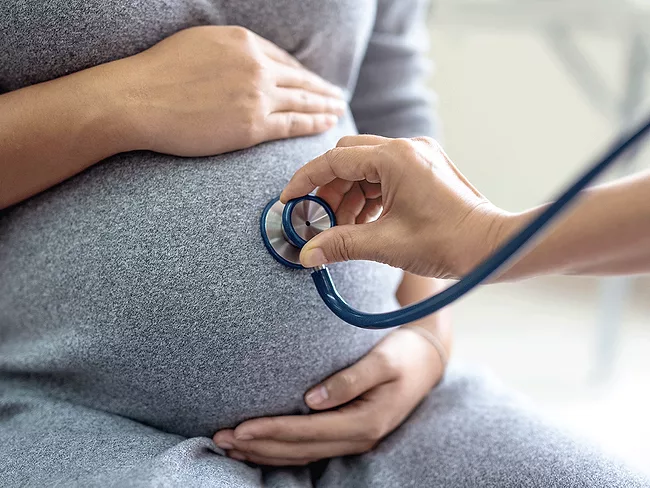
Prenaital ApS has filed a patent for technology that may identify risks of spontaneous pre-term birth. Spontaneous preterm birth (sPTB) is usually defined as birth occurring before 37 weeks of gestation. The invention relates to a method for predicting potential preterm birth from medical scan data, which may be used in practice by medical professionals for risk analysis and prognosis of potential pathologies.
A new systematic review and meta-analysis of studies looking at a possible association between Tylenol (acetaminophen) use in pregnancy and neurodevelopmental disorders in children concludes there is no evidence of any meaningful risk. The study was carried out by researchers in the U.K., Italy, Sweden and Norway, in response to U.S. Secretary of Health and Human Services Robert Kennedy saying last September that there is a link. Unless medically necessary, it is “irresponsible” to take Tylenol during pregnancy, Kennedy said.
Researchers from the University of California, Davis (UC-Davis) continue to assemble intellectual property in support of their development of methods and techniques which improve the accuracy of wearable sensor technologies.
In recognition of the fact that diversity, equity and inclusion are necessary prerequisites for precision medicine, the European Academy of Neurology announced the launch of a DEI Hub at its 11th Congress, which is being held in Helsinki through June 24.
Pregnant women with type 1 diabetes who used a hybrid closed loop automated insulin delivery system averaged more than three additional hours per day in their recommended glucose range than those who managed their diabetes with insulin injections or non-automated pump systems, a study presented at the 85th Scientific Sessions of the American Association in Chicago demonstrated.
In recognition of the fact that diversity, equity and inclusion (DEI) are necessary prerequisites for precision medicine, the European Academy of Neurology (EAN) announced the launch of a DEI Hub at its 11th Congress, which is being held in Helsinki through June 24. “We know now that when we talk about personalized medicine, we have to understand that talking about stroke, for example, in a woman is different than talking about stroke in a man,” EAN president Elena Moro told the audience at the opening session of the conference.
The EMA has issued a new guideline on how to include and/or retain pregnant and breastfeeding women in clinical trials, in a move that it says “marks a change in the paradigm.” The aim is to ensure that trial sponsors generate robust clinical data in these populations.
In what represents just the company’s third PCT filing, Houston-based Starling Medical Inc.’s co-founders, Hannah McKenney and William Hendricks, seek to gain further protection for their at-home urine diagnostic patient-monitoring platform that eliminates the traditional use of catching containers and dipsticks.
Resilia Inc., dba Uresta, raised $3 million to launch its device to stop stress urinary incontinence in women. The flexible, insertable device braces the bladder and compresses the urethral passage to reduce or eliminate leakage during exercise, when coughing or laughing or when a woman just doesn’t want to worry about it. BDC Capital led the funding with a $1.5 million investment.
With rates of preeclampsia skyrocketing, the U.S. FDA’s510(k) clearance of Roche Holding AG’s Elecsys test for preeclampsia offers some hope of reducing the number of women and infants who die or experience life-long consequences from the development of dangerously high blood pressure during late pregnancy and in the days immediately following delivery.