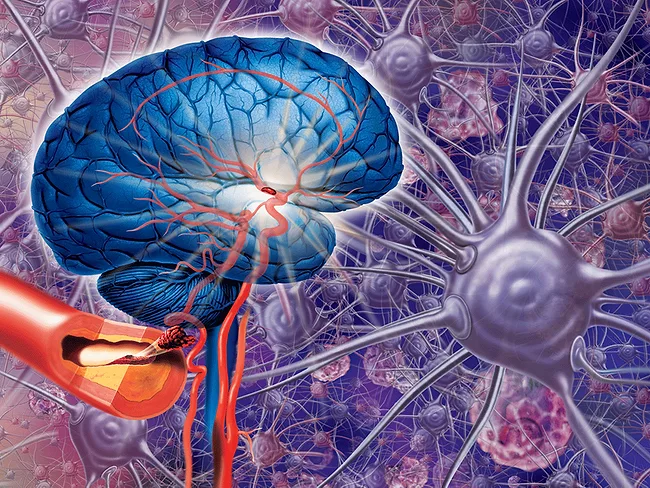
Researchers from Institute of Materia Medica Chinese Academy of Medical Sciences & Peking Union Medical College have discovered novel selective Kv2.1 inhibitors as potential therapeutic candidates for the treatment of ischemic stroke.
In stroke, one of the events underlying neuronal injury is the interaction of neuronal nitric oxide synthase (nNOS) with postsynaptic density protein 95 (PSD-95) leading to nitric oxide overproduction.
A research team from Leipzig University, the Max Planck Institute and Heidelberg University, all in Germany, devised a new segmentation algorithm for stroke lesions that improves upon previous methods. They used machine-learning models to effect CT image segmentation in the early stages of acute stroke. The research team published their findings on the fully convolutional graph network in July in the Journal of Medical Imaging.
A research team from Leipzig University, the Max Planck Institute and Heidelberg University, all in Germany, devised a new segmentation algorithm for stroke lesions that improves upon previous methods. They used machine-learning models to effect CT image segmentation in the early stages of acute stroke. The research team published their findings on the fully convolutional graph network in July in the Journal of Medical Imaging.
After raising AU$4 million (US$2.6 million), Argenica Therapeutics Pty. Ltd. is gearing up to begin phase II trials in ischemic stroke for ARG-007, a glutamate receptor modulator that is believed to reduce brain tissue death after stroke.
After raising AU$4 million (US$2.6 million), Argenica Therapeutics Pty. Ltd. is gearing up to begin phase II trials in ischemic stroke for ARG-007, a glutamate receptor modulator that is believed to reduce brain tissue death after stroke.
China Pharmaceutical University has synthesized receptor-interacting serine/threonine-protein kinase 1 (RIPK1; RIP-1) inhibitors reported to be useful for the treatment of ischemic stroke, among others.
In Alzheimer’s, the amyloid beta hypothesis has proved most persistent in terms of drug development efforts to date, but aggregation of other pathogenic factors – phosphorylated tau (p-tau), APOE4, TREM2 and alpha-synuclein, for example – have also emerged as hallmarks of the disease. It’s that aggregation that seven-year-old Truebinding Inc. aims to target with its lead program, TB-006, a monoclonal antibody against galectin-3.