Diacarta Inc.’s diagnostic assay, Coloscape, could be the first to meet the Centers for Medicare and Medicaid Service (CMS)’s strict standards for Medicare coverage of a liquid biopsy for colorectal cancer screening if results seen in a Plos One study are borne out in larger trials and the test gets the nod from the FDA. That is a lot of ifs, but the study posted strong results: 100% specificity and 92.2% sensitivity for cancer and 95% specificity and 62.5% sensitivity for precancerous lesions.
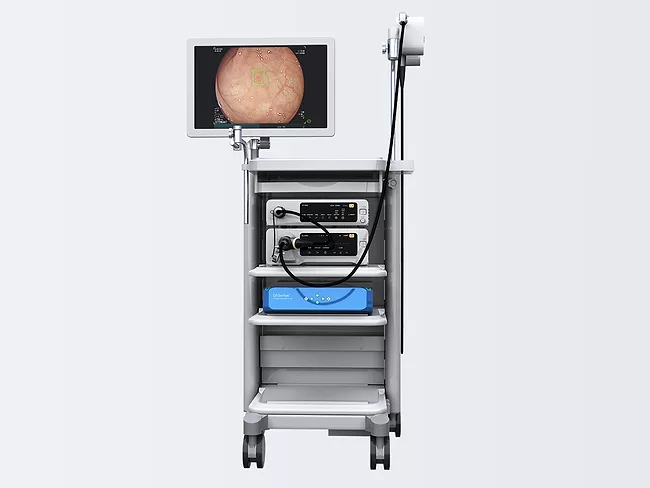
Shanghai Wision AI Co. Ltd. (Wision AI) has shared positive data from a first-of-its-kind study on the use of artificial intelligence (AI) computer-aided polyp detection (CADe) system during colorectal cancer screening in a U.S. patient population. Published in the journal Clinical Gastroenterology and Hepatology, it marks the world’s first external independent randomized controlled trial of AI in the medical field conducted in the U.S.
A long noncoding RNA (lncRNA), the RNA component of mitochondrial RNA-processing endoribonuclease, was shown to promote the growth and proliferation of colorectal cancer cells by inhibiting activity of the tumor suppressor protein p53 in a Chinese study led by oncologists Fudan University Shanghai Cancer Center.
Diagnostics startup Geneoscopy Inc. has enrolled the first patients its pivotal CRC-PREVENT clinical trial. The interventional study will assess the safety and efficacy of the company’s noninvasive, at-home, multifactor RNA screening test for the prevention of colorectal cancer.
A check up by Khosla Ventures determined that Docbot Inc. was healthy enough for the prominent biotech investor to take the lead in a $4 million series A round. The new funds bring the artificial intelligence company to a total of $8.5 million in capital raised to date. Other participants included Bold Capital Partners, Collaborative Fund and Boutique Venture Partners.
The U.S. Preventive Services Task Force (USPSTF) has updated its recommendations for lung cancer screening, which expands the age group for screening to include those aged 50-54 years. The change has forced CMS to reopen the national coverage memo for low-dose CT screening for lung cancer, which appears to be set to add millions to the number of Americans who are eligible for annual screening procedures.
HONG KONG – Lutris Pharma Ltd., a company taking on the dermal toxicity common to cancer therapy with EGFR inhibitors, has begun testing its lead product, the B-Raf inhibitor LUT-014, in a phase II trial targeting reduction of acne-like lesions associated with the class. Partial results are expected by the end of 2021.
Organoids cultured from patient-derived colorectal cancer cells have been used to demonstrate for the first time that tumors which have developed resistance to the full range of existing treatments, across chemotherapies, targeted therapies and immunotherapies, retain a requirement for Werner helicase (WRN) for survival. WRN has a key role in the maintenance of genome stability, but although loss of WRN is known to initiate synthetic lethality in DNA mismatch repair deficient colorectal cancer, studies into the effect of inhibiting that helicase have to date been limited to a handful of cell lines.
Organoids cultured from patient-derived colorectal cancer cells have been used to demonstrate for the first time that tumors which have developed resistance to the full range of existing treatments, across chemotherapies, targeted therapies and immunotherapies, retain a requirement for Werner helicase (WRN) for survival.
Cosmo Artificial Intelligence Ltd. received the FDA’s nod for its GI Genius intelligent endoscopy system. The device – the first of its kind, according to the agency – uses artificial intelligence (AI)-based on machine learning to improve the detection of lesions during colonoscopy. It will be rolled out in the U.S. by Medtronic plc, which has exclusive worldwide distribution rights.