While saying "white rabbit, white rabbit" on the first of the month may be a luck-bringing superstition, Whiterabbit.ai aims to take luck out of the equation in identifying early breast malignancies. The Santa Clara, Calif.-based company emerged from stealth mode with FDA clearance for its Wrdensity tool, two other products, and more than $49 million in funding to date.
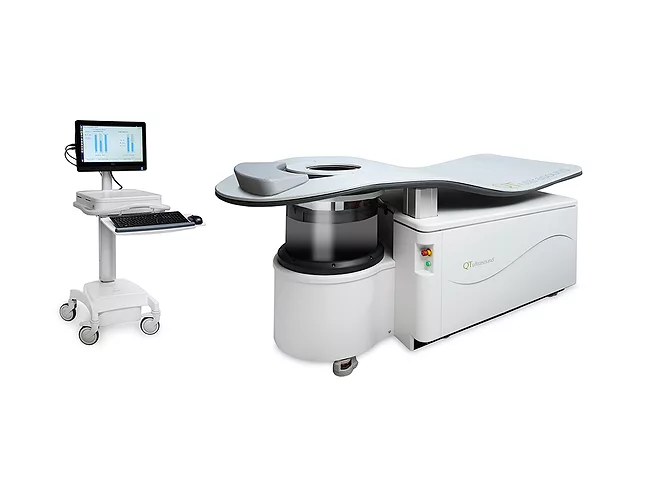
A new imaging technology that uses transmission ultrasound to provide a 3D image of breast tissue outperformed traditional digital mammography in a recent retrospective analysis. The study findings could set the stage for the U.S. FDA to clear the technology for breast cancer screening in young, high-risk women.
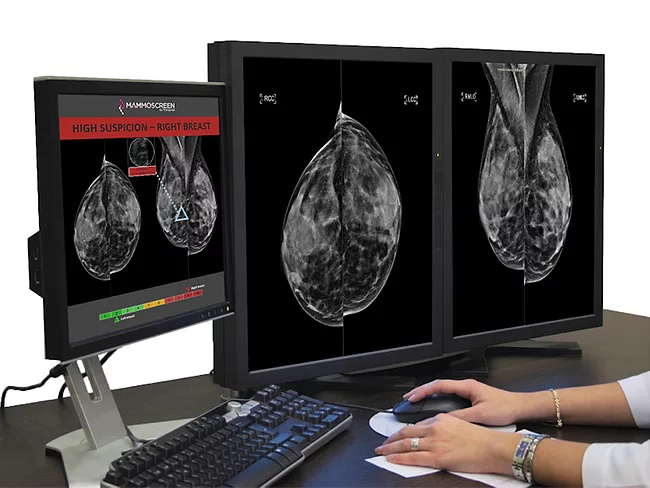
PARIS – Therapixel SA, of Nice, France, has obtained 510(k) clearance from the U.S. FDA for its Mammoscreen technology, a software platform based on artificial intelligence (AI) and used by radiologists for reading screening mammograms. “Obtaining FDA clearance is the result of working with radiologists over the past three years in order to develop a powerful tool providing relevant assistance in their day-to-day work,” Matthieu Leclerc-Chalvet, CEO of Therapixel, told BioWorld.
Hong Kong – South Korea’s Lunit Inc. is currently in the process of applying for U.S. FDA approval for Lunit Insight Mmg, its AI software that analyzes mammography images to detect breast cancer. Other markets that the company targets entering include South America, the Middle East, and Asia Pacific, Jussarang Lee, communications manager at Lunit, told BioWorld. Founded in 2013, the Seoul-based company uses artificial intelligence to develop cancer diagnostics and therapeutics.
Artificial intelligence (AI) is better than humans at pattern recognition within images and other densely complex datasets. That fact has long been expected to translate into meaningful change in the way we interpret health care data, but beyond a few early exceptions that is not yet the case. Now, the research is starting to amass that demonstrates the real potential for machine learning to significantly improve diagnostics and treatment.
TORONTO – “I don’t want this to die in the lab. We’re putting a lot of effort into this and we have to commercialize it.” With those words Oleksandr Bubon, chief technology officer of Thunder Bay, Ontario-based startup Radialis Inc., in 2016 reported ambitious plans for an imaging device that detects early stage cancer tumors in the densest breast tissue. Not only will its novel “gapless” design prevent radiation needed to treat cancer cells from escaping, a common problem in conventional positron emissions tomography (PET), its manufacture and commercialization starts here in a northern Ontario city of just over 110,000 people.