The U.S. FDA’s May 23 advisory hearing for the Shield test for colorectal cancer by Guardant Health Inc., included the expected debate over whether patients would abandon colonoscopy thanks to the advent of a new blood-based test. While much of that debate was fed by what some saw as the test’s poor performance regarding adenoma, the advisory committee voted 6-3 that the benefits outweigh the risks in a decision the FDA is likely to affirm.
The U.S. FDA’s May 23 advisory hearing for the Shield test for colorectal cancer by Guardant Health Inc., included the expected debate over whether patients would abandon colonoscopy thanks to the advent of a new blood-based test. While much of that debate was fed by what some saw as the test’s poor performance with regard to adenoma, the advisory committee voted 7-2 that the benefits outweigh the risks in a decision the FDA is likely to affirm.
On Dec. 1, a judge in the U.S. District Court for the District of Delaware granted Natera Inc. a permanent injunction in its patent infringement suit against Archerdx Inc. and its former parent company, Invitae Corp., adding another block to the intellectual property wall of protection around the market dominance of Signatera, Natera’s molecular residual disease (MRD) assay.
Most of the decisions arising from the inter partes review (IPR) process used in the U.S. patent system are the final word on the related patent dispute, but Guardant Health Inc., managed to at least temporarily reverse such an outcome recently. The Court of Appeals for the Federal Circuit reversed an IPR determination that 16 claims found in a patent held by Guardant were obvious and kicked the case back to the Patent Trial and Appeal Board (PTAB) for further consideration, but the affected patent is not clear of an adverse determination just yet.
Presentations at the Digestive Disease Week 2023 conference highlighted the strong performance of non-invasive tests for early-stage colorectal cancer. Both Guardant Health Inc. and Exact Sciences Corp. aim to increase acceptance of their tests for CRC to drive higher screening rates, as the preparation and invasive nature of colonoscopy continue to depress participation, even as rates of CRC are rising sharply among younger adults.
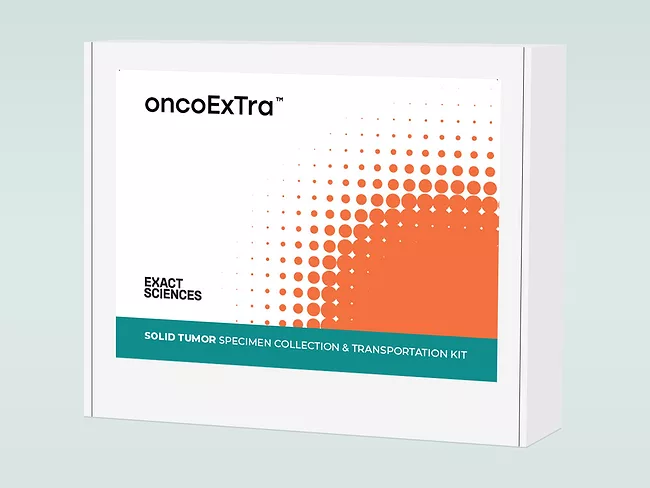
A cancer therapy test unveiled by Exact Sciences Corp. will be able to provide a complete molecular picture of a patient’s tumor allowing for them to receive the most effective treatment as quickly as possible. Exact’s Oncoextra therapy selection test, recently launched in the U.S., enhances the ability of doctors to characterize and understand solid tumors.
Burning Rock Biotech Ltd.’s share price flared up on Tuesday morning on news of U.S. FDA breakthrough device designation for its Overc multi-cancer detection blood test (MCDBT). The stock closed on Dec. 30, 2022, at $2.26 and rose sharply on the announcement to open at $2.89. By the end of the day, however, the stock had sunk to $2.15.
Guardant Health Inc. reported positive results from the ECLIPSE trial demonstrating 83% sensitivity of its DNA blood test in detecting colorectal cancer (CRC) in average-risk adults. Specificity was 90% in people without advanced neoplasia, as well as in those who had a negative colonoscopy result.
Guardant Health Inc. expanded its cancer testing to include one that provides multi-dimensional insights into tumor profiles and microenvironment that can be used to guide therapy selection. The liquid biopsy, Guardantinfinity, combines analysis of more than 800 genes with exome-wide methylation detection.
Guardant Health Inc. tripled the number of cancers that can be monitored for minimal residual disease (MRD) or risk of recurrence using its Reveal liquid biopsy, adding breast and lung cancers. The test is currently used to detect circulating tumor DNA in blood for patients treated for stage II or III colorectal cancer (CRC).



.webp?height=488&t=1670008838&width=650 "Acute myeloid leukemia")

