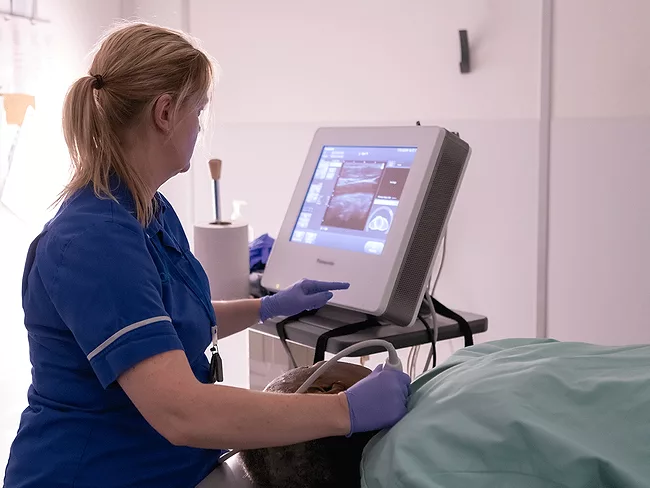
After a 10-year project and a £60 million (US$80 million) investment, the UK Biobank has completed the whole body scans of 100,000 volunteers and is making the 1 billion images available for researchers worldwide.
After a 10-year project and a £60 million (US$80 million) investment, the UK Biobank has completed the whole body scans of 100,000 volunteers and is making the 1 billion images available for researchers worldwide.
A large-scale study cross-referencing genomic data from multiple sources with primary care health records has identified genetic overlaps in 72 chronic diseases, opening the way for a more holistic approach to researching, treating and preventing multimorbidity.
A large-scale study cross-referencing genomic data from multiple sources with primary care health records has identified genetic overlaps in 72 chronic diseases, opening the way for a more holistic approach to researching, treating and preventing multimorbidity.
Fourteen global pharma companies are getting together to conduct the largest proteomics study to date, analyzing 600,000 blood samples held in the UK Biobank to assess the levels of 5,400 different proteins.
Fourteen global pharma companies are getting together to conduct the largest proteomics study to date, analyzing 600,000 blood samples held in the UK Biobank to assess the levels of 5,400 different proteins.
Oxford Nanopore Technologies Ltd. has established a new collaboration with UK Biobank to create the world’s first comprehensive, large-scale epigenetic dataset. The project will utilize Oxford Nanopore’s DNA/RNA sequencing technology to map the epigenome of 50,000 blood samples from UK Biobank to unlock insights into disease mechanisms, with the aim of improving patient outcomes.
Researchers from the U.K. have analyzed whole-genome sequencing data from 7,276 cases and 236,741 controls in the UK Biobank to perform gene-level and a variant-level exome-wide association study analysis to identify variants related to retinal detachment.
Investigators at the University of Edinburgh have identified a genomic location linked to sensitivity to gabapentin in individuals with idiopathic chronic pelvic pain.
After five years and 350,000 hours of DNA sequencing, the UK Biobank has opened up access Nov. 30 to the whole genome sequences of half a million people who volunteered to give samples 15 years ago.