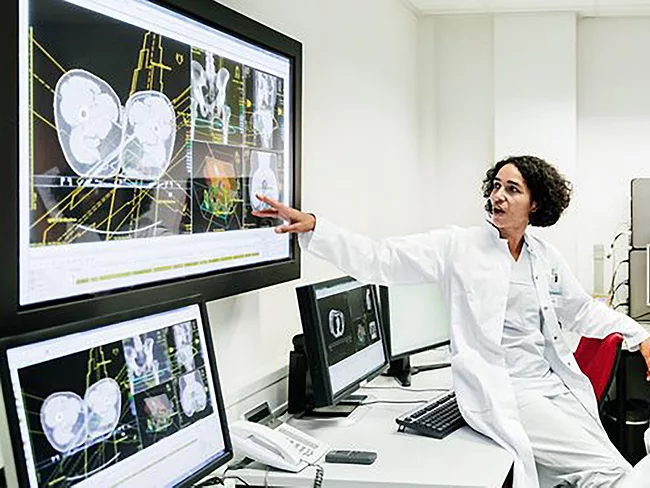
Cascination AG reported the first thermal ablation of liver tumors to be performed in France using its CT-guided stereotactic planning and navigation system, CAS-One IR. The technology was used at Dijon Bourgogne University Hospital, where a dozen procedures have been carried out in the Department of Diagnostic and Therapeutic Radiology.
Researchers from the Structural Biology Center at Montpellier University in France have devised a DNA-based nano robot capable of exploring cells in the human body. This 50-nanometer robot has been designed to study up close the mechanical forces applied at microscopic levels on cells, which trigger biological signals involved in the development of pathologies such as cancer and neurodegenerative disorders.
Lattice Medical SAS reported the first successful breast reconstruction using Mattisse technology, a totally resorbable, 3D-printed implant which naturally regenerates fatty tissue. The procedure was performed at the Institute of Clinical Oncology in Tbilisi, Georgia. It was the work of cancer specialist Gia Nemsadze and his team. This was an immediate breast reconstruction for a 62-year-old patient with breast cancer. The surgical procedure lasted one and a half hours, allowing the mastectomy to be completed, immediately followed by the breast reconstruction.
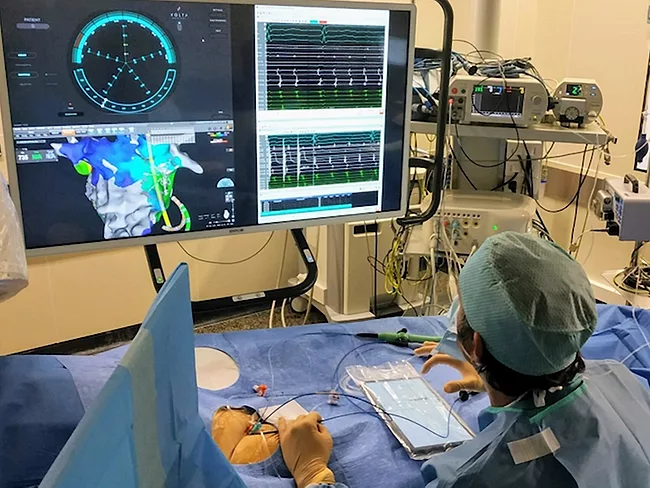
Volta Medical SAS reported validation for its VX1 software mapping system, an artificial intelligence (AI) algorithm compatible with most commonly available multi-pole catheters and technology used in operating rooms and cath labs for treating cardiac arrhythmia. Results from the proof-of-concept-study were published in the Journal of Cardiovascular Electrophysiology.
Tricares SAS raised $47 million in a first closing of its series C financing to fund further development of Topaz, its minimally invasive treatment for tricuspid regurgitation. The completion of the series C financing round is expected later in 2022.
The association of health care professionals in Normandy (APRIC) and the regional support group for the development of e-health in Normandy released new data on the importance of home telemonitoring in heart failure. Patients participating in the Suivi Clinique à Domicile (SCAD) heart failure home telemonitoring program experience less re-hospitalizations and lower death rates than patients with the same pathology but not on the program.