LONDON – CEOs of five leading biopharma companies have hit back against any suggestion COVID-19 vaccines and therapies could be approved in advance of phase III data, saying it is imperative the highest standards of quality, safety and efficacy are upheld everywhere. The most important thing is to reinforce to the public the commitment to safety as the number one priority, said Kenneth Frazier, CEO of Merck & Co. Inc.
PERTH, Australia – Australia’s biopharma sector fared better than the country at large at the end of the financial year that ended June 30, as the country saw GDP fall 7% in the final quarter, the largest drop since 1959.
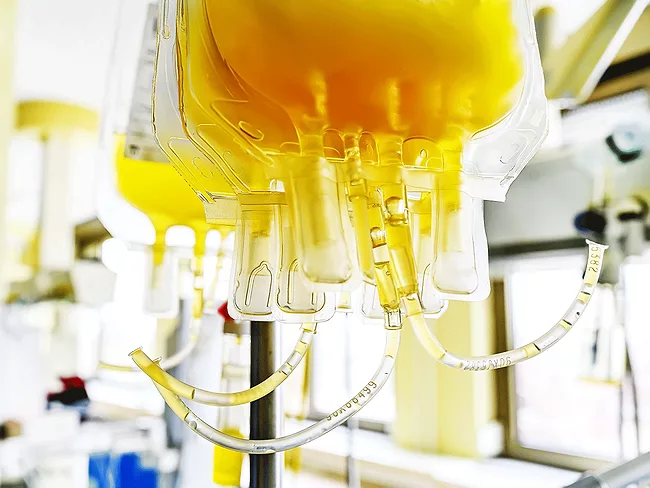
As of Aug. 13, more than 90,000 patients hospitalized in the U.S. with COVID-19 already had been given access to convalescent plasma through a national expanded use protocol (EAP) sponsored by the Mayo Clinic. The FDA’s decision Sunday to grant emergency use authorization (EUA) for the potential therapy will further expand access to convalescent plasma for hospitalized patients throughout the country at a time when fully approved COVID-19 treatments are nonexistent and even EUAs are few and far between.
Avoiding the political overtones that seem to be more viral than COVID-19 these days, Anand Shah, deputy commissioner for medical and scientific affairs at the FDA, stressed that even though the agency is making decisions in real time in response to the urgency of the pandemic in the U.S., its decisions are being driven by scientific integrity, regulatory independence and the FDA’s historic commitment to ensuring the safety and efficacy of the products it regulates.
Amid all the political positioning, finger-pointing, blame games and mountains of misinformation that have been as much a part of the COVID-19 pandemic as the coronavirus itself, there’s one point of agreement: The pandemic has been a painful experience that everyone needs to learn from so it’s not repeated in the future.
Amid all the political positioning, finger-pointing, blame games and mountains of misinformation that have been as much a part of the COVID-19 pandemic as the coronavirus itself, there’s one point of agreement: The pandemic has been a painful experience that everyone needs to learn from so it’s not repeated in the future.
Citing the limited supplies and the pricing of the COVID-19 therapy, nearly three dozen U.S. states and territories are clamoring for the federal government to march in on Gilead Sciences Inc.’s patents for remdesivir. And if the feds won’t, then states should be given that authority, according to a letter sent Tuesday to the Department of Health and Human Services, the NIH and the FDA.
The share prices of blue-chip biopharmaceutical companies continued on their lackluster trajectory, which started in June and collectively lost ground last month, with the BioWorld Biopharmaceutical index slipping about 1.3% as investors took a break in order to digest the deluge of COVID-19 vaccine data released during the period and the impact on the bottom lines that the pandemic has exerted among those companies that have reported their second-quarter results.
Second-quarter earnings reports, flowing fast in the last days of July, delivered a bevy of contrasting results, from A to V. Stymied by the pandemic, Aimmune Therapeutics Inc. booked exactly zero net sales during the quarter for its expected blockbuster peanut allergy treatment, Palforzia. Vertex Pharmaceuticals Inc. and Seattle Genetics Inc. beat top-line expectations, driven primarily by strong sales of new products.