In his latest effort to incentivize domestic manufacturing of drugs and their key ingredients, U.S. President Donald Trump issued an executive order Aug. 13 to replenish the country’s nearly empty Strategic Active Pharmaceutical Ingredients Reserve (SAPIR), giving a preference to U.S.-produced APIs.
A new rule published by India’s Central Drug Standards Control Organization that would require additional tests, trials or even approvals for drugs after changes in their active substances is likely to have only limited impact on companies and the market, despite evoking memories of a bruising patent dispute eight years ago.
NEW DELHI – Significant disruptions to supplies of active pharmaceutical ingredients (APIs) from China caused by the COVID-19 pandemic have led India to fundamentally rethink its supply chains and the structure of its pharmaceutical industry, according to industry executives and consultants.
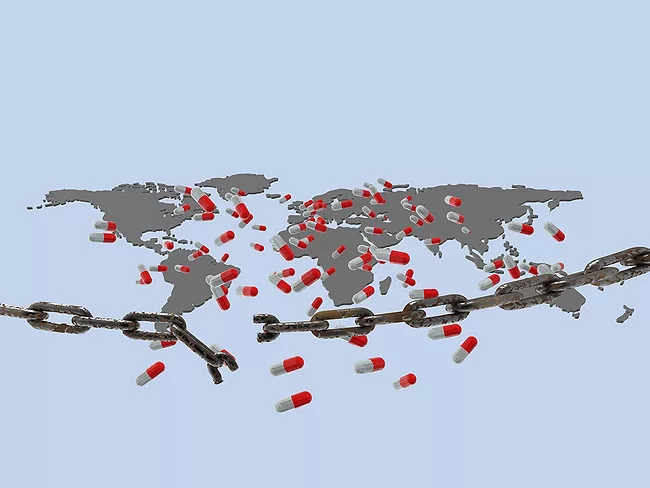
While the U.S. and other countries are looking to step up their own domestic drug and device manufacturing, a bigger takeaway from the COVID-19 pandemic is the need for resilient supply chains that can withstand a global scramble for products suddenly more in demand than the supply can support.
“There’s a difference in knowing something and realizing something. We’ve known for quite a while now that we’re too dependent on other countries for our medical supplies. But during this pandemic, I think we’ve realized it,” U.S. Rep. Buddy Carter (R-Ga.) said at a recent congressional hearing on the progress being made in developing COVID-19 vaccines.
“There’s a difference in knowing something and realizing something. We’ve known for quite a while now that we’re too dependent on other countries for our medical supplies. But during this pandemic, I think we’ve realized it,” U.S. Rep. Buddy Carter (R-Ga.) said at a recent congressional hearing on the progress being made in developing COVID-19 vaccines.
The U.S. Senate Finance Committee held the first of its two hearings on the supply chains for a variety of products vital to the response to the COVID-19 pandemic. While electoral politics were on full display during the hearing, a recurrent theme was the need to bring supply chains back to the Western Hemisphere as a solution to the fraudulent products shipped to the U.S. from Hong Kong and China.
Scaling up to manufacture a massive volume of a COVID-19 vaccine, drug or innovative device that’s still in early stage development is easier said than done, especially in a global pandemic that has the supply chain stretched beyond capacity.
Responding to COVID-19’s wakeup call as it exposes the risks of relying heavily on foreign biopharma supply chains, the U.S. Department of Health and Human Services (HHS) signed a four-year, $354 million agreement with a team of private industry partners, led by Phlow Corp., to expand U.S. manufacturing of essential medicines at risk of shortage during the pandemic and in future public health emergencies.
NEW DELHI - In a bid to limit what is seen as excessive dependence on active pharmaceutical ingredients (APIs) from China, the Indian government has announced a $394 million scheme to promote the development of three bulk drug parks.