Leyden Laboratories BV has patented polypeptides acting as spike glycoprotein (S) (SARS-CoV-2; COVID-19 virus) ligands reported to be useful for the treatment of SARS-CoV-2 infections.
The U.S. Trade Representative (USTR) once again called out the usual cast of characters in this year’s Special 301 Report for not playing by the rules when it comes to protecting intellectual property. And once again, industry asked the USTR to go further by placing new players on the list.
Citing the need to protect the public interest, the U.S. Department of Health and Human Services ordered an immediate government-wide funding suspension May 15 of Ecohealth Alliance Inc. while formal debarment proceedings are pending against the New York-based nongovernmental organization.
Citing the need to protect the public interest, the U.S. Department of Health and Human Services ordered an immediate government-wide funding suspension May 15 of Ecohealth Alliance Inc. while formal debarment proceedings are pending against the New York-based nongovernmental organization.
Osaka, Japan-based Shionogi & Co. Ltd. said May 13 that ensitrelvir fumaric acid (Xocova), its oral antiviral for COVID-19, showed no statistical difference against placebo in completely resolving 15 common COVID-19-related symptoms in a global phase III Scorpio-HR trial.
The U.S. FDA issued a May 9 warning letter to Cue Health Inc., of San Diego, following what may have been a routine inspection, but the inspection disclosed that the company had made changes to a COVID test that was granted market access via the emergency use authorization program.
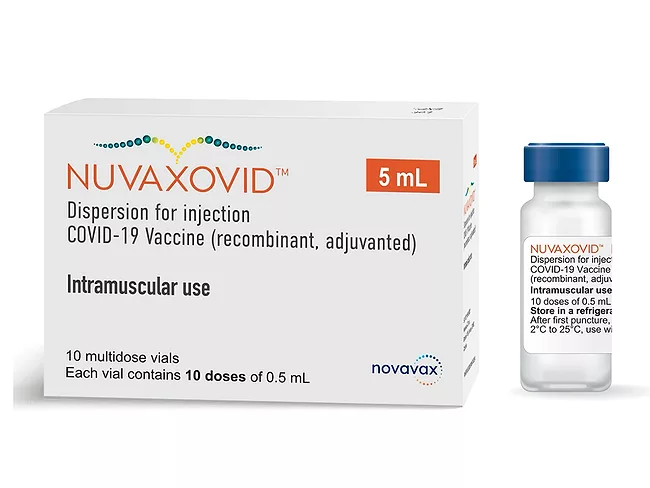
A licensing deal worth potentially up to $1.2 billion with Sanofi SA has breathed new life into Novavax Inc., which has struggled to compete in the COVID-19 space with powerhouses Pfizer Inc. and Moderna Inc.
Right on cue, the U.S. FDA’s Center for Drug Evaluation and Research (CDER) is scheduling its first in-person advisory committee meetings since the COVID-19 pandemic. Speaking during a May 6 webinar hosted by the Alliance for a Stronger FDA, CDER Director Patrizia Cavazzoni said the center was preparing to go back to in-person adcoms, adding that the first step likely would be a hybrid model.
Right on cue, the U.S. FDA’s Center for Drug Evaluation and Research (CDER) is scheduling its first in-person advisory committee meetings since the COVID-19 pandemic. Speaking during a May 6 webinar hosted by the Alliance for a Stronger FDA, CDER Director Patrizia Cavazzoni said the center was preparing to go back to in-person adcoms, adding that the first step likely would be a hybrid model.
There is still a need for developing more potent and broadly neutralizing vaccines against SARS-CoV-2 with improved durability. At the recent ESCMID meeting, Astrazeneca plc presented a new mRNA vaccine against the SARS-CoV-2 virus that encodes for self-assembling virus-like particle (VLP) antigens.