Valneva SE’s share price plummeted May 16 after the European Commission decided to terminate an advance purchase agreement for millions of doses of its COVID-19 vaccine candidate VLA-2001 because of delays in development. The company’s shares (Paris:VLA) fell more 19% to €9.65 (US$10.07) after it said it would reconsider its financial guidance for 2022.
News that the U.S. Trade Representative (USTR) had signed off on a compromise World Trade Organization (WTO) proposal to waive IP rights for COVID-19 vaccines caught Congress by surprise earlier in early May. Now, some members, both Democrats and Republicans, are reminding USTR Katherine Tai that she has an obligation to consult with Congress on such trade issues.
The commercial success of COVID-19 mRNA vaccines has other companies in the space “looking in the attic, so to speak,” to see if they have any patents they can assert against components of the vaccines so they can get a percentage of the sales, Aziz Burgy, a patent attorney, told BioWorld. Given the global spread of the pandemic and how quickly it came on, the vaccines have generated billions of dollars in sales in a short period of time, and other companies want a share, he said. He compared today’s patent infringement cases against the vaccine producers to the litigation seen in the early days of the smartphone revolution when other high-tech companies scrambled for a piece of Apple’s and Samsung’s profits.
In an effort to increase global access to COVID-19 technologies, the World Health Organization’s COVID-19 Technology Access Pool and the Medicines Patent Pool finalized a licensing agreement May 12 with the U.S. NIH for research tools, early stage vaccines and diagnostics.
With its focus on transformative high-risk, high-reward research to drive biomedical breakthroughs, the new Advanced Research Projects Agency for Health (ARPA-H) may be a good concept, but it shouldn’t come at the expense of increased investment in basic research at the NIH, according to the bipartisan leadership of U.S. House appropriators.
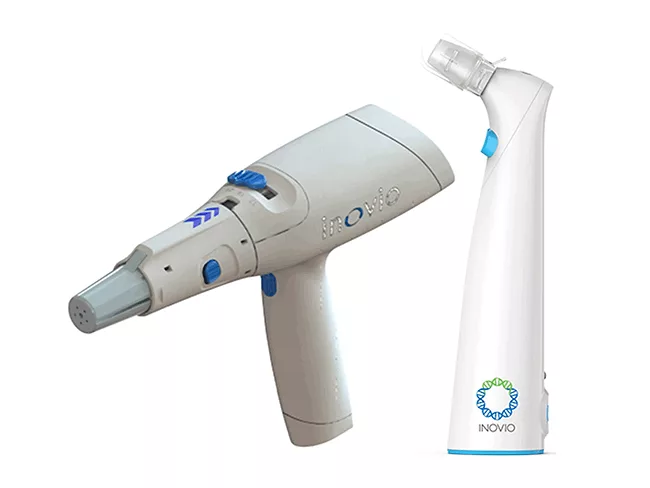
Newly appointed President and CEO Jackie Shea looks to have her work cut out for her, as Inovio Pharmaceuticals Inc. decided to ditch its phase II/III COVID-19 vaccination trial in favor of pursuing a booster strategy with INO-4800. That update, disclosed during Inovio’s first-quarter earnings late May 10 alongside a likely delay in filing for approval of HPV immunotherapy candidate VGX-3100, sent the stock (NASDAQ:INO) falling 27% May 11. Over the past year, shares have fallen more than 70%.
The in vitro diagnostics industry has turned in an impressive response to the COVID-19 pandemic, but a few problems are bound to surface. The U.S. FDA reported May 10 that the Accula test by San Diego-based Mesa Biotech Inc. has been recalled due to contamination of test materials at the manufacturing site, a problem that could lead to false negative findings with the test.
For the first time since the early weeks of the COVID-19 pandemic in 2020, global deaths caused by the disease have fallen to their lowest point, as immunity against the SARS-CoV-2 virus and its variants continues to build. Infections and deaths appear to be decelerating, an optimistic sign that the pandemic may be nearing an end.
A proposal hammered out by the EU, India, South Africa and the U.S. to allow IP waivers for COVID-19 vaccines is headed to all members of the World Trade Organization (WTO) for consideration.
A congressional investigation into COVID-19 vaccine manufacturing failures at Emergent Biosolutions Inc. unveiled more troubling issues at the company’s Bayview facility in Baltimore, which had been awarded a lucrative U.S. government contract to produce vaccines for Johnson & Johnson.