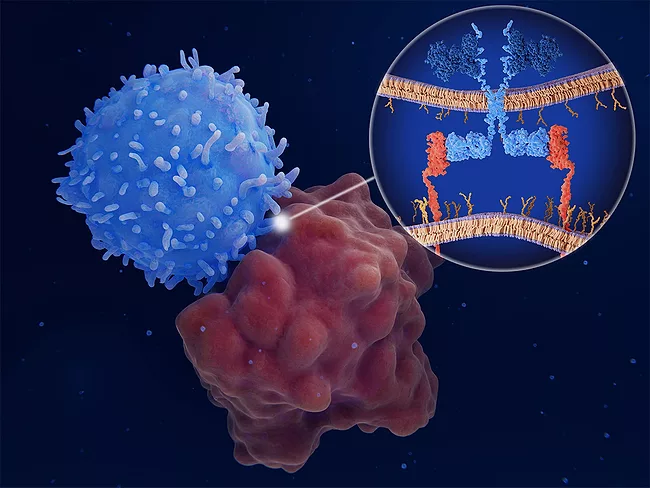
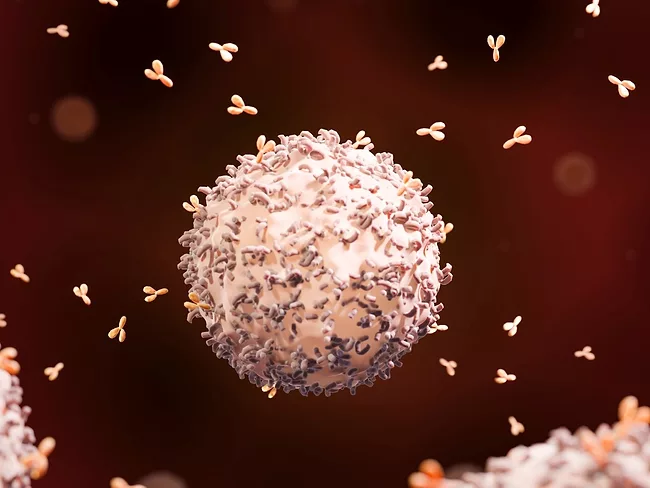
Scientists at the University of Washington have engineered human plasma B cells modified to express long-lasting bispecific antibodies that could be used to treat leukemia without requiring continuous dosing.
Scientists at the University of Washington have engineered human plasma B cells modified to express long-lasting bispecific antibodies that could be used to treat leukemia without requiring continuous dosing.
“We are trying to engineer plasma cells to make as a stable source for biologic drugs. One thing that is really unique about plasma cells is that they can live for a really long time … up to 10 years or even 100 years depending on the type of plasma cell that that you make,” Richard James, senior author of the study, principal investigator at Seattle Children’s Research Institute, and associate professor at the University of Washington, told BioWorld.
Appicine Therapeutics (HK) Ltd. has disclosed proteolysis targeting chimera (PROTAC) compounds comprising a E3 ubiquitin ligase-binding moiety coupled to a Bcl-2-like protein 1 (Bcl-xL; Bcl-X; BCL2L1)-targeting moiety through a linker. They are reported to be useful for the treatment of cancer.
Triarm Therapeutics Ltd. is on a mission to democratize CAR T therapies to make them more accessible and affordable, Triarm CEO Jay Zhang told BioWorld. “Nearly half of the patients eligible for CAR T therapies still cannot get treated, and the main reason is the expense, and the second is they cannot afford to wait.
Triarm Therapeutics Ltd. is on a mission to democratize CAR T therapies to make them more accessible and affordable, Triarm CEO Jay Zhang told BioWorld. “Nearly half of the patients eligible for CAR T therapies still cannot get treated, and the main reason is the expense, and the second is they cannot afford to wait.
Syndax Pharmaceuticals Inc. is gearing up for a U.S. FDA filing by the end of 2023 on the back of positive data from a pivotal phase I/II study testing menin inhibitor revumenib in adult and pediatric patients with relapsed/refractory KMT2A-rearranged acute myeloid leukemia and acute lymphoid leukemia.
After CAR T-cell immunotherapy for leukemia, some children have a longer remission because the engineered cells remain active and control or prevent the growth of new tumor cells. A new collaborative study has found that these persistent cells expressed certain genes that could be identified through a transcriptional signature. The finding could explain why the treatment does not work in some patients, and potentially help to improve it, reducing relapses.
Biopolar Hongye (Nantong) Pharmaceutical Co. Ltd. and Hangzhou Hertz Pharmaceutical Co. Ltd. have described apoptosis regulator Bcl-2 wild-type, Bcl-2 (D103Y mutant) and/or Bcl-2 (G101V mutant) inhibitors reported to be useful for the treatment of cancer, infections, immunological and inflammatory disorders.
Deciphera Pharmaceuticals LLC has synthesized heterocyclic compounds acting as eukaryotic translation initiation factor 2-α kinase 3 (PERK) and/or GCN2 inhibitors reported to be useful for the treatment of cancer and amyloidosis.
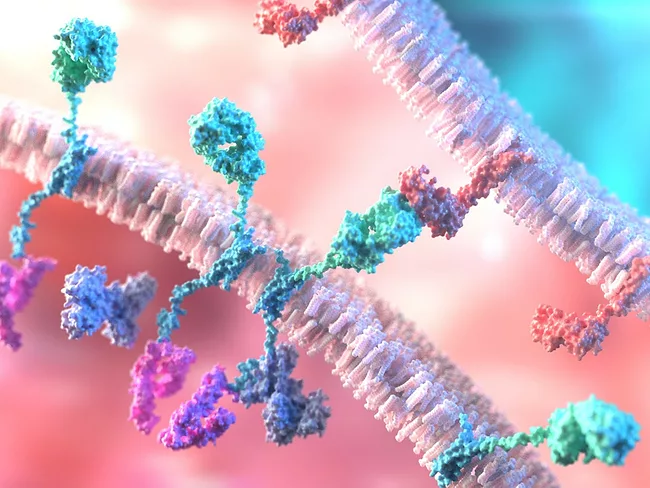
Itabmed Ltd. received an IND approval to start a phase I trial of its CD3-activating bispecific antibody A-337 for the treatment of patients with advanced solid tumors.

.webp?height=488&t=1670008838&width=650 "Acute myeloid leukemia")