The FDA has posted two draft guidances for the transition of policies from the pandemic to more normal times. One of these is the long-awaited draft for transitioning a device from an emergency use authorization (EUA) to a conventional premarket status, which offers a 180-day grace period for an EUA after the agency identifies a date on which the EUA will be terminated.
While the FDA’s reaction to the results of the Nov. 30 advisory hearing for the COVID-19 therapy molnupiravir is difficult to predict, demand for rapid antigen tests may jump considerably when this or any such product is approved. That increased demand could crunch supplies of these tests due to the convergence of any such approvals, the upcoming holiday season, and the 2021-22 flu season, a convergence that could hamper efforts to roll out these new therapies.
The U.S. Department of Health and Human Services (HHS) has withdrawn its August 2020 rescission of the FDA’s authority to regulate lab-developed tests (LDTs), a reversal predicated on the need for additional testing capacity for the COVID-19 pandemic. However, the non-COVID implications are not clear as the FDA is not widely seen as having the capacity to regulate LDTs for non-pandemic purposes, while pending legislation would dramatically overhaul the agency’s approach to LDT regulation, making the current regulatory environment an unstable environment at best. The FDA accompanied the announcement with a statement that the emphasis at the agency is on tests that do not require that the patient sample be sent to a lab for processing.
Celltrion Inc. recently received FDA emergency use authorization (EUA) for its Diatrust COVID-19 Ag home test. “With the FDA approval, we will now prioritize getting the test kits to the U.S. and into users’ hands as soon as possible,” a spokesperson for the Incheon, South Korea-based Celltrion told BioWorld. The test kits will be distributed through Celltrion’s U.S. arm, Celltrion USA Inc. Celltrion is currently in the final stage of negotiations with the U.S. government, as well as online and offline distributors.
Advocates have continued to press for more widespread use of rapid antigen tests in the home as a primary instrument for returning to economic normalcy, and the FDA has granted an emergency use authorization (EUA) to Acon Laboratories Inc., of San Diego, for the company’s Flowflex rapid antigen test for at-home use. According to the FDA, Acon said the COVID-19 test will be produced at a rate of 200 million a month by February 2022, a clip that should go a long way toward restoring vigor to a lagging U.S. economy.
Pfizer Inc. and Biontech SE have announced new data that could pave the way for childhood COVID-19 vaccine programs, with findings of a trial showing their shot is safe and effective in children of 5 to 12 years of age.
The COVID-19 pandemic has exerted a significant effect on enforcement in the U.S., but Ethan Davis of King & Spalding (K&S) said federal prosecutors have made use of several novel approaches to prosecution in the past year.
The U.S. Department of Health and Human Services (HHS) reported a rescission of a September 2020 policy that would require that the secretary of health and human Services sign off on any rulemaking by HHS agencies. Despite the firestorm of criticism that followed the issuance of the September 2020 policy, attorney Jim Shehan, of Lowenstein Sandler, told BioWorld that the rulemaking process will remain exceptionally cumbersome, leaving in place a status quo that itself has been the target of repeated criticism.
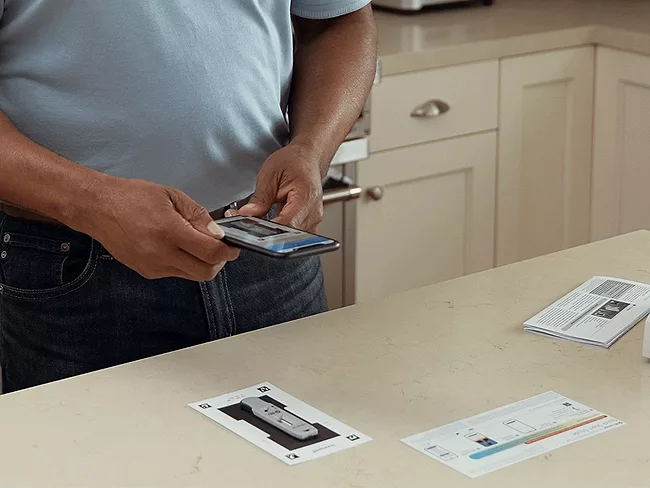
The FDA has issued an emergency use authorization (EUA) for Becton, Dickinson & Co.’s (BD) Veritor At-Home COVID-19 test – a rapid COVID-19 digital antigen test. The test, which is designed for home use, uses a mobile app from Los Angeles-based Scanwell Health Inc. that provides instructions on how to collect and transfer the nasal swab sample to the test stick. The smartphone camera is then used to capture, analyze and interpret results within 15 minutes. BD said it will initially be rolled out to businesses, schools and governments looking to provide a self-testing option.
Cadila Healthcare Ltd. (also known as Zydus Cadila) has received emergency use authorization (EUA) in India for Zycov-D, making it the world’s first plasmid DNA vaccine for COVID-19. Besides the adult population, the Drug Controller General of India’s nod has also given the South Asian country its first COVID-19 vaccine for adolescents ages 12 to 18.