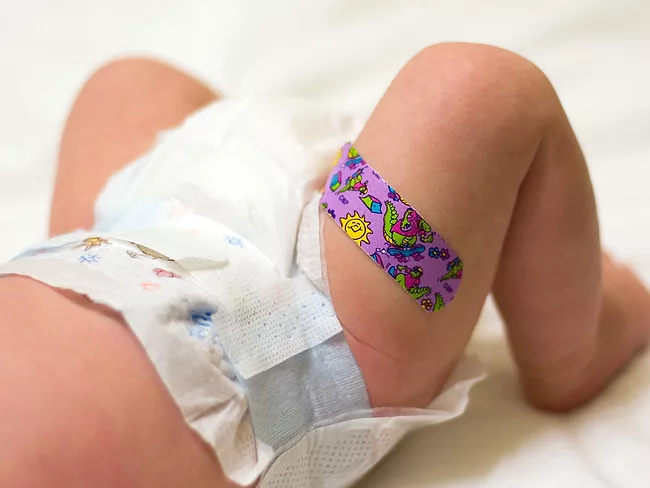
Just days after U.S. FDA advisors unanimously backed use of both the Moderna Inc. and Pfizer Inc.-Biontech SE COVID-19 vaccines in children 6 months and older, the FDA has expanded emergency use authorizations for the products. Availability could follow as soon as June 21, after a meeting of the CDC’s ongoing Advisory Committee on Immunization Practices, wraps up June 18.
Shares of Novavax Inc. dropped 19% after briefing documents released ahead of the U.S. FDA’s June 7 advisory committee raised concerns about risks of myocarditis associated with COVID-19 vaccine NVX-CoV2373, though reviewers also noted the vaccine could offer protection against the omicron variant. The stock (NASDAQ:NVAX) closed June 3 at $44.76, down $11.21.
The pandemic exponentially amplified the move to more patient-driven health care with at-home monitoring, wearable medical devices and telemedicine. Testing has arguably seen the greatest shift, led by emergency use authorizations (EUA) for dozens of rapid tests for SARS-CoV-2. Laboratory Corp. of American Holdings Inc. (Labcorp) stands to benefit even more from the trend with an EUA for an over-the-counter multiplex respiratory virus test and the launch of an at-home collection kit for testing hemoglobin A1c (HbA1c) this week.
The U.S. FDA’s device center reported April 18 that it has revoked the emergency use authorizations (EUAs) for five tests for the SARS-CoV-2 virus, a seemingly significant reduction in the inventory of tests for the COVID-19 pandemic. However, the sponsor of the test in each of these revocations requested that the EUA be revoked, an indication that the market for some types of these tests is saturated.
The FDA has granted an emergency use authorization (EUA) to Inspect IR Systems LLC, of Frisco, Texas, for the company’s namesake test that evaluates the patient’s breath for the presence of volatile organic compounds (VOC) indicative of the SARS-CoV-2 virus. The test is expected to increase the volume of testing by only 64,000 per month at the current rate of production, however, making this a technological breakthrough of limited impact on the COVID-19 pandemic.
In the summer of 2020, when Veru Inc. began researching sabizabulin for treating COVID-19 patients, the company’s CEO was cautioned that the virus could be gone by the time a therapy could be developed. Nearly two years later, Veru still has the compound in development and just reported phase III data that could propel it toward an emergency use authorization.
The Drugs Controller General of India has granted Novavax Inc. and the Serum Institute of India Pvt. Ltd. emergency use authorization (EUA) for Novavax’s protein-based COVID-19 vaccine. It was authorized for use in adolescents aged 12 to 18 years. The vaccine will be manufactured and marketed in India by the Serum Institute under the brand name Covovax.
The FDA continues to issue new and revised emergency use authorizations for testing for the COVID-19 pandemic in recent days, including three reissued and four revised EUAs dated March 24.
The Drugs Controller General of India has granted Novavax Inc. and the Serum Institute of India Pvt. Ltd. emergency use authorization (EUA) for Novavax’s protein-based COVID-19 vaccine. It was authorized for use in adolescents aged 12 to 18 years. The vaccine will be manufactured and marketed in India by the Serum Institute under the brand name Covovax.
The FDA went from zero to two oral antivirals to treat COVID-19 in the space of two days, granting emergency use authorizations last week to Pfizer Inc.’s Paxlovid and Merck & Co. Inc.-Ridgeback Biotherapeutics Inc.’s molnupiravir. Both five-day regimens are authorized for use, within five days of COVID-19 symptom onset, in individuals at high risk of progressing to severe disease, including hospitalization and death.