The latest global regulatory news, changes and updates affecting medical devices and technologies, including: FDA adds fingerstick sample to roster of COVID EUAs; NICE: Sonata system not backed by head-to-head studies.
South San Francsico-based Twist Bioscience Corp. and Biotia Inc., of New York, received the first FDA emergency use authorization (EUA) for a capture-based next-generation sequencing (NGS) assay for the coronavirus that causes COVID-19. The technique reduces the likelihood of misdiagnosing or failing to identify mutations compared to standard sequencing.
The FDA is becoming more amenable to screening and surveillance tests for the COVID-19 pandemic, although the distinction between test uses is not always clear. Toby Lowe, the associate director of the Office of In Vitro Diagnostics and Radiological Health (OIR), said on the agency’s weekly town hall that the difference between surveillance and screening tests is whether the individuals who are screened can act on the information thus derived.
The COVID-19 pandemic has affected wide swaths of the global economy, mostly in a negative manner, but it has spurred some types of innovation at a rate that would be unimaginable in ordinary times. That seems to be the take-away for an emergency use authorization (EUA) granted to Miami-based Tiger Tech Solutions Inc. for its COVID Plus monitor, which uses plethysmography and a machine learning algorithm to provide a screening mechanism at mass gatherings, thus bringing the world one step closer to a state of normalcy.
Most of the med-tech companies doing business during the COVID-19 pandemic are experienced and already have their FDA compliance systems in place. However, Dennis Gucciardo, a partner at the D.C. office of Morgan, Lewis & Bockius LLP, told BioWorld that while the FDA will give industry sufficient time to transition their emergency use authorizations (EUAs) to conventional premarket filings, the cost of setting up a quality management system may be greater than some current EUA holders are willing to bear.
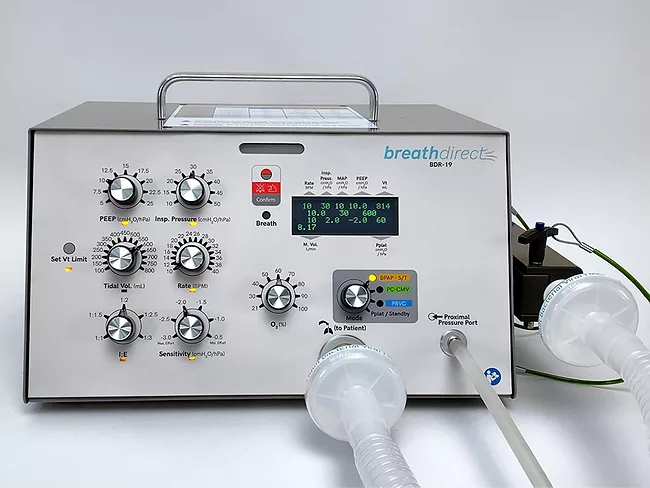
The U.S. FDA has granted emergency use authorization (EUA) to Breath Direct Inc. for its BDR-19 critical care ventilator for the treatment of critical care patients with respiratory insufficiency. Initial shipments of the device are expected within weeks. The EUA marks a major milestone for the fledgling Long Beach, Calif.-based company, which was started by medical device entrepreneur Darren Saravis in the early days of the pandemic.
Positive COVID-19 efficacy numbers from Vir Biotechnology Inc. and Glaxosmithkline plc (GSK) has prompted them to immediately seek an emergency use authorization (EUA) with the FDA and similar authorizations in other countries for their monoclonal antibody, VIR-7831. Meanwhile, the phase III Remdacta study of Actemra/RoActemra (tocilizumab) plus Veklury (remdesivir) vs. placebo plus Veklury, from Roche Holding AG and Gilead Sciences Inc., missed its primary endpoint in treating hospitalized patients with severe COVID-19 pneumonia receiving standard of care.
Cue Health Inc. became the first company to offer COVID-19 molecular testing for home use without a prescription following U.S. FDA emergency use authorization on March 5, 2021. The San Diego-based company’s isothermal nucleic acid amplification test (NAAT) detects RNA from SARS-CoV-2 virus present in the nostrils. “The FDA continues to prioritize the availability of more at-home testing options in response to the pandemic,” said Jeff Shuren, director of the FDA’s Center for Devices and Radiological Health. “Cue COVID-19 Test for Home and Over-the-Counter (OTC) Use provides access to accurate and reliable testing at-home, without a prescription.”
Non-clinical testing for the SARS-CoV-2 virus has been a major goal for regulators across the globe for months. Emergency use authorization (EUA) was just granted by the FDA is for the Quidel Quickvue COVID-19 test, an at-home antigen test with a turnaround time of 10 minutes. It’s the latest in a series of approvals of home tests and collection kits that promises to help control the pandemic.
With the FDA’s granting of emergency use authorization (EUA) to Johnson & Johnson (J&J), there is now a third vaccine – and the first requiring only a single shot – against COVID-19 for adult Americans. Though it packs less of an efficacy punch, the EUA allows J&J’s Ad26.COV2.S to join mRNA vaccines from Moderna Inc. and Pfizer Inc./Biontech SE as protection against the virus.