Test developers and the U.S. FDA are scrambling to meet the testing needs of the American public, however, it's somewhat unclear what the agency's priorities are for the emergency use authorization (EUA) program. Jeffrey Shapiro, of Hyman Phelps & McNamara, made the case that the FDA’s Center for Devices and Radiological Health (CDRH) should be more transparent about its priorities for EUA review.
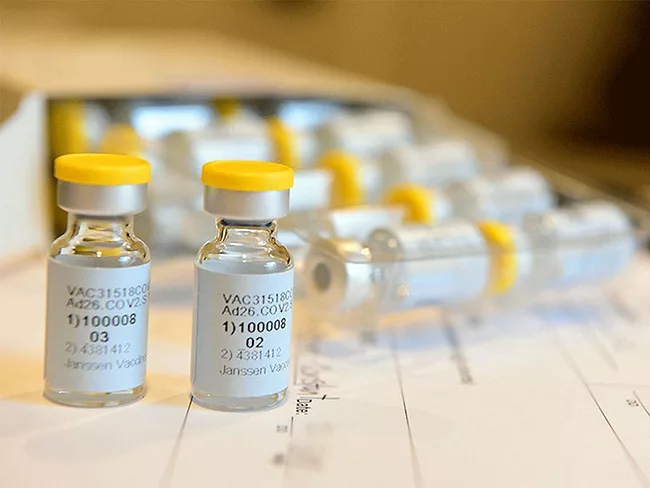
Briefing documents released by the FDA related to the Vaccines and Related Products Advisory Committee meeting slated for Friday suggest that the COVID-19 vaccine from Johnson & Johnson (J&J) will sail smoothly to an emergency use authorization.
Emitbio Inc., a life science company developing light-based therapies, is seeking emergency use authorization (EUA) from the U.S. FDA for its investigational device to treat mild to moderate COVID-19 infection at home. The portable, hand-held device works by directing precise wavelengths of visible light to the back of the throat and surrounding tissues. It is not yet available for sale in the U.S.
Another monoclonal antibody therapy has entered the pandemic fray with the FDA granting emergency use authorization (EUA) for bamlanivimab (LY-CoV555) 700 mg and etesevimab (JS016 or LY-CoV016) 1,400 mg as a cocktail for treating mild to moderate COVID-19 in patients aged 12 and up at high risk for progressing to severe COVID-19 and/or hospitalization.
The latest global regulatory news, changes and updates affecting medical devices and technologies, including: Shuren, Stenzel push back on serology tests; FDA touts accomplishments for 2020; IMDRF posts five-year plan.
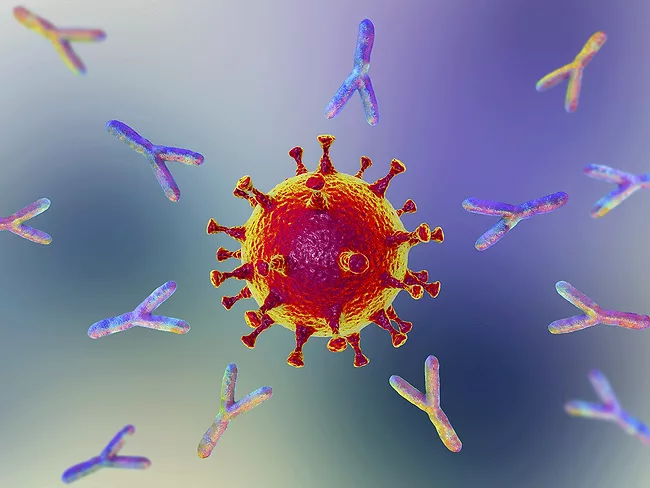
Diagnostic manufacturers are turning their attention to antibodies for those who have been vaccinated for the SARS-CoV-2 virus, and the U.S. FDA’s Tim Stenzel had some advice about this on the Feb. 10 testing town hall. Stenzel advised that developers think of such tests in the same vein as a companion diagnostic (CDx) in that these antibody test will have to be separately validated for each vaccine that is included in the test’s labeled claims.
Another monoclonal antibody therapy has entered the pandemic fray with the FDA granting emergency use authorization (EUA) for bamlanivimab (LY-CoV555) 700 mg and etesevimab (JS016 or LY-CoV016) 1,400 mg as a cocktail for treating mild to moderate COVID-19 in patients aged 12 and up at high risk for progressing to severe COVID-19 and/or hospitalization.
The U.S. FDA is still struggling to keep up with the volume of diagnostic emergency use authorizations (EUAs), but it is not for want of effort. Tim Stenzel, director of the FDA’s Office of In Vitro Diagnostics and Radiological Health (OIR), said on the Feb. 3 testing town hall that the agency is processing nine such applications per day, a big jump over the rate of one per day in the early weeks of the COVID-19 pandemic.
The U.S. Department of Health and Human Services (HHS) has awarded a contract for validation of lab-developed tests (LDTs) for the pandemic to a private company, a move that was apparently an effort to address the resource crunch at the U.S.
The U.S. FDA is actively working on guidance for conversion of emergency use authorizations (EUAs) to conventional premarket review programs, but the FDA’s Tim Stenzel said he does “not perceive a need to rush to convert EUAs” because of the volume of EUA applications, and because he does not expect the public health emergency “to end anytime soon.”