Now that the FDA has granted emergency use authorization to Eli Lilly and Co.’s bamlanivimab, the company plans to manufacture up to 1 million doses of the therapy by year-end with worldwide distribution to mild to moderate COVID-19 patients ages 12 and older in early 2021.
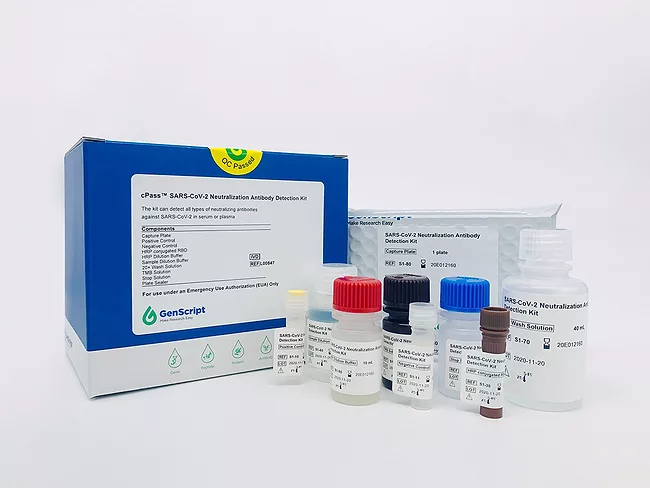
The U.S. FDA has granted emergency use authorization (EUA) to Genscript USA Inc. for its Cpass SARS-CoV-2 Neutralization Antibody Detection Kit, the first commercially available test to detect neutralizing antibodies in individuals previously infected with the novel coronavirus. The serology test measures levels of neutralizing antibodies in samples from patients recovering from COVID-19 as well as people vaccinated against the SARS-CoV-2 virus.
The COVID-19 pandemic has affected the U.S. FDA on the postmarket side as well as on the premarket side, but the focus of pandemic-driven warning letters has shifted over time. Amanda Johnston, senior attorney at Gardner Law of Stillwater, Minn., said on a Nov. 5 webinar the FDA’s emphasis lately has been closer to the agency’s traditional enforcement considerations after an initial wave of warnings dealing with flatly fraudulent products.
The U.S. FDA’s stated policy is that it will not review emergency use authorizations (EUAs) for lab-developed tests (LDTs) for the COVID-19 pandemic, but that doesn’t mean labs are completely shut out. The FDA’s Toby Lowe said that a lab that wants to pair an assay that already has an EUA with a new software installation on lab instrumentation can work with the assay developer to update that EUA.
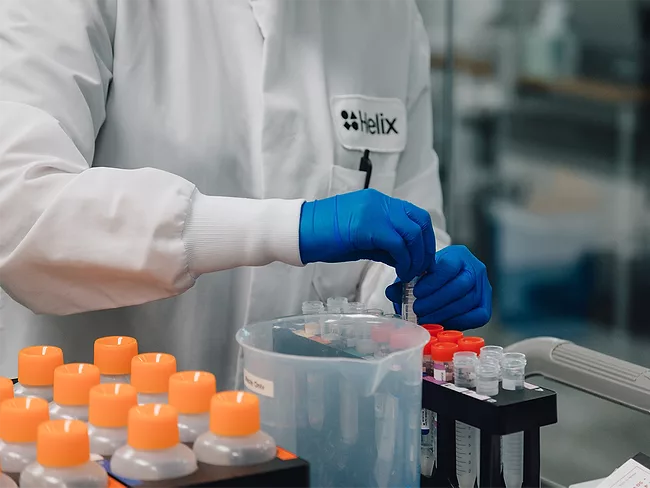
The U.S. FDA moved the goal posts for other companies with its expansion of the emergency use authorization for Helix Opco LLC’s COVID-19 test to include both unsupervised self-collection of samples and testing of asymptomatic individuals. The new indications promise to make the Helix test the preferred tool for schools, universities, and work settings by reducing costs and increasing flexibility.
With the lack of public trust and confidence the biggest barrier to SARS-CoV-2 vaccines in the U.S., the risk of granting an emergency use authorization to a vaccine with safety issues or questionable efficacy could destroy confidence in future FDA-approved products. That message was drummed home throughout the Oct. 22 meeting of the FDA’s Vaccines and Related Biological Products Advisory Committee.
The U.S. FDA’s device center has declared it will not review emergency use authorization (EUA) requests for lab-developed tests (LDTs) for the COVID-19 pandemic, but on the agency’s most recent town hall, on Oct. 14, FDA officials were uncertain as to whether labs should file those EUAs, leaving labs in a state of limbo yet again.
The U.S. FDA will no longer review lab-developed tests (LDTs) for the SARS-CoV-2 virus under the emergency use authorization (EUA) program, a change that will eliminate any prospect of immunity from liability for these tests. The FDA’s Tim Stenzel, director of the Office of In Vitro Diagnostics and Radiological Health, announced the news on the weekly COVID-19 testing town hall, but the change was simultaneously unveiled in the FDA’s Q&A for testing.
With an ongoing phase II trial showing that a pair of its SARS-CoV-2 neutralizing antibodies has so far reduced viral load, symptoms and COVID-19-related hospitalization and ER visits, Eli Lilly and Co. has asked the FDA to consider an emergency use authorization (EUA) for one of the components, LY-CoV555.
Amid speculation that the White House had killed it, the FDA issued a promised guidance Oct. 6 on what it will take to get an emergency use authorization (EUA) for a COVID-19 vaccine.