The U.S. FDA granted an emergency use authorization (EUA) for Quest Diagnostics Inc.’s self-collection kit for COVID-19. The kit allows individuals to collect their own specimens at home or in a health care setting.
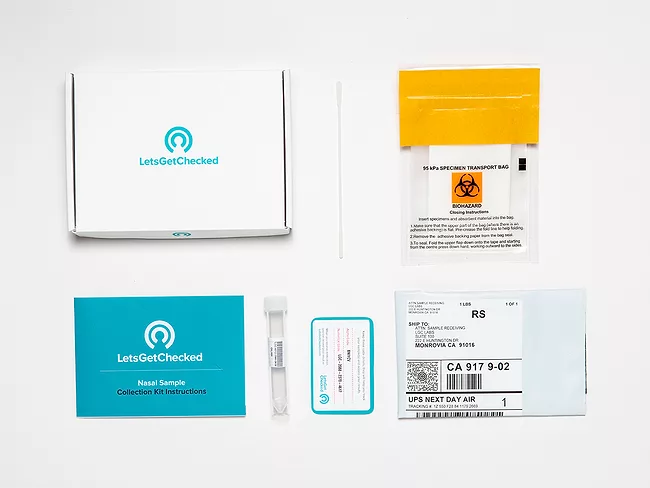
New York-based at-home testing startup Letsgetchecked said Friday that the U.S. FDA has granted emergency use authorization (EUA) for its COVID-19 Sure-track Test for signs of active SARS-CoV-2 infection. The polymerase chain reaction (PCR) nasal swab test is for use by at-risk individuals in the home and delivers results within 24 hours of a sample being received by the company’s CLIA-certified laboratory.
The number of tests of various types for the SARS-CoV-2 virus are still growing, but the emergency use authorization (EUA) program is not the only option for developers. Timothy Stenzel, director of the Office of In Vitro Diagnostics and Radiology, said on the agency’s May 27 town hall that the agency would like to see test developers file for a 510(k) for their tests when the data are sufficient to support an application, adding that any such clearances will not affect the U.S. FDA’s interest in keeping plenty of similar tests on the market via the EUA mechanism.
The U.S. FDA reported that 28 serology tests for antibodies for the SARS-CoV-2 virus either have been withdrawn from the market by the sponsor or delisted by the agency for failure to comply with its notification process for emergency use authorization (EUA). The agency said the list of unavailable tests will be updated over time. For his part, Commissioner Stephen Hahn said the move was undertaken “to ensure that Americans have access to trustworthy tests.”
Quidel Corp., of San Diego, has scored another win at the U.S. FDA, receiving emergency use authorization (EUA) for the Lyra Direct SARS-CoV-2 Assay to allow direct sample processing. What’s special about this assay is that it does not require an up-front sample extraction. Instead, it uses a reformulated buffer that replaces that process with a simple 10-minute heat step, saving about 50 minutes in processing time.
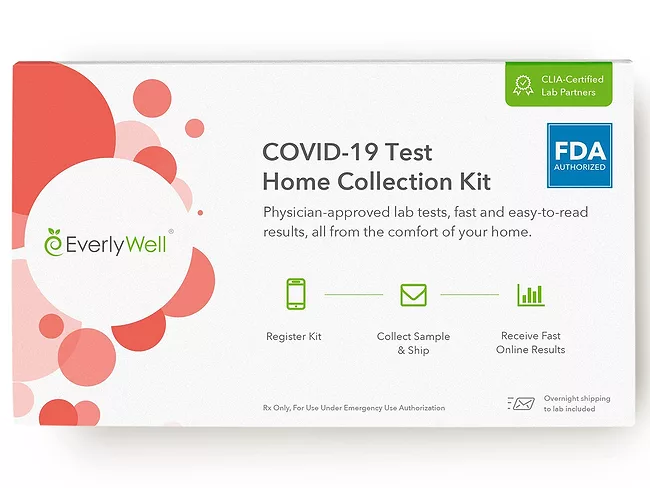
The FDA has granted an emergency use authorization (EUA) for the home sample collection kit made by Austin, Texas-based Everlywell Inc., which can be run on two lab-developed tests. However, the agency has also shut down a Gates Foundation-backed effort in Seattle to develop another home sample collection kit even though the organization behind the effort has been authorized by state health authorities. The FDA announced the news about the Everlywell EUA with the stipulation that the user of the kit has completed an online questionnaire that is subsequently reviewed by a health care professional.
Abbott Laboratories’ ID Now test for the SARS-CoV-2 virus made waves when it was introduced thanks to the rapid turnaround time the molecular test promised. But questions about the test’s performance have surfaced several times in recent weeks. The latest criticism comes from a study conducted at the New York University Langone Medical Center, which claims the diagnostic compared poorly against a competitor. However, the U.S. FDA said that it has questions about the swabs and transport media used in connection with the test. As a result, it will stand pat regarding the ID Now’s place in the emergency use authorization (EUA) program.
The U.S. FDA has given the greenlight to Eko Devices Inc.’s electrocardiogram (ECG)-based algorithm to aid in detecting patients with heart failure during the COVID-19 pandemic. The artificial intelligence (AI)-powered algorithm, which provides a quick way to screen for low ejection fraction, won FDA breakthrough status in December of 2019.
Abbott Laboratories received FDA emergency use authorization (EUA) for its COVID-19 molecular test, which will run on the company's new Alinity m system, as well as its COVID-19 antibody blood test, which will run on the Alinity i system. The two actions bring to five the number of COVID-19 tests developed by the Abbott Park, Ill.-based company to receive EUAs.
The U.S. FDA has issued an emergency use authorization (EUA) for an antigen test for the SARS-CoV-2 virus from Quidel Corp., of San Diego, that is more readily deployed than other diagnostic tests for the pathogen. Quidel’s offering can be used at the point of care (POC) and as a lab test.