Australia is attempting a once-in-a-generation reset of its innovation system, and biotech industry leaders have lauded the federal government’s independent review into Australia's slipping R&D ranks and its proposals to reverse the decline.
U.S. lawmakers and industry experts are raising alarm over China’s expanding dominance across the pharmaceutical supply chain, warning that reliance on Chinese inputs poses a growing national security and public health risk.
Australia is attempting a once-in-a-generation reset of its innovation system, and biotech industry leaders have lauded the federal government’s independent review into Australia's slipping R&D ranks and its proposals to reverse the decline.
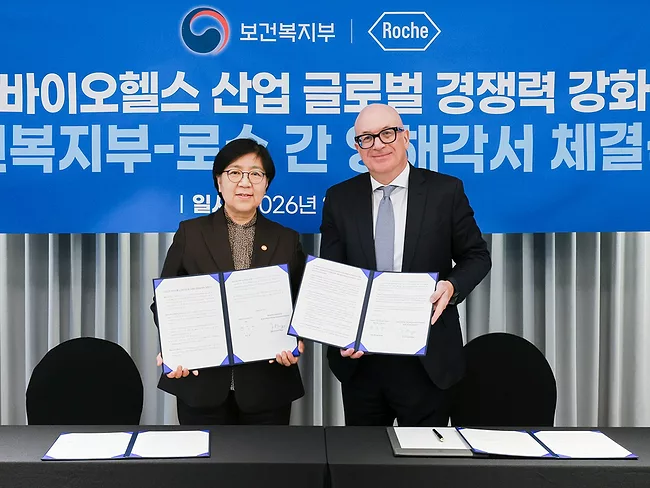
Roche Holding AG pledged to invest ₩710 billion (US$484.6 million) in South Korea over the next five years, positioning the country as a major global hub for clinical trials. The near $500 million agreement inked with the Korean government will bring Roche’s clinical trials for common or incurable diseases and innovative biopharmaceutical products to the country.
In releasing its latest revision of a draft guidance on biosimilars and interchangeable biosimilars, the U.S. FDA took another step in streamlining the development of the follow-ons by easing unnecessary clinical pharmacokinetic testing involving comparator biologics approved outside the U.S.
Roche Holding AG pledged to invest ₩710 billion (US$484.6 million) in South Korea over the next five years, positioning the country as a major global hub for clinical trials. The near $500 million agreement inked with the Korean government will bring Roche’s clinical trials for common or incurable diseases and innovative biopharmaceutical products to the country.
The U.S. FDA’s expectations that its new default position of basing marketing authorization of novel drugs on one adequate, well-controlled trial may be overstated. In explaining the policy in a recent article in TheNew England Journal of Medicine, FDA Commissioner Marty Makary and CBER Director Vinay Prasad said they expect the initiative will create a “surge in drug development,” substantially reduce development costs and will speed drugs to market. While the initiative could reduce the time to the U.S. market, those expectations don’t take into consideration global norms and payer expectations.
Looking to fill a treatment gap, the U.S. Biomedical Advanced Research and Development Authority (BARDA) is launching the first stage of a $100 million prize competition to support development of broad-spectrum, small-molecule antiviral therapies targeting viruses in the Togaviridae and Flaviviridae families.
Looking to fill a treatment gap, the U.S. Biomedical Advanced Research and Development Authority (BARDA) is launching the first stage of a $100 million prize competition to support development of broad-spectrum, small-molecule antiviral therapies targeting viruses in the Togaviridae and Flaviviridae families.
In subpoenaing a former Pfizer Inc. official to appear before the U.S. House Judiciary Committee July 22, Judiciary Chair Jim Jordan, R-Ohio, signaled legislative steps Congress may take in response to allegations that Pfizer slow-walked its COVID-19 vaccine development in 2020 so the trial results wouldn’t have to be disclosed until after the presidential election.