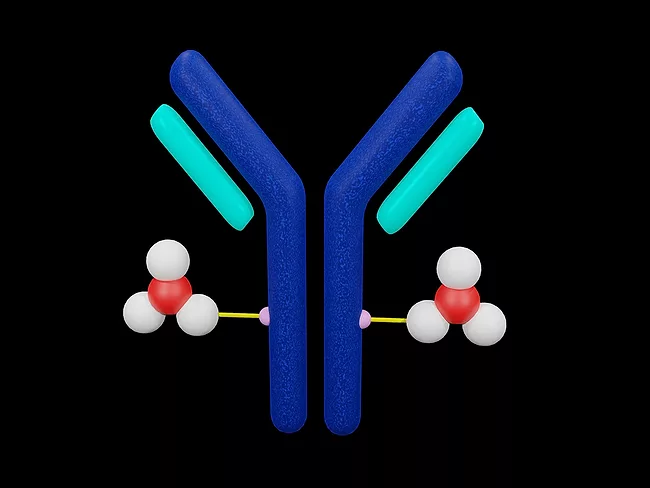
CD33 is known to be highly expressed in myeloid cells and a good therapeutic target for treating acute myeloid leukemia (AML). In the search for more potent compounds, researchers from Dragonfly Therapeutics Inc. and Bristol Myers Squibb Inc. investigated the therapeutic potential of BMS-986357, also known as CC-96191.
Systimmune Inc. and Bristol Myers Squibb Co. have joined hands in a co-development deal for bispecific antibody drug conjugate (ADC) BL-B01D1 in a deal worth up to $8.4 billion. The deal falls on the heels of BMS acquiring Mirati Therapeutics in October 2023 for $4.8 billion to add to its oncology pipeline.
Systimmune Inc. and Bristol Myers Squibb Co. have joined hands in a co-development deal for bispecific antibody drug conjugate (ADC) BL-B01D1 in a deal worth up to $8.4 billion. The deal falls on the heels of BMS acquiring Mirati Therapeutics in October 2023 for $4.8 billion to add to its oncology pipeline.
Three giants have produced new phase III study data for their already approved, big name therapies. Two were positive and the third was stopped for futility.
Following its acquisition of Jounce Therapeutics Inc. for $95.6 million, Concentra Biosciences LLC lodged another proposal to acquire the U.S. and China biotech Lianbio Co. Ltd. The unsolicited and non-binding proposal filed Nov. 30 by San Diego-based Tang Capital Partners LP, Concentra’s parent firm, offered a 100% cash equity acquisition of the Shanghai- and Princeton, N.J.-based Lianbio at $4.30 per share, ringing up a deal worth around $465 million.
Following its acquisition of Jounce Therapeutics Inc. for $95.6 million, Concentra Biosciences LLC lodged another proposal to acquire the U.S. and China biotech Lianbio Co. Ltd. The unsolicited and non-binding proposal filed Nov. 30 by San Diego-based Tang Capital Partners LP, Concentra’s parent firm, offered a 100% cash equity acquisition of the Shanghai- and Princeton, N.J.-based Lianbio at $4.30 per share, ringing up a deal worth around $465 million.
In a deal that could bring Avidity Biosciences Inc. $2.3 billion if all milestones are met, Bristol Myers Squibb Co. gained global rights to Avidity’s antibody oligonucleotide conjugates platform to advance up to five genetic cardiovascular targets. Avidity’s technology, which combines the specificity of monoclonal antibodies with the precision of oligonucleotide therapies, aims to address the root cause of diseases that are untreatable with current RNA therapeutics. Its lead internal programs are based on the targeted delivery of RNA into muscle.
With U.S. drug prices a perennial issue, several lawmakers, both Democrats and Republicans, are increasingly looking beyond biopharma to identify other “persons of interest” that may be complicit in the high list prices facing American patients.
Bayer AG’s asundexian, considered one of the next generation class of anticoagulants and a potential blockbuster, has failed a phase III clinical trial in atrial fibrillation. The factor XIa inhibitor is one of three with a similar mechanism of action in late stage development by big companies.
Bristol Myers Squibb Co. has identified triazole N-linked carbamoyl cyclohexyl acids acting as lysophosphatidic acid LPA1 receptor (LPAR1; EDG2) antagonists reported to be useful for the treatment of fibrosis, cancer, transplant rejection, osteoporosis, inflammatory disorders, neuropathic pain, atherosclerosis and chronic obstructive pulmonary disease, among others.
.webp?height=488&t=1670008838&width=650 "Acute myeloid leukemia")