About 30%-40% of triple-negative breast cancers (TNBC) show HER2-low status and may benefit from the HER2-directed antibody-drug conjugate trastuzumab deruxtecan (T-DXd). Ataxia-telangiectasia mutated (ATM) kinase plays a crucial role in double-strand break (DSB) repair response, thus inhibitors of ATM, such as AZD-1390, may enhance the effect of DSB inducers, resulting in DNA damage accumulation.
Researchers at the Olivia Newton-John Cancer Research Institute and collaborators have developed a new anti-HER2 monoclonal antibody, mAb104, which targets a conformationally exposed, tumor-specific epitope in domain II of the HER2 protein.
Although HER2-targeted therapies have become a mainstay in cancer treatment, some tumors evade them by stripping away the portion of the HER2 receptor that most therapies are built to recognize and bind to, but Taiwan’s AP Biosciences Inc. is developing bispecific antibody AP-402 to address treatment-resistant HER2+ cancers.
Although HER2-targeted therapies have become a mainstay in cancer treatment, some tumors evade them by stripping away the portion of the HER2 receptor that most therapies are built to recognize and bind to, but Taiwan’s AP Biosciences Inc. is developing bispecific antibody AP-402 to address treatment-resistant HER2+ cancers.
China’s National Medical Products Administration has approved Remegen Co. Ltd.’s antibody-drug conjugate (ADC), disitamab vedotin (RC-48), for treatment of HER2-positive advanced breast cancer in patients with liver metastasis.
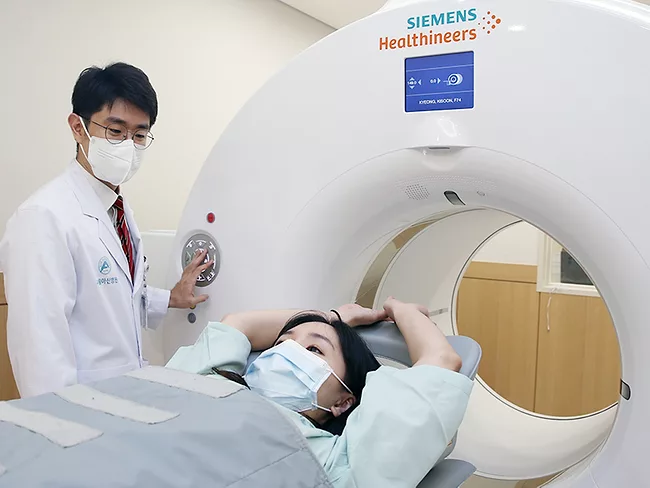
Radiopharmaceuticals, including 16α-18F-fluoro-17β-estradiol (18F-FES) PET/CT, are emerging as powerful tools with new diagnostic and therapeutic potential in breast cancer diagnosis and treatment, Han Sang-won, professor from the department of nuclear medicine at Asan Medical Center, recently told BioWorld.
Tharimmune Inc. has announced preclinical data from its expanded pipeline with HS-1940, a dual-target multispecific biologic engineered to bind to both programmed cell death protein 1 (PD-1) and vascular endothelial growth factor (VEGF), and HS-3215, a dual-target biologic binding to HER2 and HER3 receptors. Both use the proprietary Epiclick technology, a multispecific antibody engineering platform.
Radiopharmaceuticals, including 16α-18F-fluoro-17β-estradiol (18F-FES) PET/CT, are emerging as powerful tools with new diagnostic and therapeutic potential in breast cancer diagnosis and treatment, Han Sang-won, professor from the department of nuclear medicine at Asan Medical Center, recently told BioWorld.
Antibody-drug conjugate (ADC)-focused Callio Therapeutics debuted on March 3 with the closing of a $187 million series A financing round based on cancer drug technology and assets in-licensed from Hummingbird Bioscience Pte Ltd.
Vir Biotechnology Inc.’s 2024 deal with Sanofi SA is starting to look like a pretty savvy move. The company, which picked up three clinical-stage dual-masked T-cell engagers (TCEs) and rights to the platform technology as part of a pipeline overhaul, reported phase I data for TCE programs targeting HER2 and PSMA that indicated promising efficacy with a low prevalence of the cytokine toxicity that has hampered other TCE programs.