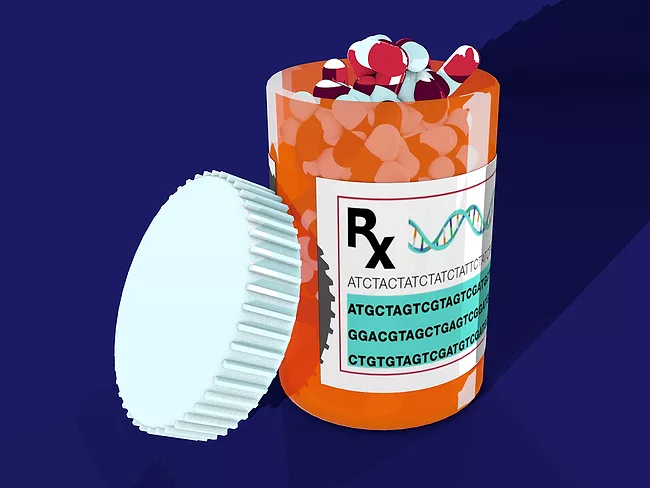
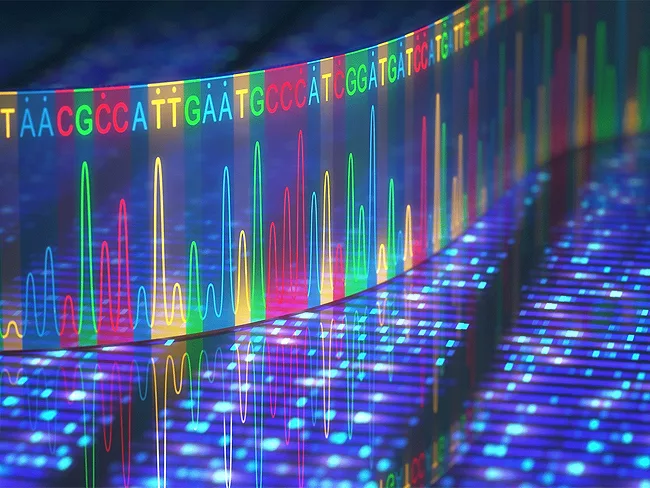
For Inocras Inc., the benefits of whole genome sequencing are two-fold. First is its explicit usefulness in diagnosing and treating hard-to-treat diseases like cancer and rare diseases. The second, less apparent, benefit lies in the data generated in the process, and its applications to current and future generations of cancer patients.
Genotype assay testing can detect new variants of the COVID-19 virus six days faster than whole genome sequencing (WGS), with results returned in just three days — compared to nine for WGS — according to a study published in the Lancet Microbe.
A landmark, real-world study in the U.K. has demonstrated that combining whole genome sequencing with clinical data enabled tailored cancer treatment and improved outcomes. At one health care center, having DNA sequence data led to changes from usual standard of care in 25% of cases. “Mostly, [patients] got into clinical trials; some got medicines they wouldn’t have got. Others avoided medicines because their genetic make-up suggested that if they were exposed to the medicines, they would be at risk of harm,” said Mark Caulfield, professor of clinical pharmacology at Queen Mary University of London, who is co-author of a paper outlining the findings in Nature Medicine, Jan 11, 2024.
Illumina Inc. released Connected Insights in a beta version for the U.S., following its commercial release in other selected countries. Connected Insights, an assay-agnostic, cloud-based software designed to streamline interpretation and reporting across next-generation sequencing (NGS) types, was initially developed for somatic oncology applications, the system will shortly also support whole genome sequencing for rare diseases.
Seekin Inc.’s cancer mutation detection kit Pancanseek for leukemia patients has received a CE-IVD mark, expanding the company’s reach in the testing space.
The U.K. is taking the next step in applying genomics to health care with the launch of a £105 million (US$130 million) project that will sequence the whole genomes of 100,000 healthy newborn babies to detect rare genetic conditions.
The U.K. is taking the next step in applying genomics to health care with the launch of a £105 million (US$130 million) project that will sequence the whole genomes of 100,000 healthy newborn babies to detect rare genetic conditions.
LONDON – A pilot study has shown that whole genome sequencing can pinpoint the genetic causes of rare diseases, even in people who had previously not been given a diagnosis after undergoing sequencing of their protein coding exome.
The U.S. National Institutes of Health had its hands full with the Rapid Acceleration of Diagnostics (RADx) program as the COVID-19 pandemic unwound, but the agency’s other work on diagnostics is bearing fruit. NIH said Aug. 31 that its collaboration with an academic research institute has led to development of a test that predicts which patients suffering from neurofibromatosis will develop cancers with metastatic potential.
A whole genome sequencing study has been the first to demonstrate a strong association between infection with the avian influenza A virus H7N9 and rare, heterozygous single-nucleotide variants in the MX1 gene encoding for the myxovirus resistance protein A.