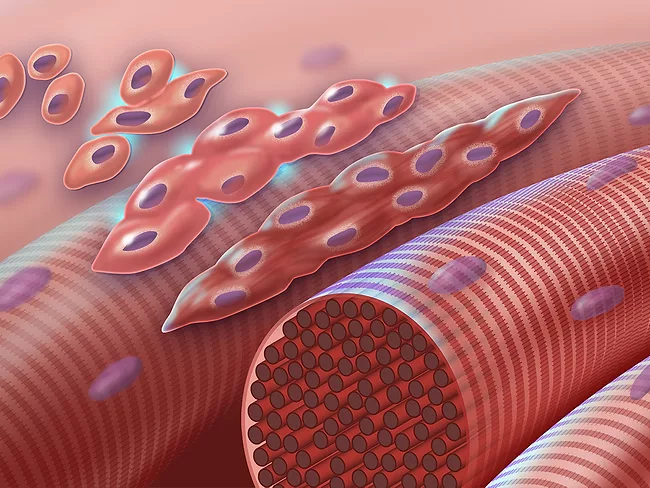
Researchers have linked Duchenne muscular dystrophy (DMD) to a loss of regenerative capacity of muscle stem cells. The findings, which were published in the March 1, 2023, issue of Science Translational Medicine, suggest that boosting the regenerative capacity of muscle stem cells could delay or perhaps even prevent the progression of DMD. DMD is “an early and horrible disease,” senior author Frederic Relaix, who is the director of a research team studying the biology of the neuromuscular system at the Mondor Institute for Biomedical Research told BioWorld.
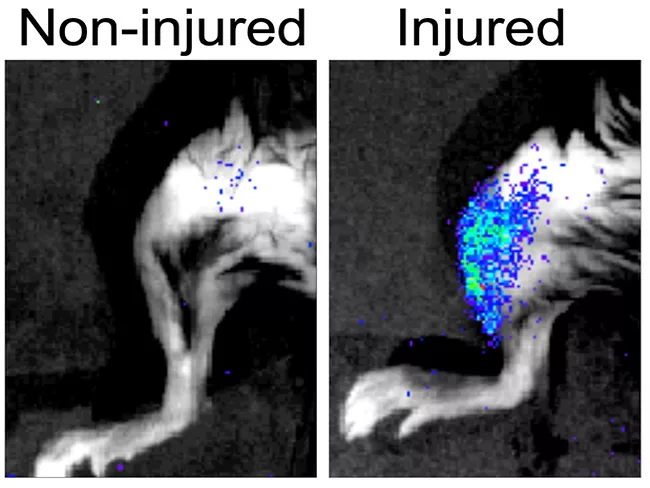
The first in vivo cell atlas of senescent tissue in skeletal muscle has identified the damaging properties of these cells and explained why they block muscle regeneration. According to a study at Pompeu Fabra University led by scientists from Altos Labs Inc., cell damage caused the senescence of the cells, which secreted toxic substances into the surrounding microenvironment, causing fibrosis and preventing tissue regeneration.
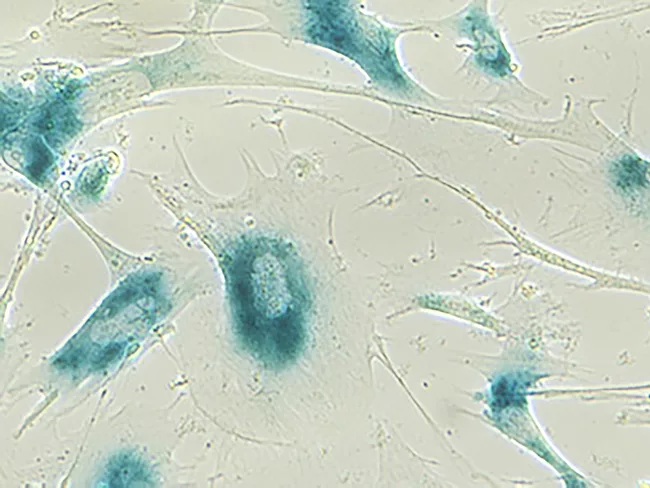
Subpopulation of senescent-like cells are known contributors to acquiring drug resistance in cancer. Potential therapies are increasingly being developed with designs to reduce the proportion of slowly dividing cells rather than to kill hyperproliferative cells. Insufficient RNA-binding protein HuR/ELAVL1 levels are known to cause cell senescence, while increased HuR is associated with proliferation.
Low-dose administration of anti-PD-1 monoclonal antibodies could potentially reverse conditions associated with aging such as the accumulation of senescent cells and inflammation, according to a new study conducted at the Institute of Medical Science at the University of Tokyo.
Fibroblasts expressing the tumor suppressor p16INK4a (a marker of senescence) stimulated lung stem cells from young mice to repair damaged tissue, according to a study from the University of California, San Francisco (UCSF). The finding calls into question therapies that eliminate these senescent cells without considering their beneficial role in tissue homeostasis.
By targeting chimeric antigen receptors (CARs) to a senescence marker, researchers at Memorial Sloan-Kettering Cancer Center have developed a CAR T cell that had beneficial effects in mouse models of both liver fibrosis and lung cancer.
By targeting chimeric antigen receptors (CARs) to a senescence marker, researchers at Memorial Sloan-Kettering Cancer Center have developed a CAR T cell that had beneficial effects in mouse models of both liver fibrosis and lung cancer.
By targeting chimeric antigen receptors (CARs) to a senescence marker, researchers at Memorial Sloan-Kettering Cancer Center have developed a CAR T cell that had beneficial effects in mouse models of both liver fibrosis and lung cancer.