There may be no COVID-19 vaccines authorized yet in the U.S. for the youngest children, but there’s now an approved treatment for some children who are already sick with an infection.
With the pandemic lingering across the world and more COVID-19 therapies becoming available and in demand, the opportunity for counterfeits is growing.
With the pandemic lingering across the world and more COVID-19 therapies becoming available and in demand, the opportunity for counterfeits is growing.
LONDON – The U.K. Recovery trial has added a fourth drug to the list of therapies it has shown are effective in treating hospitalized COVID-19 patients, demonstrating the JAK inhibitor Olumiant (baricitinib) reduces the risk of death by 13% in seriously ill patients. That effect is in addition to treatment with dexamethasone, which became standard of care after the Recovery trial showed it reduced mortality by one-third in patients on ventilators.
The deadly SARS-CoV-2 virus that has cost nearly 6 million lives worldwide and disrupted global economies has brought the biopharma industry $82 billion in sales revenue since the start of the pandemic, with guidance for another $88 billion this year.
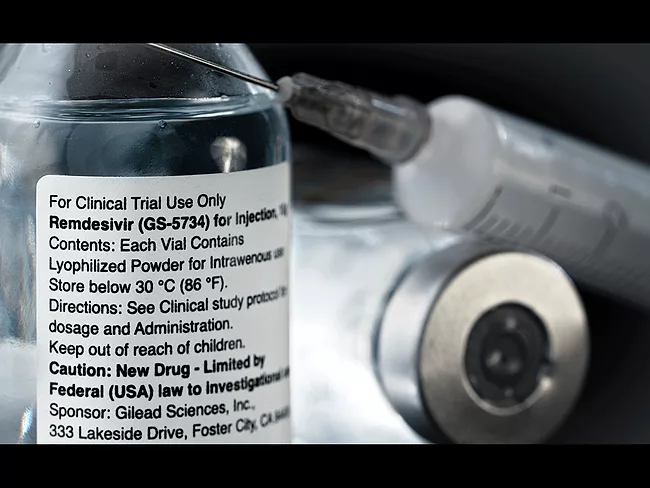
As part of its ongoing effort to speed drug pricing competition in the U.S. through the development of generics, the FDA is releasing another batch of draft and revised draft product-specific guidances on the design of bioequivalence studies to support abbreviated new drug applications. Among the 30 new draft guidances is one specific to remdesivir, which was approved in October 2020 as a COVID-19 treatment.
Once again, the U.S. FDA giveth and it taketh away. Just a few days after expanding its approval for Gilead Sciences Inc.’s Veklury (remdesivir) to provide access to more people infected with COVID-19, the FDA essentially shut down the use of two monoclonal antibody (mAb) treatments Jan. 24 that had been authorized to treat mild-to-moderate COVID-19 infections – Regeneron Inc.’s Regen-Cov (Ronapreve in Europe), an antibody cocktail of casirivimab and imdevimab, and Eli Lilly and Co.’s bamlanivimab and etesevimab that are administered together.
Should the U.S. government be in the business of manufacturing COVID-19 vaccines? Several prominent Democratic senators and representatives would say yes.
Enacting provisions to control U.S. prescription drug prices remains a top priority with many members of Congress as they push through the Biden administration’s budget agenda – despite warnings that government price controls on drugs would come at the cost of innovation.
Investigators at the University of California at San Francisco have identified a confounder that appears to be behind the purported anti-SARS-CoV-2 effects of a number of therapeutic candidates that were identified via repurposing.