The brain-computer interface (BCI) is the subject of keen medical interest for those dealing with neurological damage, but military applications are also a point of interest among a number of national governments. With all this in mind, an agency at the Department of Commerce has posted a request for comments regarding a possible imposition of export controls on BCI devices due to national security concerns, a proposal that could complicate exports of such devices for medical use.
Using a minimally invasive brain implant, Feinstein Institutes for Medical Research scientists produced tingling sensations in the fingers of patients who lacked the sense of touch as a result of nerve damage, according to a study published in Brain Stimulation. A second study by the team, which appeared in Frontiers in Neuroscience, used stereoelectroencephalography (SEEG) electrodes to decode neural signals to improve the hand control algorithms in brain-computer interfaces.
The FDA’s device center has a mantra of sorts when it comes to the details, or lack thereof, in guidance, which is “talk to us early and often.” For device makers eyeing the brain-computer interface (BCI) device space, this mantra has been applied to the question of pivotal study enrollment numbers, suggesting that some sponsors will find their pivotal studies come with a case of sticker shock sufficient to force them to rethink their research and developmental plans.
With paralysis affecting more than 5 million Americans, devices that serve as brain-computer interfaces (BCIs) are increasingly important, even if few are commercially available. The FDA has responded to the predicament with a leapfrog guidance, a preliminary form of guidance designed to foster more interaction with industry and encourage developers to move along on development programs for devices that will aid patients in restoring lost motor and/or sensory capabilities.
Synchron Inc. landed $40 million in new funding through a series B fundraising round led by Khosla Ventures. This round brings the total amount raised by the company to $59 million since its founding in 2016. Other participants in the round included Forepont Capital Partners, ID8 Investments, Shanda Group, General Advance, Subversive Capital, and Re.mind Capital as well as Arani Bose and Thomas Reardon. Returning investors included Neurotechnology Investors, Metis Innovative, and the University of Melbourne.
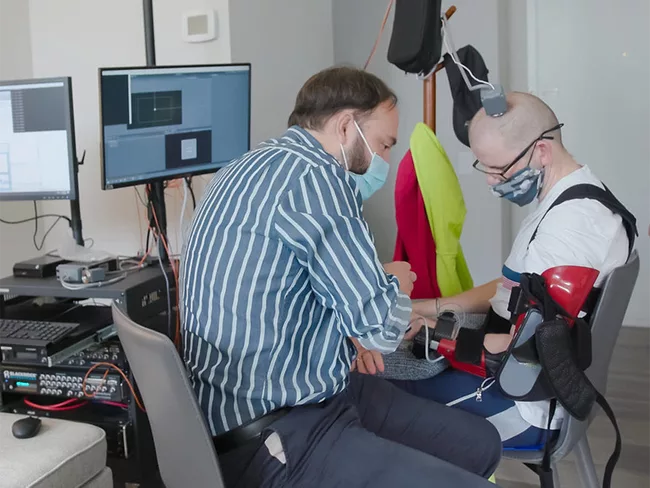
Researchers at Thomas Jefferson University have implanted brain electrodes in a patient who suffered a subcortical ischemic stroke more than a year ago to help them overcome abnormal muscle tone and control a robotic arm brace. Artificial intelligence (AI) algorithms interpret neuronal signals recorded by the electrodes into movement of the brace.
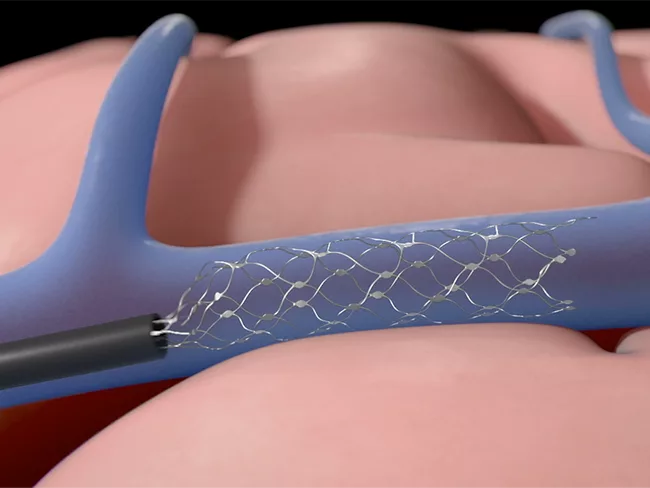
Neurovascular bioelectronics medicine company Synchron Inc. has received good news in the form of a breakthrough device designation for its Stentrode. The U.S. FDA granted the designation for the fully implantable medical device that can translate brain activity or stimulate the nervous system from inside a blood vessel. As a bonus for patients, the device does not require open brain surgery. “As this is a first-of-its-kind device, we look forward to working closely with the FDA to prioritize development of the Stentrode and ensure access for patients with paralysis, as well as lay the groundwork for future indications for brain-computer interfaces,” said Thomas Oxley, CEO of Synchron.