Incheon, South Korea-based Celltrion Inc. said on Jan. 2 that it reached an agreement with Asian health care investment firm CBC Group to partially sell off its Primary Care unit by March 2024 for ₩209.9 billion (US$160.7 million). Incheon, South Korea-based Celltrion Inc. said on Jan. 2 that it reached an agreement with Asian health care investment firm CBC Group to partially sell off its Primary Care unit by March 2024 for ₩209.9 billion (US$160.7 million).
Biosimilars grabbed a lot of headlines in 2023, thanks to the biggest U.S. biosimilar launch to date targeting Abbvie Inc.’s mega-blockbuster Humira (adalimumab). Eight biosimilars referencing the immunology drug entered the U.S. market under licensing agreements with Abbvie. Amgen Inc.’s Amjevita led the pack with a five-month headstart in January. The others – including the first adalimumab interchangeable, Boehringer Ingelheim GmbH’s Cyltezo – launched in July.
South Korean pharmaceuticals Celltrion Inc. and Cyron Therapeutics Co. Ltd. are teaming up to discover and develop bispecific and trispecific antibodies, collectively called polyspecific antibodies, under the ₩1.158 trillion (US$882.38 million) joint research agreement inked on Dec. 6. Under the terms, privately held Daegu-based Cyron will discover and develop at least three polyspecific antibodies for blood and solid cancers pre-selected by Incheon-based Celltrion via Cryon’s CD-3 targeting T-cell engager platform that helps engage T cells to attack cancer cells.
South Korean pharmaceuticals Celltrion Inc. and Cyron Therapeutics Co. Ltd. are teaming up to discover and develop bispecific and trispecific antibodies, collectively called polyspecific antibodies, under the ₩1.158 trillion (US$882.38 million) joint research agreement inked on Dec. 6. Under the terms, privately held Daegu-based Cyron will discover and develop at least three polyspecific antibodies for blood and solid cancers pre-selected by Incheon-based Celltrion via Cryon’s CD-3 targeting T-cell engager platform that helps engage T cells to attack cancer cells.
As South Korea increases its stakes on the “bioeconomy” as its next growth engine and as its “second semiconductor industry,” leading domestic biologic and biosimilar drug producers such as Samsung Biologics Co. Ltd. and Celltrion Inc. are setting record production targets to become forerunners in the global playing field.
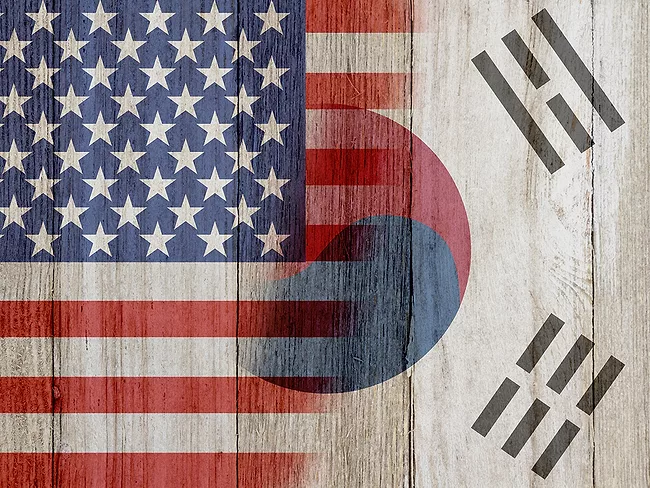
National support for the biosimilar sector and the domestic industry’s efforts to increase production and sales may not be enough for South Korean biosimilar firms to box out competition in the ever-changing regulatory court of the U.S.
National support for the biosimilar sector and the domestic industry’s efforts to increase production and sales may not be enough for South Korean biosimilar firms to box out competition in the ever-changing regulatory court of the U.S. “Competition in U.S. negotiations and rebates are fierce,” Choi Sung-ho, chairman of the Korean Society for Bioeconomy, said. “Even if you get listed, it is crucial to be placed in an advantageous class to lower out-of-pocket costs.
As South Korea increases its stakes on the “bioeconomy” as its next growth engine and as its “second semiconductor industry,” leading domestic biologic and biosimilar drug producers such as Samsung Biologics Co. Ltd. and Celltrion Inc. are setting record production targets to become forerunners in the global playing field.
South Korea’s Celltrion Inc. is rolling out a tweaked plan to merge its three affiliates – electing for a two-way merger followed by consolidation with the final branch – in its latest efforts to rise through the ranks and emerge as a “true” big pharma.
South Korea’s Celltrion Inc. is rolling out a tweaked plan to merge its three affiliates – electing for a two-way merger followed by consolidation with the final branch – in its latest efforts to rise through the ranks and emerge as a “true” big pharma.