The demise of the Medicare Coverage of Innovative Technologies (MCIT) rule may not be the end of the breakthrough devices coverage story, but Lee Fleisher of the U.S. Centers for Medicare & Medicaid Services (CMS) said the MCIT rule was riddled with deficiencies. Fleisher said CMS is of the view that expedited coverage of breakthrough medical devices would be better handled under existing statutory authorities, suggesting the agency sees no need for the MCIT-driven provisions of the Cures 2.0 legislation.
The Medicare Coverage of Innovative Technology (MCIT) rule is administratively a dead letter, but the U.S. House of Representatives’ Cures 2.0 legislation would statutorily resurrect the MCIT concept. Scott Whitaker, president and CEO of the Advanced Medical Technology Association (AdvaMed), said automatic coverage of breakthrough devices does not constitute a subversion of the Medicare coverage process, but added that AdvaMed is not opposed to other means of cutting the Medicare red tape, such as greater resources at CMS.
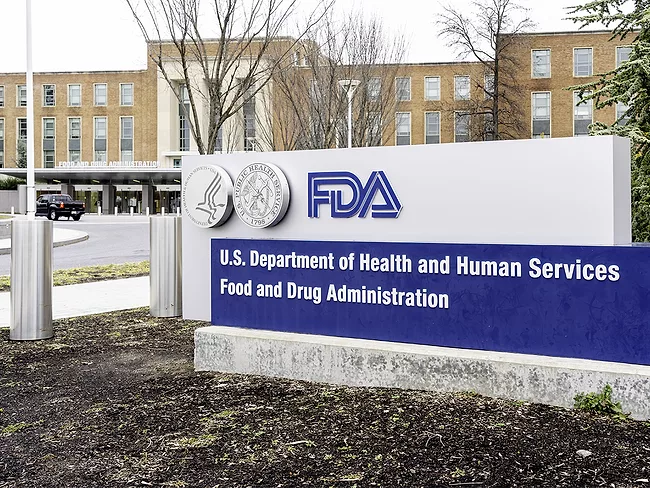
While the FDA has not provided transcriptions for device user fee meetings in roughly five months, the agency is still demonstrably determined to increase the volume of user fees. A source close to the negotiations told BioWorld that the latest proposal from the agency, dated Sept. 22, would require that industry come up with roughly $2.5 billion over the next five fiscal years, more than double the amount under MDUFA IV.
The FDA’s quarterly report on device user fee performance goals encodes a number of metrics, such as the rate at which PMA originals are cited for a major deficiency on the first review cycle. For premarket approval applications (PMAs) filed in fiscal year 2021 to date, the major deficiency rate on the first cycle is 86%, which would be tied for the fifth highest rate in two decades if that rate holds throughout the balance of the fiscal year.
Negotiations between the FDA and industry over the next device user fee are going on behind closed doors, but the agency’s summaries of these meetings suggest there are sharp disagreements. While the FDA continues to press industry on additional fees for the total product life cycle advisory program, industry’s dissatisfaction with the FDA’s fiscal management of the user fee program has prompted a demand for a one-off audit of the agency’s use of those user fees.
The FDA and industry are deep into the negotiations over the next device user fee, with the usual array of concerns such as premarket program performance and the volume of user fees. Jeff Shuren, director of the FDA’s Center for Devices and Radiological Health (CDRH), has once again given voice to a perceived need for a significant boost in user fee volumes in an interview with a major trade association, suggesting that device makers can expect a significant uptick in fees for PMAs and 510(k)s in the years ahead.
Of all the controversies surrounding the FDA, the agency’s reliance on user fees and its use of accelerated review of therapies might be the most consistent sources of public angst. Coleen Klasmeier, a partner of Sidley Austin LLP, told BioWorld that while she is not particularly concerned about regulatory capture stemming from FDA reliance on user fees, it may be appropriate to ask whether the drug premarket review process leaves FDA staff with more confidence in a new drug application than the data would seem to suggest.
The FDA’s presenters at this year’s joint FDA/Xavier med-tech conference presented on a range of issues, such as the breakthrough devices premarket program and the agency’s postmarket surveillance efforts. However, the two FDA presenters both remarked that these functional areas are hampered by lack of resources, suggesting the agency has a unified message about resources that permeates negotiations for the next device user fee agreement.
The negotiations for the next device user fee agreement are well underway, and there are signs that the FDA is looking for a significant boost in user fees from device makers. However, Rep. Anna Eshoo (D-Calif.) told members of the MDMA that no member of Congress should believe that user fees relieve Congress of its responsibility “for funding the agency in a robust way.”