Researchers from Moderna Inc. and affiliated organizations presented preclinical data for the novel mRNA-lipid nanoparticle (LNP) vaccine, mRNA-1769, against mpox virus.
Exsilio Therapeutics emerged from stealth mode on June 25, 2024, with $82 million from a series A financing that was co-led by Novartis Venture Fund and Delos Capital. The company plans to use naturally occurring, mobile genetic elements to integrate therapeutic genes at a defined location in the genome, making it safer than random integration, which can cause tumor formation.
Exsilio Therapeutics emerged from stealth mode on June 25, 2024, with $82 million from a series A financing that was co-led by Novartis Venture Fund and Delos Capital. The company plans to use naturally occurring, mobile genetic elements to integrate therapeutic genes at a defined location in the genome, making it safer than random integration, which can cause tumor formation.
Researchers from Poseida Therapeutics Inc. presented preclinical data for P-FVIII-101, a novel nonviral gene therapy being developed for the treatment of hemophilia A.
Generation Bio Co. has announced a breakthrough in its nonviral genetic medicine platform with the development of a proprietary, novel DNA called immune-quiet DNA (iqDNA).
Immetas Therapeutics Inc. and GC Biopharma Corp. have entered into a research collaboration to discover and develop novel mRNA therapeutics for the treatment of a broad range of autoimmune diseases. The collaboration combines Immetas’ proprietary platform for modulating innate immune pathways with GC Biopharma’s mRNA therapeutic and lipid nanoparticle (LNP) delivery platforms.
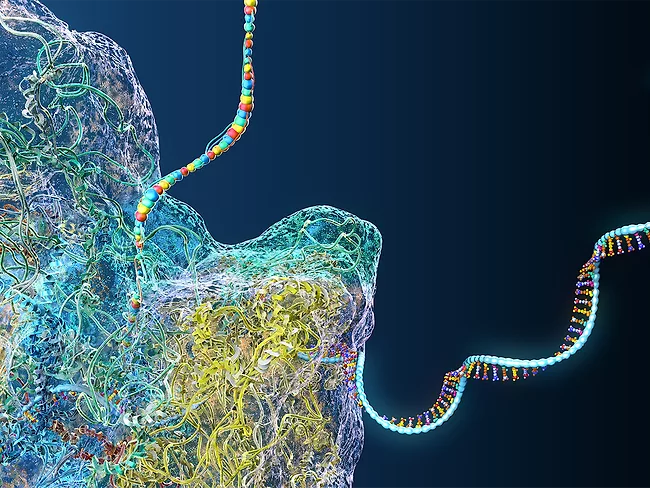
Messenger RNA, or mRNA, represents a relatively new class of therapeutics with the potential to prevent and treat a wide range of diseases. A well-known success story is of the mRNA vaccines that controlled the COVID-19 pandemic, which has fueled enthusiasm for the field. But biotechs are also developing mRNA candidates for several other infectious diseases, including malaria, tuberculosis and HIV, as well for cancer, autoimmune and allergic diseases. However, delivering nucleic acid therapeutics can be challenging, since mRNA cannot get into cells on its own.
Messenger RNA, or mRNA, represents a relatively new class of therapeutics with the potential to prevent and treat a wide range of diseases. A well-known success story is of the mRNA vaccines that controlled the COVID-19 pandemic, which has fueled enthusiasm for the field. But biotechs are also developing mRNA candidates for several other infectious diseases, including malaria, tuberculosis and HIV, as well for cancer, autoimmune and allergic diseases. However, delivering nucleic acid therapeutics can be challenging, since mRNA cannot get into cells on its own. “Nucleic acid therapeutics can be incredibly fragile,” Thomas Madden, CEO of Acuitas Therapeutics, told BioWorld. “When injected into the body without a delivery system, messenger RNA, for example, is rapidly destroyed.”
Launching with a $300 million series A financing, Renagade Therapeutics Inc. has set out to target disease on a large scale – at every point throughout the human body where disease forms – through its RNA platform designed to deliver, code, edit and insert genetic information. The round, led by founding investors MPM Bioimpact and F2 Ventures, is the largest venture capital (VC) round for a U.S.-based biopharma company this year, and it is among the top series A rounds for the industry to date.