Synlogic Inc. jolted Wall Street with news that the firm is scrapping for futility Synpheny-3, its pivotal study with labafenogene marselecobac (SYNB-1934) for phenylketonuria, and will evaluate strategic options. Shares of the Cambridge, Mass.-based firm (NASDAQ:SYBX) fell 48.7%, or $1.68, to end Feb. 9 at $1.77. Synlogic will cease operations and reduce its workforce by more than 90%, retaining only certain employees to help with the wind-down.
Modifying a patient’s DNA is no longer just for science fiction novels. The CRISPR gene editing technique developed by Jennifer Doudna and Emmanuelle Charpentier only took 10 years to reach the market as Casgevy (exagamglogene autotemcel/exa-cel, Vertex Pharmaceuticals Inc.), treating congenital pathologies such as β-thalassemia and severe sickle cell disease. But science does not stop.
Modifying a patient’s DNA is no longer just for science fiction novels. The CRISPR gene editing technique developed by Jennifer Doudna and Emmanuelle Charpentier only took 10 years to reach the market as Casgevy (exagamglogene autotemcel/exa-cel, Vertex Pharmaceuticals Inc.), treating congenital pathologies such as β-thalassemia and severe sickle cell disease (SCD). But science does not stop.
Phenylketonuria (PKU) is an inborn error of metabolism caused by heritable phenylalanine hydroxylase gene mutations that result in decreased metabolism of phenylalanine (Phe) causing brain damage. The most severe phenotype termed PKU occurs when untreated individuals achieve plasma Phe concentrations of >1200 microM/L, which are neurotoxic.
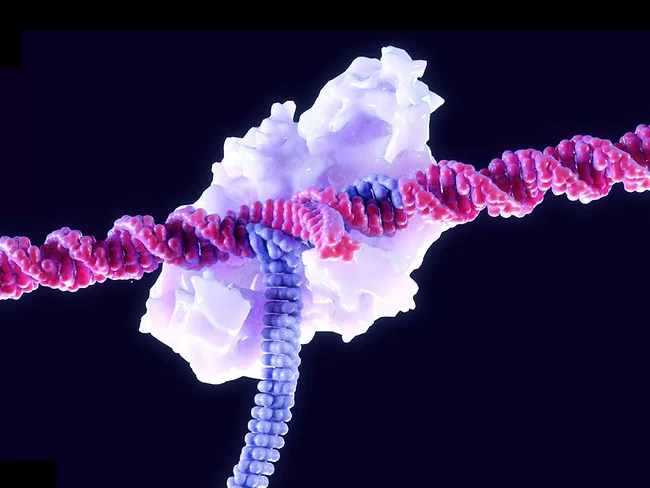
With CRISPR-Cas9 technology making its way toward clinical practice, laboratories are studying different gene-editing techniques, from base editors to prime editors, to correct mutations associated with various pathologies. Researchers at Tessera Therapeutics Inc. have been inspired by retrotransposons to develop a tool for editing DNA using RNA and reverse diseases such as phenylketonuria (PKU) or sickle cell disease (SCD).
New research shows base and prime editing can correct some forms of phenylketonuria (PKU) in mice and human cell lines, raising the prospect that this gene-editing approach could allow children born with the inherited metabolic disorder to have a treatment that would avoid the need for dietary restrictions and medication.
NGGT (Suzhou) Biotechnology Co. Ltd. has presented preclinical data on an AAV vector approach that expresses human PAH, rAAV8-PAH, also known as NGGT-002. NGGT-002 has liver tropism and it was codon-optimized for expressing PAH in the liver.
With PTC Therapeutics Inc.’s positive results in phase III with sepiapterin for pediatric and adult patients with phenylketonuria (PKU), attention turned to the would-be showdown with Kuvan (sapropterin dihydrochloride), the drug from Biomarin Pharmaceuticals Inc. that was approved in December 2017.
Phenylketonuria (PKU) is an autosomal recessive disorder where the primary catabolic pathway for phenylalanine (Phe) is disrupted due to mutations in the gene encoding PAH. Elevated Phe levels lie behind several neuropathologic anomalies that can lead to severe and irreversible mental retardation, if untreated.
Momentum is building at Jnana Therapeutics Inc. The firm has raised $107 million in a series C round and banked another $50 million up front from a new drug discovery and development pact with Roche Holding AG, which could potentially deliver significant near-term milestones and more than $2 billion in future milestone payments. It also commenced recruitment onto a first-in-human study of its lead drug candidate, JNT-517, an inhibitor of the phenylalanine transporter SLC6A19, which is in development for phenylketonuria.