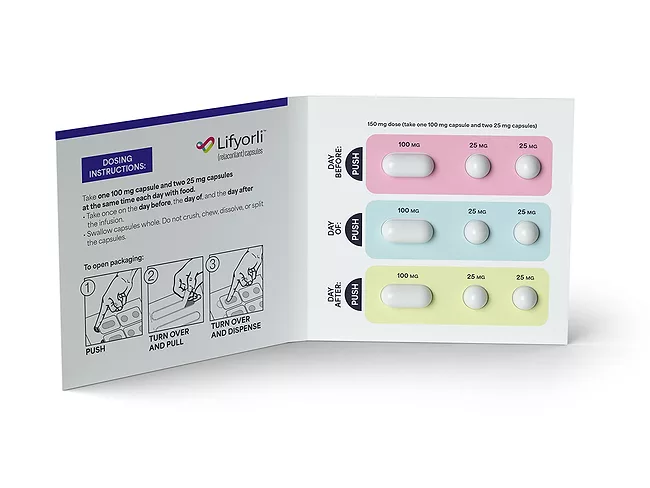
The U.S. FDA approved Corcept Therapeutics Inc.’s oral, selective glucocorticoid receptor antagonist, Lifyorli (relacorilant), nearly four months ahead of schedule for adults with platinum-resistant epithelial ovarian, fallopian tube or primary peritoneal cancer. A short time after the agency approved Lifyorli, it cleared Denali Therapeutics Inc.’s Avlayah (tividenofusp alfa) under the accelerated approval pathway for mucopolysaccharidosis II, also called Hunter syndrome, ahead of the April 5 PDUFA date.
Hunter syndrome, also called mucopolysaccharidosis II, is an X-linked genetic lysosomal disorder caused by loss-of-function mutations in the IDS gene, encoding iduronate-2-sulfatase (I2S). I2S is a lysosomal enzyme responsible for the cleavage of glycosaminoglycans (GAGs), and its deficiency results in accumulation of GAGs leading to a multisystemic disorder.
With the PDUFA date fast approaching for Regenxbio Inc.’s gene therapy RGX-121, the U.S. FDA placed the drug on clinical hold along with another, RGX-111, after preliminary analysis of a single case of neoplasm (specifically, an intraventricular central nervous system tumor) in a participant treated in the phase I/II study with the latter treatment.
Immusoft of CA Inc., a wholly owned subsidiary of Immusoft Corp., has announced that the FDA has granted orphan drug designation to ISP-002, the company’s investigational engineered B-cell therapy for the treatment of mucopolysaccharidosis type II (MPS II), also known as Hunter syndrome.
In a deal potentially worth $810 million for Regenxbio Inc., Nippon Shinyaku Co. Ltd. is partnering on the U.S. and Asian development and commercialization of iduronate-2-sulfatase enzyme RGX-121 for Hunter syndrome and RGX-111 for Hurler syndrome.
Regenxbio Inc. plans to file a BLA this year seeking accelerated approval for gene therapy candidate RGX-121 to treat young children with mucopolysaccharidosis type II, also known as Hunter syndrome, based on positive data from the phase I/II/III Campsiite trial, which not only hit the biomarker endpoint but also indicated potential systemic benefits.
For the second time in a week, measures of serum neurofilament light chain (NfL) took center stage, this time as Denali Therapeutics Inc. unveiled interim data from the open-label, single-arm phase I/II study testing DNL-310 in children with mucopolysaccharidosis II (MPS II), also known as Hunter syndrome.
Angelini Pharma SpA and JCR Pharmaceuticals Co. Ltd. signed an exclusive worldwide agreement for the development and commercialization of biologic therapies for epilepsy based on the J-Brain Cargo technology.
Angelini Pharma SpA and JCR Pharmaceuticals Co. Ltd. signed an exclusive worldwide agreement for the development and commercialization of biologic therapies for epilepsy based on the J-Brain Cargo technology.
Denali Therapeutics Inc.’s extensive update on clinical programs in central nervous system diseases at the start of this year included plans for lead asset DNL-310 in mucopolysaccharidosis II (MPS II), also known as Hunter syndrome – a space where other notable players include such names as Regenxbio Inc. and Takeda Pharmaceutical Co. Ltd.