Theken Companies LLC reported the acquisition of Visionair Solutions Inc. from the Cleveland Clinic, a deal that adds pulmonary therapy to its broad portfolio with Visionair’s 3D platform for the creation of silicon stents for central airway obstructions (CAOs). Terms of the transaction, which has officially closed, were not disclosed.
Tissue regeneration company Osteopore Ltd. is on the cusp of dramatically changing the way orthopedic surgery is conducted globally, with Australia playing a crucial role. Osteopore was the first company to successfully develop and commercialize 3D-printed bioresorbable implants for surgical use, reducing post-surgery complications compared to permanent implants.
Triastek Inc., a digital pharmaceutical solutions company, is taking a unique approach by using 3D printing technology to develop a pipeline that spans rheumatoid arthritis (RA), clotting disorders, ulcerative colitis and pulmonary hypertension. Its technology was recently validated through a partnership with Boehringer Ingelheim GmbH. The company’s 3D printing products include T-19, T-20 and T-21, which have all received IND approval from the FDA.
Bellaseno GmbH and Evonik Industries AG joined forces to commercialize 3D-printed scaffolds used in bone regeneration. The scaffolds are made with Evonik’s Resomer polymers to address large and complex bone defects as an alternative to frequently less stable conventional methods.
Surgical teams from the Department of Oncology at Toulouse University Hospital and the Cancer University Institute of Toulouse Oncopole have achieved a total reconstruction of a patient’s nose using a 3D-printed synthetic graft previously implanted in her forearm to pre-vascularize it.
Lattice Medical SAS reported the first successful breast reconstruction using Mattisse technology, a totally resorbable, 3D-printed implant which naturally regenerates fatty tissue. The procedure was performed at the Institute of Clinical Oncology in Tbilisi, Georgia. It was the work of cancer specialist Gia Nemsadze and his team. This was an immediate breast reconstruction for a 62-year-old patient with breast cancer. The surgical procedure lasted one and a half hours, allowing the mastectomy to be completed, immediately followed by the breast reconstruction.
Limacorporate SpA reported U.S. FDA approval for Prima, its new shoulder platform focused on versatility and operating roam efficiency. “For the first time in our history, both the glenoid base plate and humeral stem are fully 3D-printed, leveraging our long legacy in additive manufacturing,” Massimo Calafiore, CEO of Limacorporate, told BioWorld.
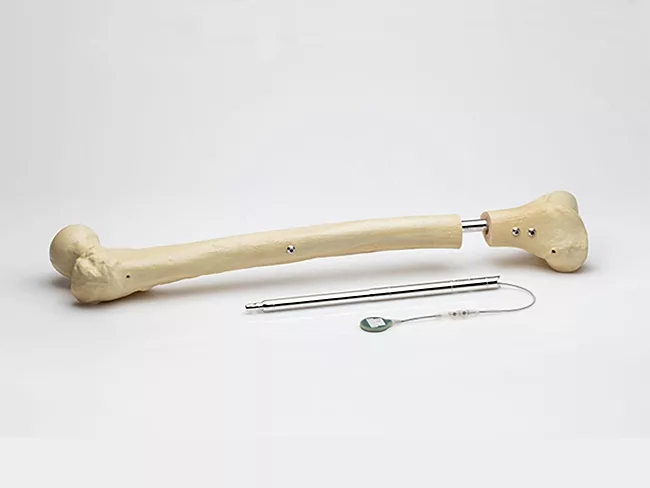
Limacorporate S.p.A has outlicensed to Orthofix Medical Inc. new medical technology for patients suffering from chronic high dislocation of the hip. The deal, for U.S. market rights, will see the companies combine the limb-lengthening technology of Orthofix’s Fitbone intramedullary nail system with Limacorporate’s 3D-printed pelvic fixation device to form what Emmanuel Bonhomme, CEO of Limacorporate, told BioWorld is “a personalized and unique complex hip replacement solution.”
About 1,500 babies are born each year in the U.S. with microtia, which happens when the external ear is small and not formed properly, but 3Dbio Therapeutics Corp., and the Microtia-Congenital Ear Deformity Institute (MCEDI) of San Antonio have brought to patients a solution that avoids biocompatibility issues seen with existing solutions. The Auri Novo device, a 3D-printed reconstruction of the outer ear that leverages the patient’s own ear cartilage, eliminates the need to harvest rib cartilage or use porous polyethylene in lieu of native cartilage, another indication that the era of personalized medicine is finally in view.